
Original briefings. Zero spin.
Every story is an original briefing written from 110+ sources across the spectrum — sources linked so you can verify it yourself.
 defense
Major Story (7/10)
Event date: September 8, 2026
defense
Major Story (7/10)
Event date: September 8, 2026
US Navy Destroys 8 Iranian Tankers in Four Days as Houthis Seize Yemeni Port, Democrats Demand Review of Ship Conditions
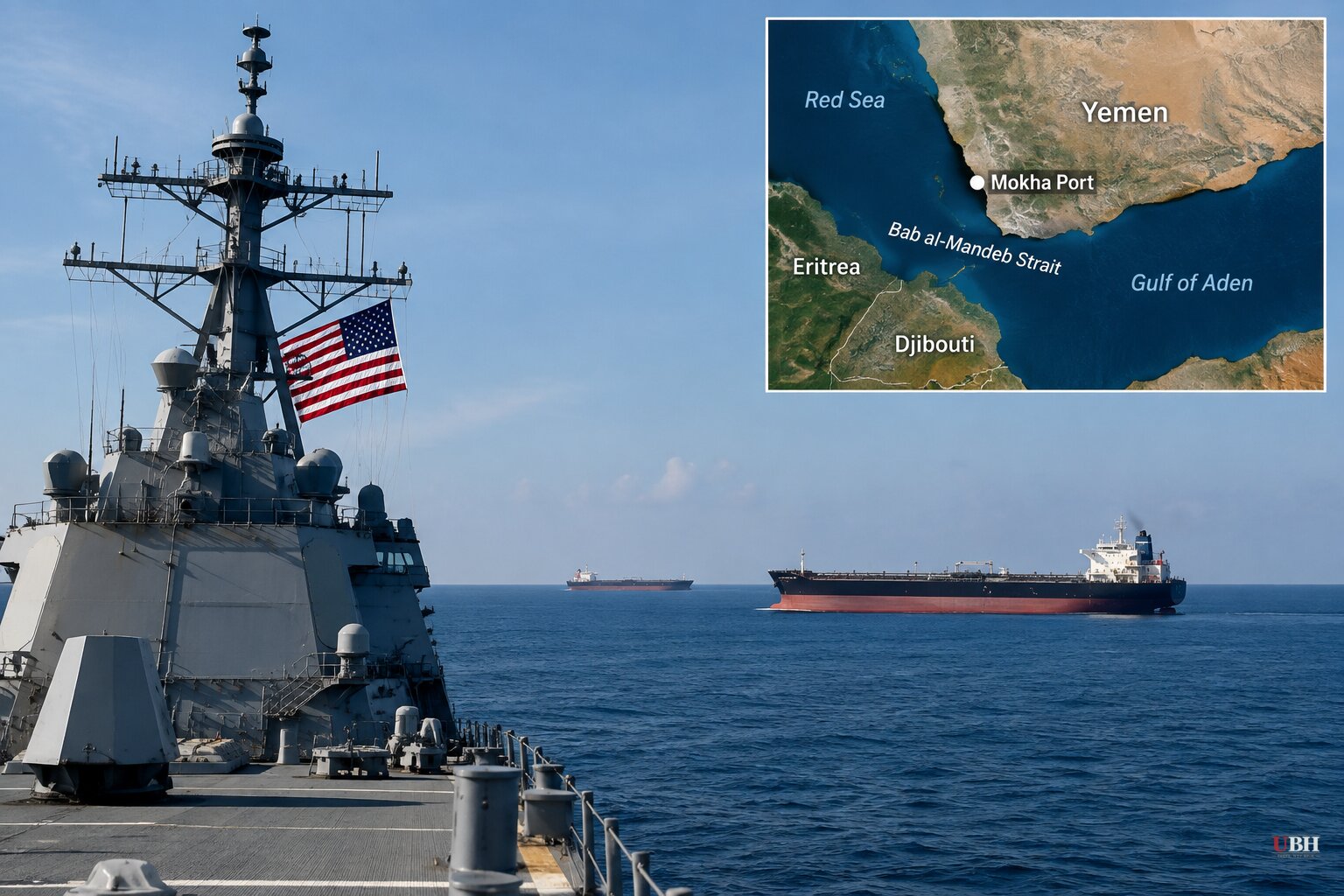
The war between the United States and Iran has passed the six-month mark, and this week brought two developments that show why nobody expects it to end soon: another round of tanker strikes in the Persian Gulf, and a formal complaint from Capitol Hill about how the Navy is treating the sailors fighting it.
Eight Tankers, Four Days
U.S. Central Command said American forces destroyed five Iranian oil tankers on Tuesday, September 8, after Iran twice fired ballistic missiles at a U.S. Navy warship over the preceding two days, according to CENTCOM and reported by both Breitbart and the Washington Post. The warship evaded both attacks and no American personnel were harmed, CENTCOM said.
The five vessels destroyed Tuesday were the M/T Kaviz, M/T Charminar, M/T Horizon 1, and M/T Riesco in the Gulf of Oman, plus the M/T Derya near Kharg Island, Iran's main oil export terminal. Crews were ordered to abandon the ships before U.S. forces struck them, according to Breitbart's reporting on the CENTCOM statement.
Three days earlier, on Saturday, September 5, Iran fired on a U.S. aircraft carrier and a guided-missile destroyer. Neither ship was hit. American forces responded by destroying three more Iranian tankers, bringing the four-day total to eight vessels destroyed or disabled.
CENTCOM Commander Adm. Brad Cooper laid out the policy in blunt terms after the first strike: "If you shoot at two of our ships, we will impose an even higher economic cost, taking out three of yours." Secretary of State Marco Rubio reinforced it to reporters Tuesday: "The back and forth is pretty straightforward, and that is that Iran continues to try to hit U.S. naval ships, and for every time they do that or try to do that, they're going to lose tankers."
Treasury Secretary Scott Bessent has framed the broader campaign, dubbed Operation Economic Outcast, as "the greatest economic isolation operation in the history of the world," aimed at cutting off the oil revenue that funds the IRGC and its regional proxies, according to Breitbart.
Iranian President Masoud Pezeshkian rejected any suggestion his country would back down. "If Americans are warriors, let them face our valiant military forces," he wrote on X Saturday, September 12, according to Fox News. "Why wage war on civilian infrastructure, food supplies, and livelihoods? If they're human, why deny people access to water, food, and medicine? Our people can't be bullied into submission. Iran won't surrender."
Why Iran Keeps Firing
The Institute for the Study of War, in its September 10 update, attributed Iran's continued attacks to a hardline faction led by IRGC Commander Major General Ahmad Vahidi that has not achieved its central war aim: recognized control over the Strait of Hormuz. ISW assessed that this faction is "not satisfied with the current status of the war" and is trying to force a change in trajectory through continued military pressure, rather than negotiate from a position it views as weak.
Houthi forces captured Mokha Port in Yemen's Taiz Governorate from Republic of Yemen Government-affiliated forces on September 10, following nearly a week of fighting along frontlines in Hudaydah and Taiz, ISW reported. The gain pushes Houthi forces closer to the Bab al-Mandeb Strait, a chokepoint ISW says supports Iran's broader campaign by giving Tehran added leverage to threaten global shipping beyond the Strait of Hormuz, which is already disrupted.
Aboard the USS George Washington in the Arabian Sea, more than 5,000 sailors are supporting what the Navy calls Operation Epic Fury, according to Fox News chief foreign correspondent Trey Yingst, who reported from the carrier's flight deck Saturday as fighter jets launched into the night and guided-missile destroyers, including the USS Shoup, formed a defensive screen. An officer aboard the Shoup told Yingst the crew is "ready and equipped to respond as quickly as necessary." Yingst said Iran has stepped up attacks on U.S. warships over the past week and a half, including a strike on the George Washington itself last weekend.
Fox News also reported that President Trump predicted the war would end "very soon," with that resolution likely coming after the November midterms. No timeline or ceasefire framework has been announced by either side as of this week.
The Fight Over Ship Conditions
Senate Appropriations Committee Vice Chair Patty Murray of Washington and ranking defense appropriator Chris Coons of Delaware sent a letter Monday, September 7, to Defense Secretary Pete Hegseth and acting Navy Secretary Hung Cao demanding "an immediate independent strategic review" of deployments aboard the USS Abraham Lincoln, USS Gerald R. Ford, and USS Benfold, according to CNN, which obtained the letter.
The senators want the review to cover "readiness issues related to operations, manning, quality of life, including mental health, and culture on the ships," plus communication with families, CNN reported. The USS Benfold spent four days without power in the South China Sea last month after an engineering failure. The Lincoln has been deployed nearly nine months with no shore time since a December 2025 stopover in Guam, and CNN cited reports of unsanitary conditions, food shortages, and sailors attempting to jump overboard.
A carrier crew stretched past the Navy's own seven-month deployment target, on reduced food and no shore leave, is a force-management problem. CNN reported the median length of U.S.-based carrier deployments has been rising steadily since 2020, well before the current Iran conflict began. The Ford, meanwhile, completed what CNN described as a record-long deployment that included combat missions against both Venezuela and Iran.
Neither the Pentagon nor the Navy has publicly responded to the Murray-Coons letter, and no independent review has been announced as of this writing. Whether Hegseth's office authorizes the requested investigation, and whether the war's trajectory changes after November's midterms as Trump has predicted, remain open questions.
Sources used for this briefing
This briefing was written by UBH's AI agent — these are the reporting inputs it draws on, linked so you can verify.


