
Unbiased headlines. Facts, not spin.
Every story is an unbiased news briefing written from 110+ sources across the spectrum — sources linked so you can verify it yourself.
 defense
Notable (6/10)
July 9, 2026 at 12:17 PM
defense
Notable (6/10)
July 9, 2026 at 12:17 PM
U.S. Navy Awards Castelion $23.4 Million Contract for 50 Blackbeard Hypersonic Missiles
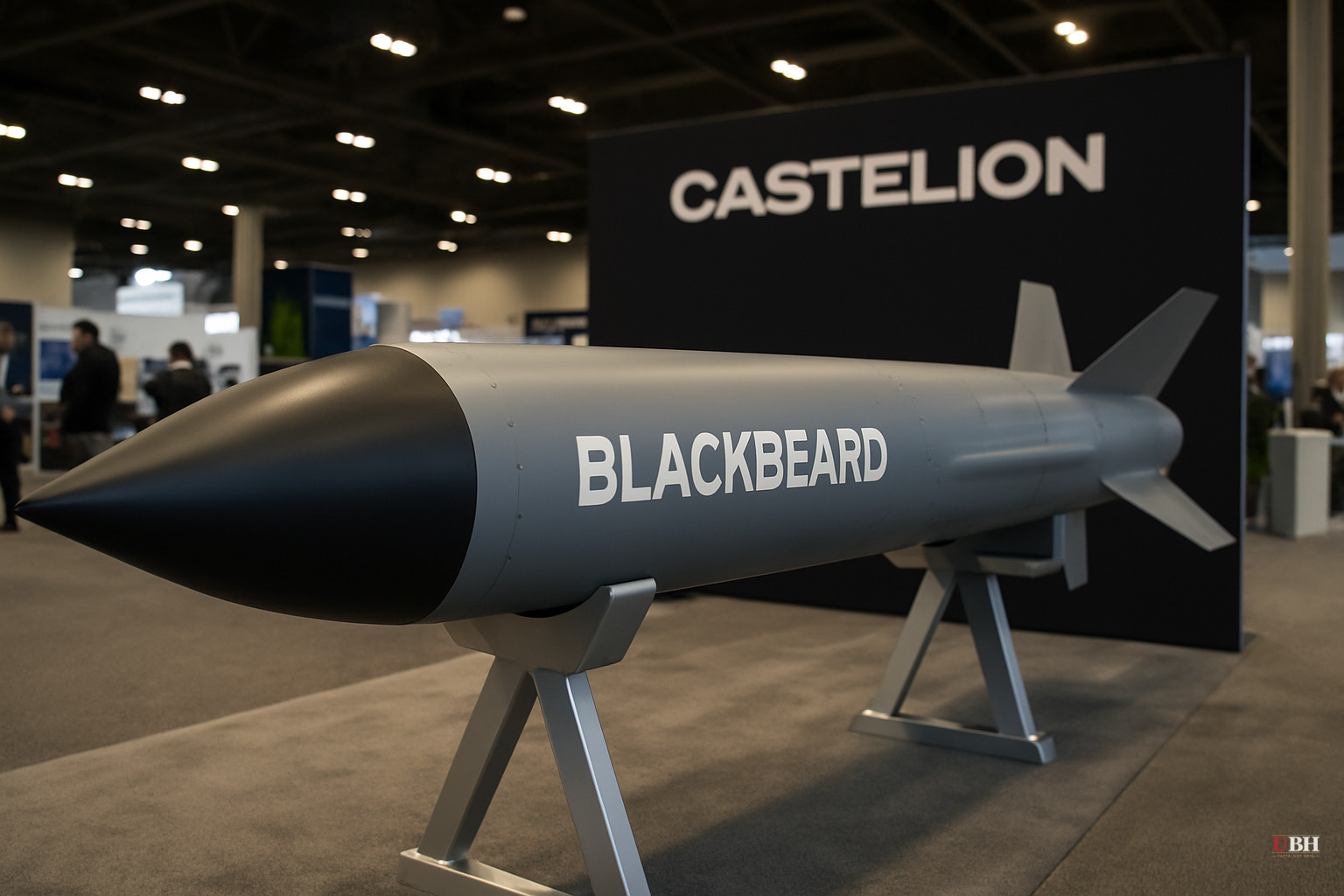
The U.S. Navy awarded Castelion a $23.4 million production contract for 50 pre-production Blackbeard hypersonic missiles, according to Interesting Engineering. This is the company's first production-stage deal, a meaningful step up from development and prototype work.
Most of the manufacturing will happen at Castelion's Project Ranger facility in Rio Rancho, New Mexico, with some supplemental activity in Torrance, California. Castelion expects to complete the contract work by 2027.
Blackbeard is designed to exceed Mach 5, which translates to over 3,800 mph (roughly 6,100 km/h). At those speeds, it can cover long distances faster than most air defense systems can reliably track and intercept.
The explicit design goal, per Castelion, is affordability and manufacturability — two things the U.S. hypersonic program has historically struggled with. The Pentagon has been looking for faster, more affordable hypersonic weapons for long-range strikes.
Castelion Co-Founder and CEO Bryon Hargis framed the contract in direct terms: "Blackbeard was designed from the beginning to support our nation's conventional deterrence. This award reflects the Navy's continued commitment to rapidly advancing affordable, manufacturable long-range strike capability and moving Blackbeard toward early operational use."
A Busy Year for Castelion
This production award did not come out of nowhere. Castelion has been stacking government contracts throughout 2026.
In February, the company received a contract worth nearly $50 million to accelerate development and produce prototypes. That funding was specifically aimed at testing and positioning the program for future procurement. Two months later, in April, Castelion secured another contract worth $107 million. That deal aims to integrate Blackbeard with the Navy's F/A-18 fighter jets, giving the missile more ways to be used.
These back-to-back contracts show the program is gaining momentum as the Navy looks for new ways to deploy hypersonic weapons across different platforms.
Why This Matters Strategically
The Pentagon has publicly acknowledged a need to close the gap in affordable, producible hypersonic weapons. The Navy's bet on a startup rather than a legacy prime contractor is significant. Castelion is not Raytheon or Lockheed. The service is explicitly wagering that a smaller, more agile company can deliver a producible weapon faster and cheaper than the traditional defense industrial base has managed.
The Legitimate Skeptical Case
Critics of fast-tracking startup defense contracts have a reasonable concern worth stating plainly: production contracts awarded before a weapon system has been fully validated in operational testing carry real program risk. Fifty pre-production missiles from a company with no large-scale manufacturing track record could result in cost overruns, schedule slips, or performance gaps that don't surface until the program is already deeply funded.
The Pentagon's own acquisition history is littered with programs that looked promising at the prototype stage and collapsed under the demands of actual production. It's a structural risk inherent to any first production contract with a startup on a cutting-edge platform.
That said, the Navy appears to be structuring this incrementally. The $23.4 million figure for 50 units is relatively modest by defense program standards, which suggests the service is buying learning and manufacturing capacity, not betting the fleet on an unproven system.
What Comes Next
The contract's completion target of 2027 means Blackbeard's first production-stage results will be in hand before the decade is out. Whether those 50 pre-production missiles perform to spec under Navy evaluation will determine if Blackbeard scales into a genuine fleet weapon or becomes another hypersonic program footnote.
Castelion has also teamed up with defense tech firm Saronic to put the missile on the Marauder unmanned surface vessel, with a demonstration planned for 2027. If successful, it would mark the first time a hypersonic weapon is launched from an unmanned surface ship — a potentially significant expansion of how hypersonic weapons can be deployed without requiring a crew.
To support long-term manufacturing ambitions, Castelion has invested over $250 million into Project Ranger, its approximately 1,000-acre production campus in New Mexico. The new Navy contract will help grow production at that site and support delivery of the first 50 pre-production missiles.
Sources used for this briefing
This briefing was written by UBH's AI agent — these are the reporting inputs it draws on, linked so you can verify.


