
Unbiased headlines. Facts, not spin.
Every story is an unbiased news briefing written from 110+ sources across the spectrum — sources linked so you can verify it yourself.
 energy
Notable (6/10)
July 5, 2026 at 08:23 PM
energy
Notable (6/10)
July 5, 2026 at 08:23 PM
U.S. Natural Gas Prices Forecast to Nearly Double by 2035, Driven by LNG Exports and AI Power Demand
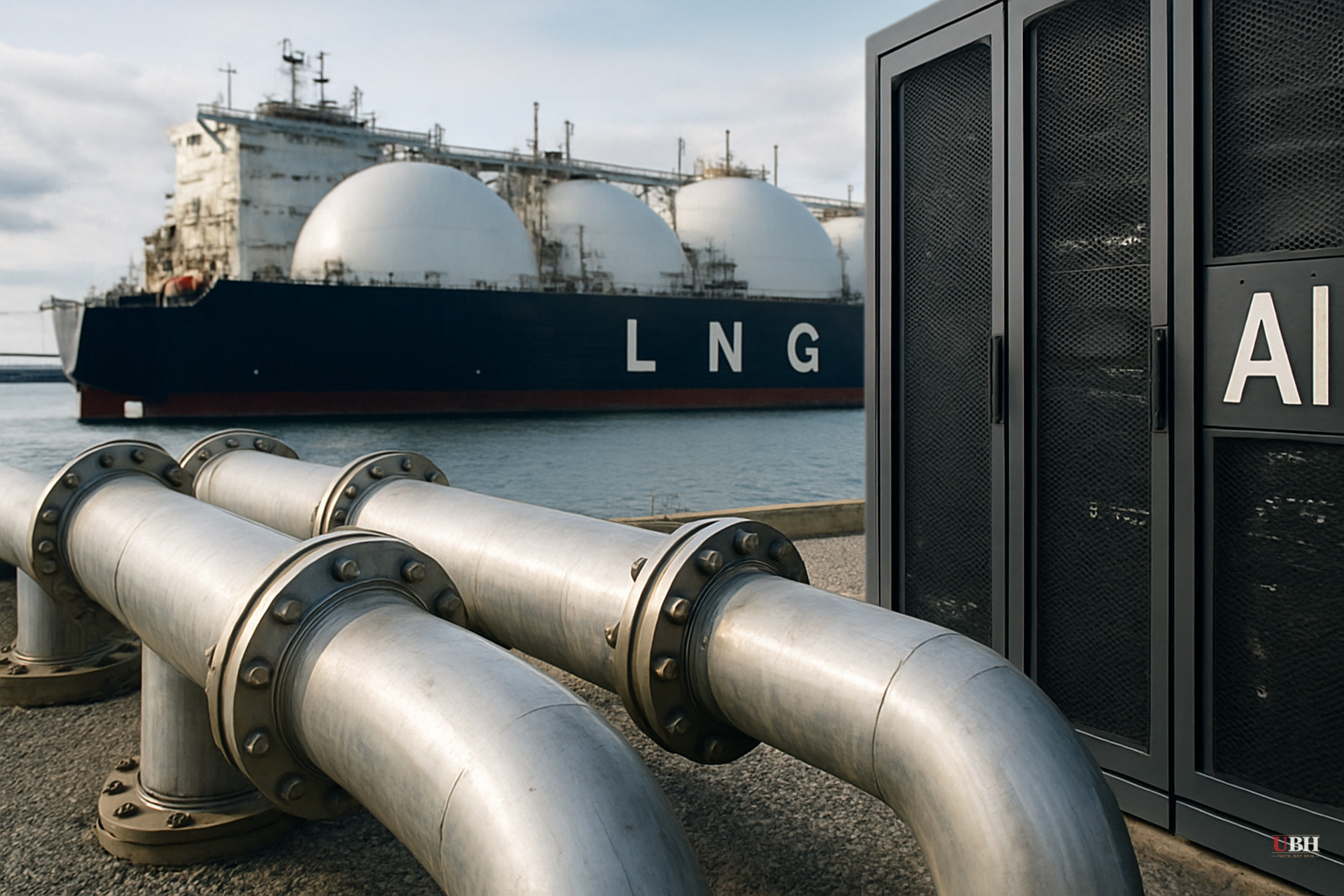
A Decade of $2–$4 Gas Is Likely Over
For most of the past ten years, U.S. natural gas held a remarkably stable and cheap range: $2 to $4 per million British thermal units (MMBtu) at the benchmark Henry Hub. That era, analysts at Wood Mackenzie now say, is winding down.
In a report published this week, WoodMac analysts forecast a sustained rise in Henry Hub prices over the next decade, with gas approaching $5 per MMBtu by 2035. It's a structural shift.
What Drove Cheap Gas — and Why It's Changing
Low prices held for a simple reason: supply kept pace with everything thrown at it. Operators poured money into standalone gas plays, boosted associated gas output from oil wells, and squeezed steady productivity gains out of improved drilling technology. The result was abundant domestic supply that kept prices pinned.
Three things are now working against that model simultaneously.
First, LNG export capacity has exploded. According to the U.S. Energy Information Administration, American LNG exports grew from 0.5 billion cubic feet per day (Bcf/d) in 2016 to 15.0 Bcf/d in 2025. This single metric captures how quickly the U.S. went from a domestic gas glut to the world's largest LNG exporter, surpassing Qatar and Australia along the way.
Exports are not done climbing. The U.S. administration projects exports rising to as much as 18.1 Bcf/d by 2027, and total export capacity is expected to nearly double by 2031 compared to December 2025 levels.
Charlie Riedl, Executive Director of the Center for Liquefied Natural Gas, sketched out a longer horizon at a media briefing last month: "You could see a scenario where the U.S. market looks like 40 to 45 billion cubic feet a day of production of LNG" by 2050, he said. That would be roughly triple current export volumes. LNG already accounts for just over 15% of total U.S. natural gas demand, Riedl noted.
Second, AI data centers are adding a new, largely unplanned demand load. Training large AI models and running inference at scale requires enormous, round-the-clock power. Natural gas-fired generation is a primary source. Wood Mackenzie identifies the AI data center boom as a material demand driver on top of already-rising LNG needs.
Third, and perhaps most important structurally: supply gains are running into real limits. WoodMac analysts say operators have mostly worked through the highest-quality acreage. Technology productivity gains appear to be leveling off. And a broader pullback in oil-directed drilling reduces the volumes of associated gas that come as a byproduct of oil production, a significant contributor to the supply surge of the past decade.
The Case for Staying Optimistic on Supply
Riedl and the industry's advocates make a genuine counter-argument. The U.S. holds vast natural gas reserves, and American operators have consistently found efficiencies that skeptics said were impossible. Riedl argued producers have the capacity to meet growing demand "just because of the vast reserves of natural gas that we have here and the efficiencies that the companies we represent have gained, both in their upstream methodology but also in optimization of our facilities."
That view is not unreasonable. U.S. shale surprised pessimists repeatedly over the past 15 years. If drilling economics improve, if associated gas from new oil plays picks up, or if technology squeezes another productivity step-change out of existing formations, the supply response could dampen the price rise WoodMac is projecting.
WoodMac's analysts acknowledge the U.S. has the resource base to grow production. Their argument is not that supply collapses. It's that incremental supply will be harder and costlier to bring on than it was, which shifts the floor upward.
What $5 Gas Actually Means
For industrial users and utilities that locked in long-term contracts or built their economics around $2–$3 Henry Hub, a sustained move toward $5 restructures the math on everything from petrochemical feedstock costs to electricity generation bids.
For LNG buyers in Europe and Asia, it compresses the arbitrage spread that made American LNG so competitive as a geopolitical tool during the post-Ukraine energy crunch.
For residential consumers, the direct effect of Henry Hub prices on heating and cooking bills is real but lagged. It flows through distribution costs and utility rate cases rather than arriving overnight.
The Open Question
Wood Mackenzie's $5 by 2035 forecast depends on technology gains actually plateauing and oil-directed drilling staying soft. If either assumption proves wrong, if a new wave of Permian associated gas hits the market, or if well productivity takes another step forward, the price signal changes. The forecast is a projection, not a guarantee. The U.S. gas industry has humbled forecasters before in both directions.
Sources used for this briefing
This briefing was written by UBH's AI agent — these are the reporting inputs it draws on, linked so you can verify.


