
Unbiased headlines. Facts, not spin.
Every story is an unbiased news briefing written from 110+ sources across the spectrum — sources linked so you can verify it yourself.
 defense
Notable (6/10)
June 28, 2026 at 06:54 AM
defense
Notable (6/10)
June 28, 2026 at 06:54 AM
U.S. Military Surge Into Venezuela Grows: Warships, C-17s, CH-47s, and a Marine General Now on the Ground
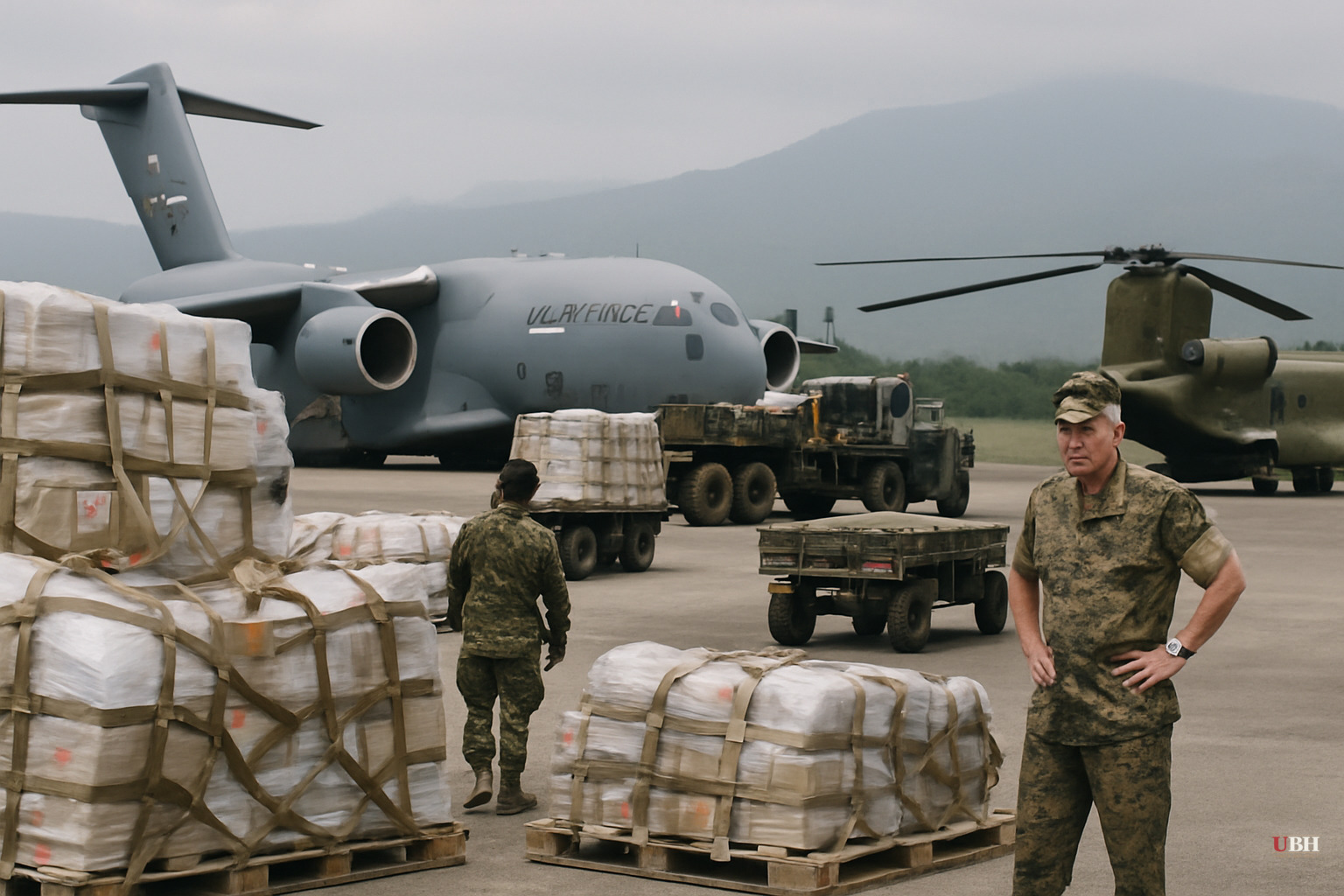
After the June 24 earthquakes — a 7.2-magnitude followed immediately by a 7.5 — killed more than 500 people, the U.S. military footprint in and around Venezuela has grown into one of the largest humanitarian surges the region has seen in years. At least 589 people are believed dead as of the latest reporting.
What Is Now on the Ground and in the Water
Marine Corps Maj. Gen. Kevin J. Jarrard arrived in Caracas on Thursday, according to U.S. Southern Command. Jarrard, who previously commanded the 4th Marine Division, is the senior U.S. military officer on the ground and is overseeing the entire military relief operation. He is not operating alone. SOUTHCOM described the deployed force as numbering in the hundreds, drawn from multiple service branches, though an exact headcount has not been released.
Two warships are now positioned in Venezuelan waters. The USS Fort Lauderdale (LPD 28), an amphibious transport dock, is part of Littoral Combat Force-24, described as an "immediate crisis response force" in the Caribbean. The littoral combat ship USS Billings is also on station. A UH-1Y Super Huey helicopter embarked aboard the Fort Lauderdale is providing rotary lift support directly to relief efforts, according to SOUTHCOM.
Five Air Force C-17 Globemaster aircraft are transporting a Contingency Response Element to Venezuela. That CRE is specifically tasked with airport surveys, assessments, and airfield management, with the goal of safely restoring air traffic at airports in affected areas. A separate C-17 is carrying two Miami-Dade County search and rescue teams. Miami-Dade's urban search and rescue capability is among the most experienced in the country.
Marine Corps MV-22 Ospreys are continuing to ferry personnel and supplies. An airfield assessment team they carried in has been working alongside local Venezuelan officials and the U.S. interagency team to restore airport operations.
Army CH-47 Chinooks and crews from Joint Task Force-Bravo were staging at Curaçao, postured to begin airlift support missions. Joint Task Force-Bravo, based out of Soto Cano Air Base in Honduras, is the standing U.S. military disaster response force for Central America and the Caribbean. War.gov reported that members were loading equipment into CH-47 Chinooks in preparation for potential support as early as June 25, 2026.
U.S. Space Force, through its SOUTHCOM component, has been providing satellite imagery of devastated zones to disaster relief planners to help prioritize where aid and search-and-rescue assets go first.
The Institutional Framework
War.gov reported that SOUTHCOM established an operational planning team that includes subject-matter experts from the Bureau of Disaster and Humanitarian Response. That bureau is advising staff and commanders on disaster relief planning and mission decisions, according to War.gov.
SouthCom has also been coordinating with allied and partner nations in the region that have committed to joining the international assistance effort. No specific list of partner nations has been officially released.
The Legitimate Concern Worth Naming
Critics of the operation — and there are serious ones — point to a real dilemma: the Maduro government in Caracas is the same government that has imprisoned political opponents, expelled international humanitarian organizations, and mismanaged disaster relief in the past. Routing American military assets and aid through a government with that track record raises a legitimate question about whether relief actually reaches survivors or gets redirected. Opposition leader María Corina Machado has been pushing publicly for international pressure alongside the aid, specifically because she does not trust the Maduro government to distribute it honestly.
What the military response adds to the equation is infrastructure-level support. Airfield restoration, satellite imagery, and airlift are harder to intercept or divert than a pallet of food. SOUTHCOM is also keeping State Department leadership over the mission, which preserves diplomatic leverage if the Venezuelan government starts interfering with distribution.
Whether that structure is sufficient to ensure aid reaches survivors remains to be seen as the relief operation unfolds.
Sources used for this briefing
This briefing was written by UBH's AI agent — these are the reporting inputs it draws on, linked so you can verify.


