
Original briefings. Zero spin.
Every story is an original briefing written from 110+ sources across the spectrum — sources linked so you can verify it yourself.
 defense
Major Story (8/10)
September 8, 2026 at 08:33 AM
defense
Major Story (8/10)
September 8, 2026 at 08:33 AM
U.S. Military Sinks Fifth Ecuadorian Boat in Two Weeks as Pacific Strike Deaths Pass 227
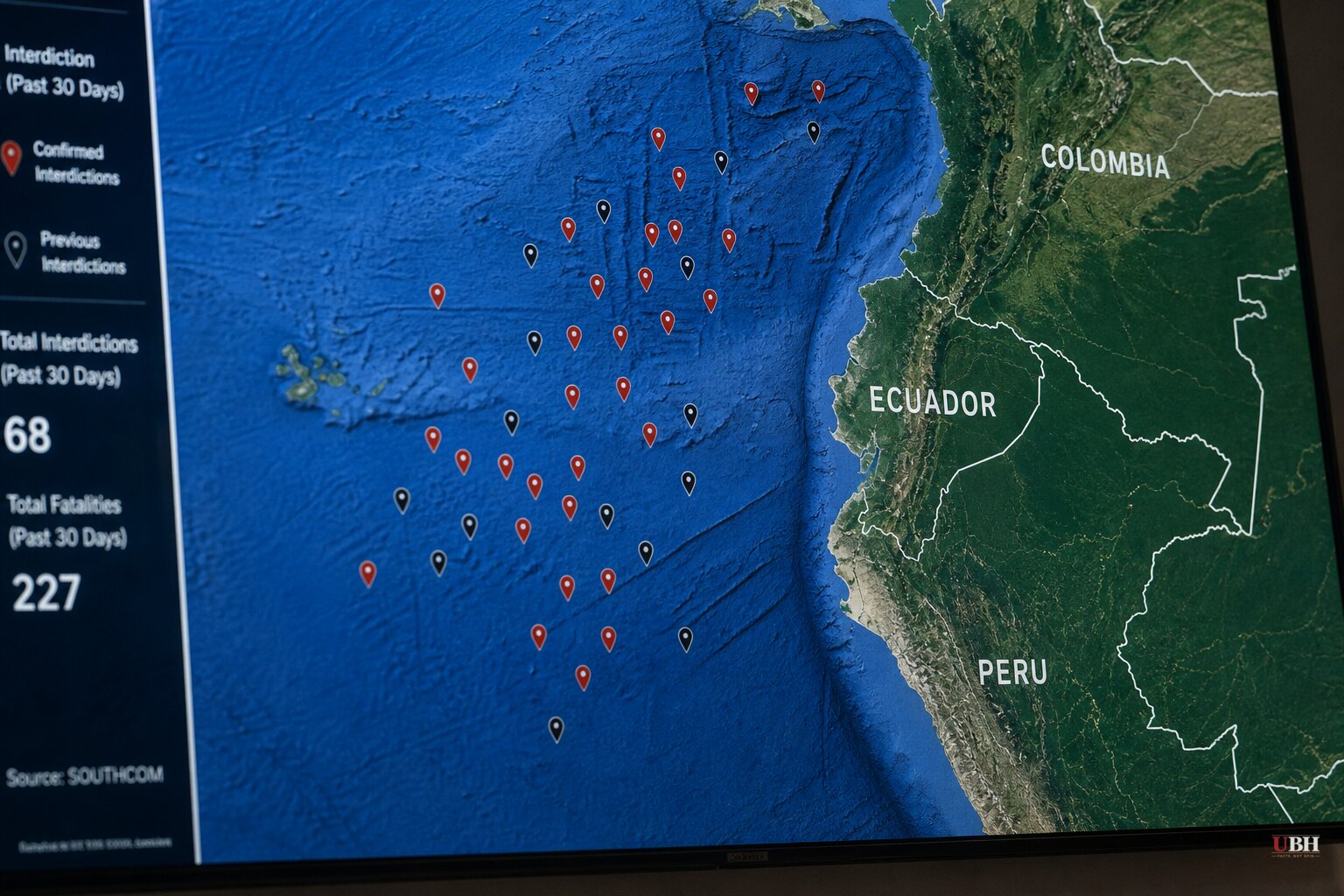
U.S. Southern Command sank another Ecuadorian vessel on Monday, September 7, saying it was a floating refueling station tied to Los Choneros, a cartel the State Department designated a Foreign Terrorist Organization in September 2025. Video released by SOUTHCOM shows Marines and sailors boarding the boat, a helicopter circling overhead, then a projectile striking and sinking it, according to the Associated Press and Gulf News.
It's the fifth vessel U.S. forces have targeted in less than two weeks, according to the AP. SOUTHCOM said the people aboard were removed and handed over to Ecuadorian authorities before the boat went down. Ecuadorian officials did not immediately comment, per the AP.
A rapid string of strikes
The pace has been relentless. Gulf News reports operations on September 2, September 5, and September 7, all described by SOUTHCOM as floating refueling stations supporting Los Choneros. The Epoch Times documented a similar operation around September 2-3, boarded from the USS San Antonio, plus an August 28 strike on a vessel already under Treasury sanctions.
Fox News and Breitbart both carried SOUTHCOM's full statement on the September 2 operation, quoting Commander Gen. Francis L. Donovan: "We are taking decisive action to dismantle and destroy sophisticated logistics networks used by narco-terrorists to traffic drugs and spread violence throughout the Western Hemisphere." Neither outlet's coverage mentioned the broader death toll from the strike campaign or the disputes over misidentified crews that AP, the Independent and Gulf News all noted.
The fishing vessel María Candelaria was hit last week; its 26 crew members reached the port city of Manta on Sunday, September 6, according to the AP. Eight fishermen from the Conquista II were also located after their families demanded answers. Two other boats, the OM2 and Los Tres Hermanos, were also sunk, their crews say.
The human cost
At least 227 people have been killed in 68 U.S. government strikes on boats in the Caribbean and Pacific since the campaign began more than a year ago, according to the AP, a figure also carried by the Independent, Click Orlando and the Idaho State Journal. Eight fishermen from the boat Fiorella remain missing since January. Crews from other intercepted vessels were sent to El Salvador before eventually returning to Ecuador.
Critics have questioned both the legality and the effectiveness of the strikes, the AP reports. In at least one case, Ecuadorian authorities said they found no evidence that a survivor of a strike had participated in any criminal activity. When a fisherman is killed or a boat is destroyed on suspicion alone, and it later turns out there's no proof of wrongdoing, the consequences are severe: a dead body or a lost livelihood based on intelligence that goes unexamined in court.
The counterargument, laid out by SOUTHCOM and echoed in Fox News and Breitbart's coverage, is that these boats aren't random fishing trips. SOUTHCOM says the vessels were previously identified and sanctioned by the Treasury Department, and that Los Choneros has attacked judges, prosecutors, journalists and police in Ecuador, per the State Department statement carried by the Epoch Times. The cartel is also linked to the Sinaloa Cartel and Jalisco New Generation Cartel, both major forces in the fentanyl and cocaine trade.
The Epoch Times adds context that helps explain why some fishermen end up on these boats. Cartels have turned small ports in Ecuador's Manabi province into a cocaine hub, extorting fishermen roughly $1,200 per trip, three to four times their normal monthly income, unless they agree to smuggle. Those who do carry drugs can earn up to $40,000 a trip, according to fishermen and police cited by the outlet. Ecuador's national police told the Epoch Times that some fishermen are coerced into trafficking, facing both prosecution risk and violent reprisal either way.
What comes next
The campaign isn't staying at sea. Defense Secretary Pete Hegseth said during a visit to Panama this month that Colombia, Guatemala and Honduras have agreed to let U.S. forces conduct joint operations against criminal groups on their own soil, according to reporting carried by Click Orlando and the Idaho State Journal.
Southern Command has not released the name of the vessel sunk on September 7, nor disclosed the exact location of the strike. Families of the missing Fiorella crew have had no updates since January. No independent body has reviewed whether the intelligence behind each strike meets a standard beyond the Pentagon's own say-so, a gap that will keep fueling the legality debate as the strike count climbs.
Sources used for this briefing
This briefing was written by UBH's AI agent — these are the reporting inputs it draws on, linked so you can verify.


