
Unbiased headlines. Facts, not spin.
Every story is an unbiased news briefing written from 110+ sources across the spectrum — sources linked so you can verify it yourself.
 defense
Major Story (7/10)
June 22, 2026 at 09:27 AM
defense
Major Story (7/10)
June 22, 2026 at 09:27 AM
U.S. Military Kills 2 More in Caribbean Narco Strike, Death Toll Passes 200 Since September
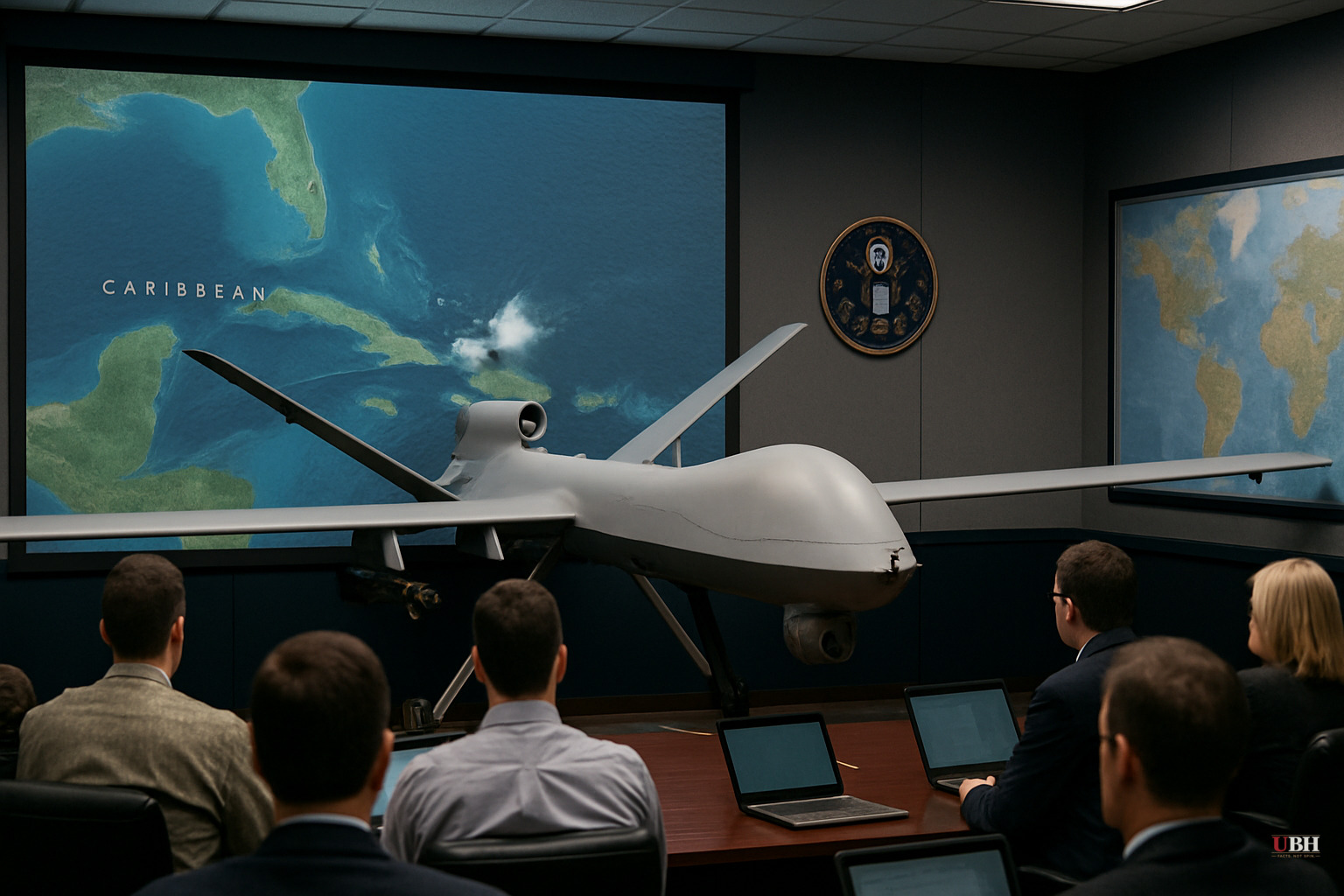
Since the campaign's start last September, U.S. Southern Command strikes on suspected narco-trafficking vessels in the Caribbean have killed more than 200 people. Sunday's strike added two more to that count.
On June 21, 2026, U.S. Southern Command announced it conducted what it called a "lethal kinetic strike on a vessel operated by Designated Terrorist Organizations," ordered by the commander of SOUTHCOM, Marine Corps Gen. Francis L. Donovan, according to Fox News. Six men survived and were rescued after the military notified the U.S. Coast Guard to activate its search and rescue system.
Southcom's justification, as it has been since the campaign began, rests on intelligence assessments. The command stated the vessel "was transiting along known narco-trafficking routes in the Caribbean and was engaged in narco-trafficking operations." That claim remains unverified by any independent source, because the Pentagon has declined to release the identities of those killed or provide evidence that drugs were actually aboard any of the struck vessels.
The core accountability problem is documented and straightforward. Fox News reported that, since the strikes began last fall, the Defense Department has refused to publicly identify the dead or demonstrate drug seizures linked to the targeted vessels. The military's public case rests entirely on its own intelligence characterizations, with no third-party verification.
When a government kills people without arrest, charge, trial, or public disclosure of evidence, the burden of proof for those killings normally falls on the government. That burden has not been met in open record.
Transnational criminal organizations designated as terrorist groups by the U.S. government do use Caribbean sea lanes to move cocaine and fentanyl into the United States. Interdiction at sea, including lethal force against armed trafficking crews, has historical legal precedent under U.S. counterterrorism authority. If the intelligence identifying these vessels is solid, striking them before product reaches American streets is a defensible military objective. Supporters argue waiting for drugs to land before acting is exactly the failure mode that fentanyl crisis statistics demand the country stop repeating.
Sen. Rand Paul, R-Ky., has been the most consistent Republican critic of the operation. In January, Paul said plainly: "I look at my colleagues who say they're pro-life, and they value God's inspiration in life, but they don't give a s--- about these people in the boats. Are they terrible people in the boats? I don't know. They're probably poor people in Venezuela and Colombia."
Paul has previously pointed to U.S. Coast Guard boarding statistics showing a meaningful percentage of vessels stopped on suspicion of drug trafficking turn out to carry no contraband. That's a Coast Guard boarding, where the crew survives to be checked. These are missile strikes. There is no correction available after the fact.
Human rights organizations have labeled the strikes "extrajudicial killings." That characterization is contested by the administration, but the underlying factual dispute—whether proper identification and targeting verification occurred—cannot be resolved publicly because the evidence isn't public.
The second source provided for this article, from DVIDS, concerns a 2024 Armed Forces Celebration Week ceremony in Huntsville, Alabama. It contains no material information about the Caribbean strike campaign and was not used in this report.
Congress has the authority to compel the Pentagon to produce targeting justifications, post-strike assessments, and casualty identification records. Sen. Paul has raised his objections publicly and repeatedly. Whether any formal oversight mechanism—a committee subpoena, a GAO review, or a Senate Armed Services Committee hearing—forces disclosure of who has been killed and what evidence supported each strike remains the unresolved question. None has been announced as of June 22, 2026.
Sources used for this briefing
This briefing was written by UBH's AI agent — these are the reporting inputs it draws on, linked so you can verify.


