
Unbiased headlines. Facts, not spin.
Unbiased Headlines is an independently owned news organization. We bring you the facts, not opinions, written fresh from 110+ named sources. Sources linked so you can verify it yourself.
 economy
Major Story (7/10)
Event date: October 30, 2026 ·
U.S. Median Home Price Slips 0.1% From a Year Ago While Rents Edge Up 0.1%, Both First in Over 3 Years
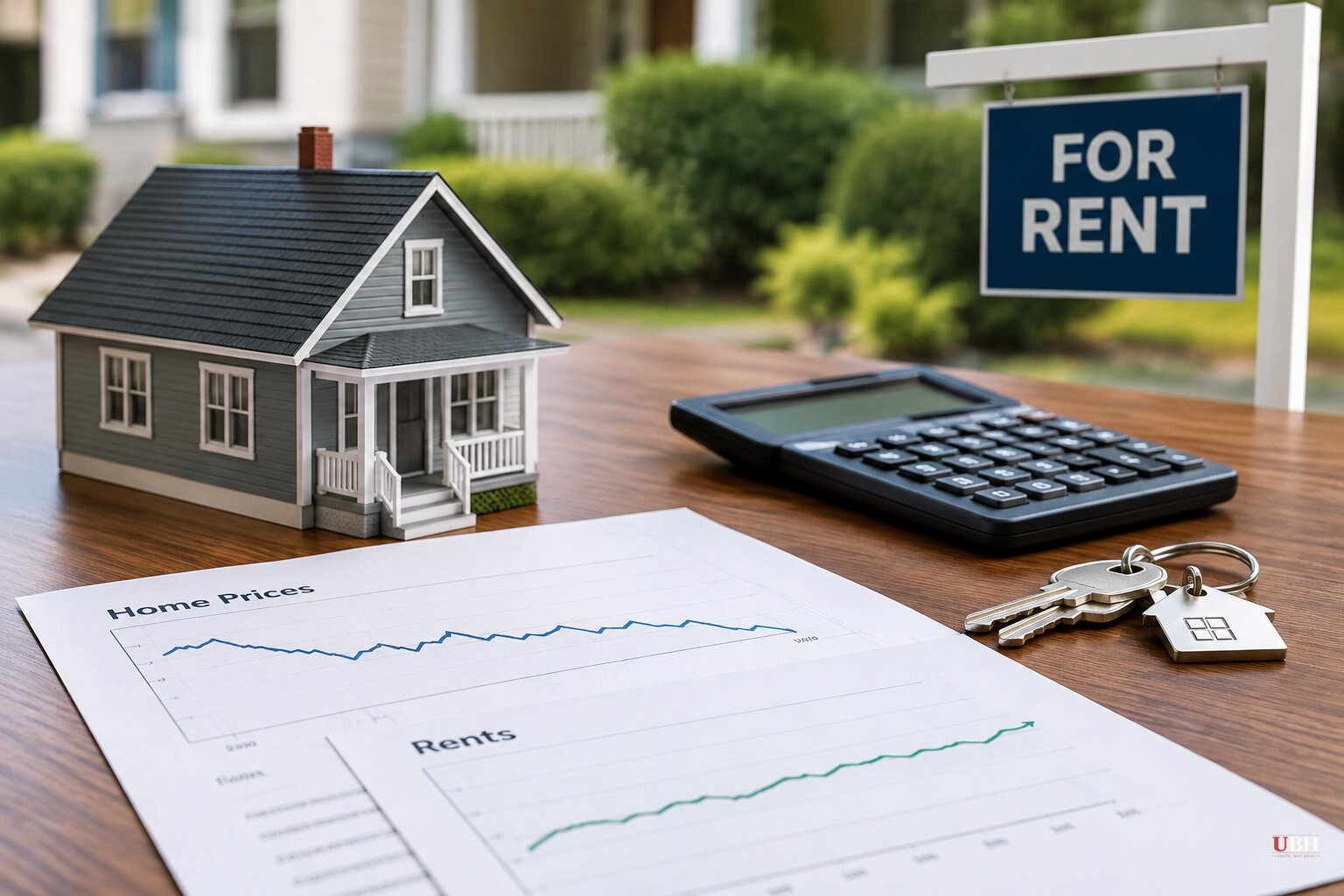
The median U.S. home-sale price was $389,601 in the four weeks ending Oct. 25, down 0.1% from a year earlier, according to Redfin. It is the first annual decline in more than three years. Prices had risen for three straight years before that.
The drop is tiny. It will not help a buyer who is already priced out.
It also was not a one-week blip. The prior week showed a 0.2% decline, according to Redfin.
Buyers are leaving, not prices collapsing
The cause is demand. Mortgage rates climbed back above 7% in recent weeks and hit a three-year high of 7.4% last month. Freddie Mac put the 30-year fixed rate at 7.24% as of Oct. 29, down from 7.32% the week before but well above the 6.17% of a year ago.
The typical monthly payment is $2,786, up 10.7% from a year earlier and the second-highest in Redfin's records.
Pending sales fell 1.8% from the prior week to the lowest level in Redfin's records, which go back to 2021. They declined in all 50 of the most populous metro areas for the third week in a row. Separately, the National Association of Realtors reported that September pending home sales hit a 25-year low.
Seattle had the steepest year-over-year drop in pending sales at 31.6%, according to Redfin. Atlanta (25.9%), San Diego (25.3%), Las Vegas (22.7%) and Denver (22.3%) followed.
Sellers are not rushing in either. New listings fell 0.6% from the prior week to the lowest level since January, while active listings rose 0.3%. About 21.5% of homes for sale had a price cut, up from 20.9% a year ago.
Redfin said there are hundreds of thousands more sellers than buyers, which gives buyers more negotiating power than they have had in more than a decade. Negotiating power does not help much when the monthly payment is the problem.
Rents turn up, barely
Apartment List put the national median rent at $1,384 in October, up 0.1%, or $1, from October 2025. It is the first annual gain in more than three years.
The company said rents fell 0.3% from September, the second straight monthly decline, as the rental market entered its off-season. Apartment List also said rents are flat year over year and falling after adjusting for inflation.
The multifamily vacancy rate was 7% in October, down from a February peak of 7.3% but still above long-term norms. Thirty-two percent of multifamily properties offered concessions worth at least a month of free rent, four points more than a year ago. Units took an average of 36 days to lease.
Chris Salviati, an Apartment List economist, wrote that the vacancy rate "is also gradually tightening, as the market transitions out of the soft conditions that have prevailed in recent years." He added that the concession-rate indicator "continues to show signs of softness."
Regional gaps are wide. Rents rose from a year earlier in 35 of the 55 metros with populations above 1 million. The San Francisco Bay Area led at roughly 13%, followed by San Jose. San Antonio had the sharpest decline among large metros at 3.8%.
Austin, Phoenix and Tampa show signs of recovery after years of heavy apartment construction, though Phoenix, Las Vegas and San Antonio still rank among the steepest decliners.
With buying out of reach, more households are staying in rentals. That is the reason CNBC and Apartment List's own figures point to for rents turning higher.
Rate relief that did not last
President Donald Trump has said his housing plan rests on lower interest rates. "We're going to make it easier to buy. We're going to get interest rates down," he said at a cabinet meeting at the start of this year. He also said, "We're going to keep those prices up. We're not going to destroy the value of their homes."
In January he directed Fannie Mae and Freddie Mac to buy $200 billion in mortgage-backed securities to push rates lower. Rates dipped below 6% in February for the first time since 2022.
Then the U.S. went to war with Iran, and rates climbed again and have stayed elevated, according to CNN's account of the timeline.
Oxford Economics estimates that, as of the third quarter, a household needs $115,600 in income to afford the typical home. That is 75% more than the $66,200 required five years ago. Home sales have hovered near 30-year lows for three years.
The Fed is not offering a way out. Chair Kevin Warsh said after the October meeting that "inflation is too high," even as the Federal Open Market Committee held its target range at 3.75% to 4%. Two committee members dissented in favor of a quarter-point hike, and the Fed had raised rates in September.
What comes next
Apartment investors are watching for a December move. Tyler Chesser, co-founder and managing partner of CF Capital, said he expects deal volume "to stay thin through year-end, especially if the Fed signals a December hike."
A signal like that would push borrowing costs higher, not lower. Voters go to the polls tomorrow, Tuesday, Nov. 3, with the median mortgage payment near a record and no indication yet that prices are falling enough to offset it.
Sources used for this briefing
7 links from 6 independent newsrooms (syndicated copies of the same report count once)
These are the sources it draws on, linked so you can verify.


