
Unbiased headlines. Facts, not spin.
Unbiased Headlines is an independently owned news organization. We bring you the facts, not opinions, written fresh from 110+ named sources. Sources linked so you can verify it yourself.
 economy
Major Story (8/10)
Event date: November 1, 2026 ·
Saudi Arabia's Economy Shrinks 3.8% in Third Quarter as Oil Output Falls 20.4%
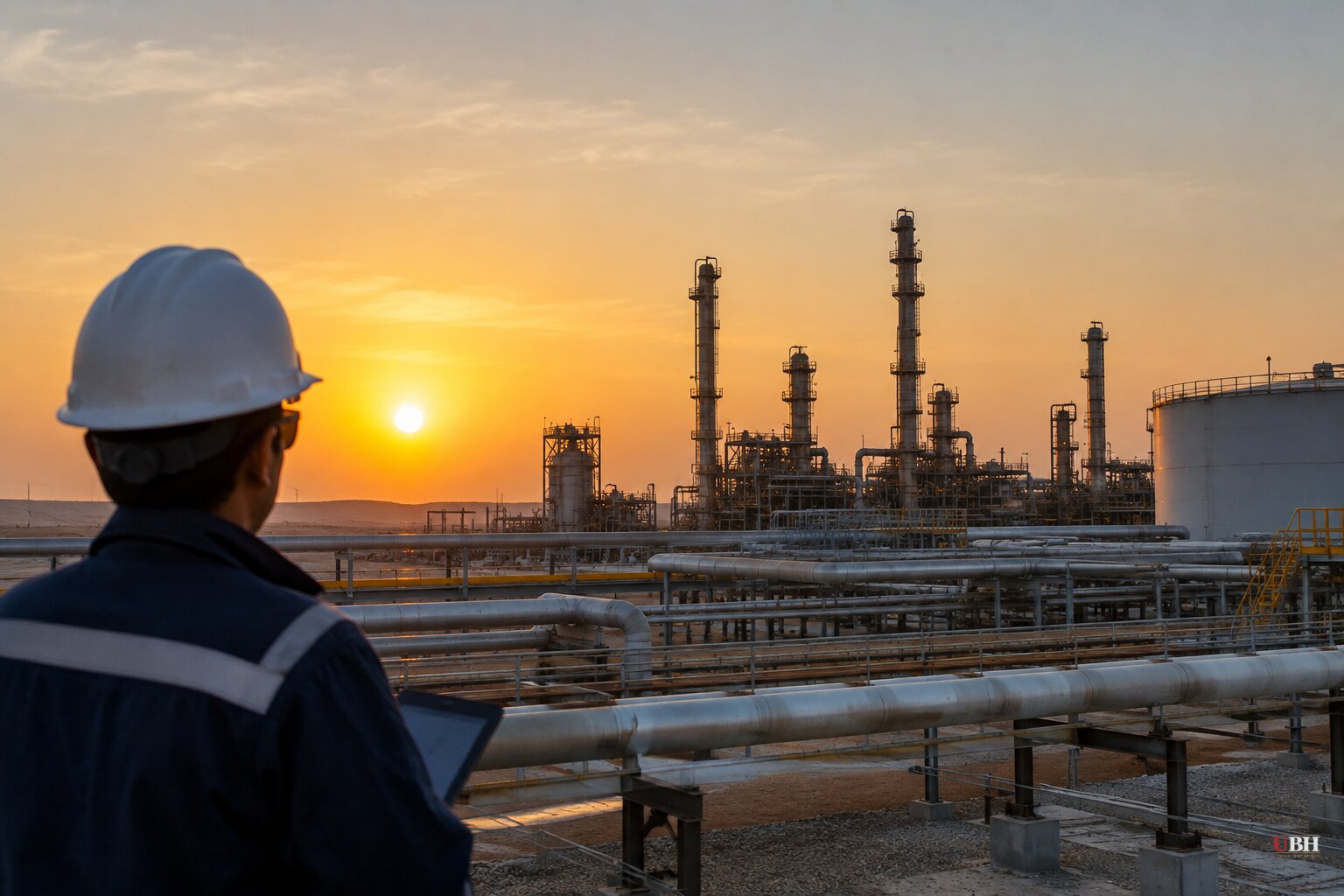
Saudi Arabia's economy shrank for a second straight quarter, and the damage is almost entirely in oil.
The General Authority for Statistics reported on Sunday, Nov. 1, that preliminary third-quarter GDP fell 3.8% from a year earlier. The second quarter was revised to a 4.7% decline from an initial 4.8%. Before that, the economy grew 3.0% in the first quarter.
Oil sinks, non-oil holds
Oil activities fell 20.4% year over year in Q3. That follows a 24.8% collapse in Q2. Non-oil activity grew 1.9%.
Government activities dropped 2.7% from a year earlier, after growing 0.9% in the second quarter.
On a quarter-on-quarter basis, the picture is less grim. The economy expanded 1.3% in Q3 after contracting 4.8% in Q2. Oil activity rebounded 5.7% from the prior quarter, following a 21.6% plunge. Non-oil activity rose 0.6%.
So the year-over-year figure is still deeply negative, but the quarterly numbers show output climbing back from the Q2 floor.
The war behind the numbers
The contraction tracks an eight-month U.S.-Iran conflict that has produced attacks on Gulf energy facilities and restricted shipping through the Strait of Hormuz. Saudi Arabia has partly worked around the choke point by sending crude through a pipeline from its eastern fields to a Red Sea export terminal.
That workaround was itself hit. Operations on the pipeline route were briefly shut down in September after a series of attacks, and that outage is reflected in the Q3 data. Saudi crude exports have since climbed to wartime highs, a recovery the third-quarter figures do not capture.
Brent crude has traded above $115 a barrel. Higher prices do not help a producer that cannot get as much oil out of the ground and onto ships.
October makes the outlook murkier
The quarter ended before the worst of the fighting with Yemen's Iran-backed Houthis. In October, Houthi missile and drone attacks disrupted flights at Riyadh's airport, forced changes to major investment events and interrupted activity in the capital's financial district. Remote learning in Riyadh was extended into early November.
Saudi aviation authorities said a separate attack on King Fahd International Airport in the eastern part of the country killed two people, a Saudi citizen and an Indian national living in the kingdom, and injured eight more. The Houthis reportedly claimed responsibility on Telegram, along with strikes on the Defense Ministry in Riyadh and an Aramco facility in Yanbu where a fire broke out. They provided no evidence of the ministry strike. An earlier suspected Houthi missile attack on King Khalid International Airport reportedly killed 14 people and closed the airport.
Those hits land on the part of the economy that was still growing. With oil already hobbled, non-oil business is where the pressure is moving.
What officials and the IMF say
The International Monetary Fund said the kingdom's financial reserves and alternative export infrastructure are helping cushion the blow, leaving it better positioned than several Gulf neighbors.
Saudi authorities had previously projected a 3.6% contraction for 2026 and raised their expected budget deficit to 4.9% of GDP. For a government that has spent years pushing to diversify a roughly $1.4 trillion economy beyond crude, a 1.9% non-oil growth rate is positive but modest against the size of the oil hole.
Washington's side of the oil equation
The war is also shaping U.S. energy policy. President Donald Trump invoked the Defense Production Act to accelerate domestic petroleum production, saying that without federal action U.S. defense capabilities would remain vulnerable to disruption. His order said industry cannot expand output quickly enough on its own because of "constrained financing, long lead times, permitting and infrastructure bottlenecks, and supply chain limitations." The Secretary of War was directed to use the emergency powers.
At a rally in Sioux City, Iowa, for Senate candidate Ashley Hinson, Trump said the U.S. naval blockade and maritime escorts had reopened Hormuz shipping lanes for non-Iranian oil. "More oil came out of the Hormuz Strait over the last week than at any time previous, including before the war," he said. He also said the blockade had cut off Iran's own exports, and that consumer oil prices would fall once the war ends. Those are Trump's claims; the Saudi statistics office has not commented on them.
Iran's Revolutionary Guard Corps has threatened to target U.S. bases if commercial ships keep transiting the strait.
What comes next
These are preliminary figures, and the statistics authority has revised prior quarters. The fourth-quarter data will be the first to reflect the October Houthi attacks on Riyadh's airport and financial district, and it will show whether the rebound in oil exports can outweigh the damage to non-oil activity. The government's 3.6% full-year contraction forecast is the benchmark that data will be measured against.
Sources used for this briefing
6 links from 5 independent newsrooms (syndicated copies of the same report count once)
These are the sources it draws on, linked so you can verify.


