
Unbiased headlines. Facts, not spin.
Unbiased Headlines is an independently owned news organization. We bring you the facts, not opinions, written fresh from 110+ named sources. Sources linked so you can verify it yourself.
 economy
Major Story (7/10)
Event date: October 29, 2026 ·
Canada to Table Budget 2026 on Thursday as PBO Projects $63.3 Billion Deficit and Tariffs Weigh on Growth
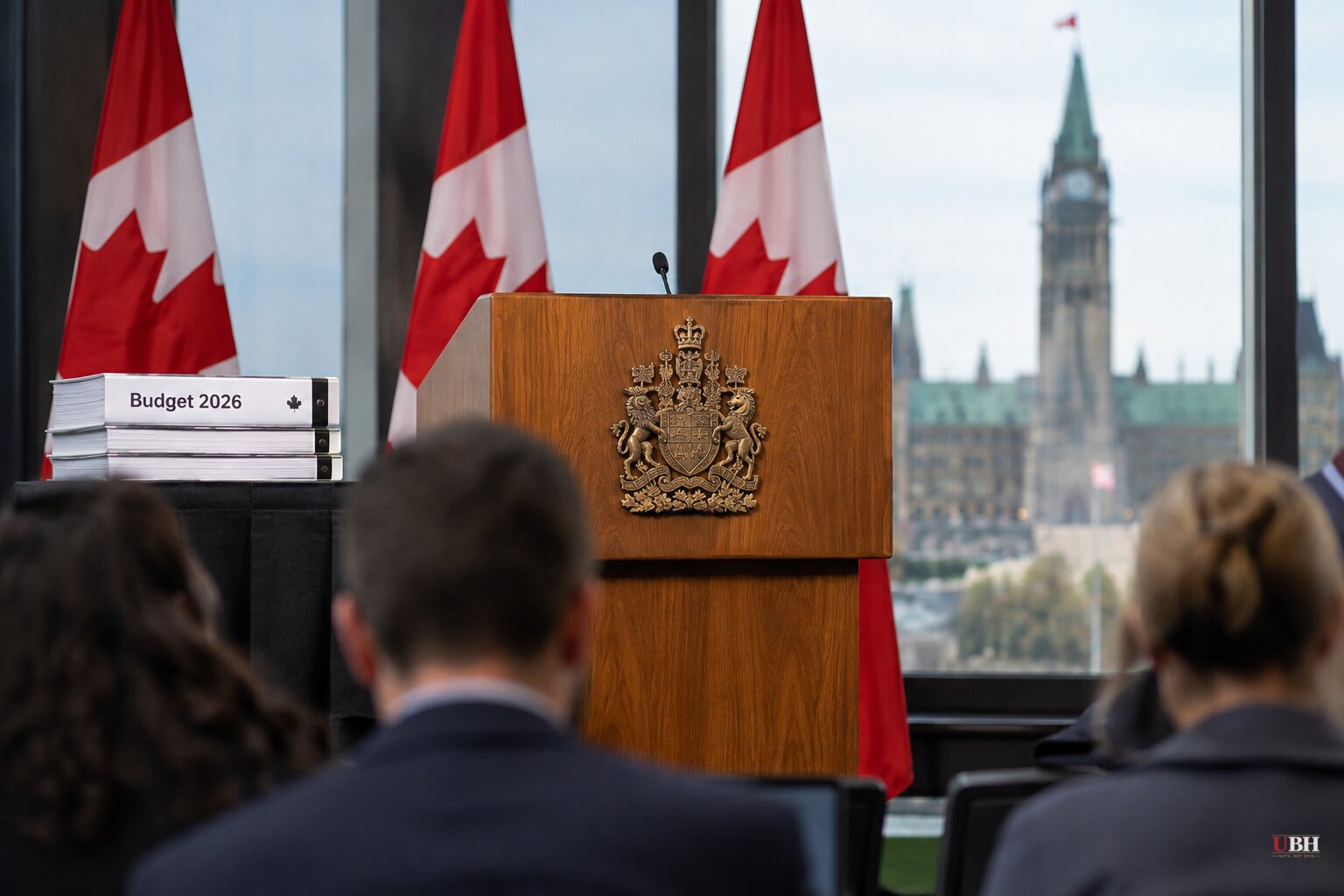
Canada's federal budget lands Thursday, Nov. 5, and it arrives into an economy that is slowing, a trade war that has no off-ramp, and a deficit forecast that keeps growing.
Champagne, the Minister of Finance and National Revenue, announced the date on Oct. 20. It is Carney's second budget, and it follows his move to a fall schedule in place of the traditional spring release. It falls two days after the U.S. midterm elections on Nov. 3.
What the government says is coming
A senior government official, who was not authorized to speak publicly, told CBC News the budget will include new affordability measures, business tax incentives and spending on infrastructure, defence and culture. The official described three pillars: "Investing in the people, the identity and the growth of Canada."
The budget is also expected to add detail to earlier announcements. That includes plans for private investment in Canada's four biggest airports, an update on the Canada Strong Fund (the national sovereign wealth fund Carney announced last April), and how the government will keep its promise to balance the operational budget a year early.
The Department of Finance said Budget 2026 will "unlock investment, move nation-building projects forward, create good jobs at home" and strengthen economic security. It pointed to existing steps such as grocery and fuel relief, home energy retrofits, cheaper new housing and a new Productivity Mega Deduction for business investment.
Champagne posted the budget's title on social media last week: "Masters of Our Destiny" in English, "Maîtres chez nous" in French. The phrase is a Quiet Revolution slogan from 1960s Quebec, and Carney often uses similar language about Canadian sovereignty.
The numbers it has to answer to
The Parliamentary Budget Officer has already cut its outlook. It now projects GDP growth of 0.9% this year and 1.5% in 2027, down from 1.1% and 1.6%.
The PBO projects a budgetary deficit of $63.3 billion for 2026-27, rising to $70.2 billion the following year.
The government's pledge concerns the operational budget, while the PBO figures are for the overall budgetary deficit. Those are different measures.
The labour market is soft. Canada lost 68,000 jobs in September and unemployment rose 0.1 percentage point to 6.5%, according to Statistics Canada. The Bank of Canada has raised its policy rate by a quarter point to 2.5%. Governor Tiff Macklem and Senior Deputy Governor Carolyn Rogers appeared before the House of Commons finance committee on Tuesday, Oct. 28, after that decision.
The tariff drag
Trade talks between Ottawa and Washington collapsed in August. The U.S. then imposed a fresh round of tariffs, and Canada answered with counter-tariffs. Global News reports that Trump put previously threatened 50% tariffs on Canadian goods in effect that month.
Carney has said he had his negotiators walk away because the deal on offer would have given the U.S. the power to control who Canada could trade with. That is his characterization of the terms.
The U.S. side has its own complaint. David Clement, North American affairs manager at the Consumer Choice Center, said the Trump administration's grievances over dairy access are "completely valid." He said Canada imposes "exorbitant tariffs" on chicken, turkey, eggs, cheese and milk. Clement also noted that differences between U.S. and European access to Canada's market stem from terms negotiated in separate trade agreements, including the USMCA.
The Bank of Canada's figures show where the damage is. Steel exports have fallen by roughly half since the tariffs took effect. Lumber exports were about 20% below 2024 levels earlier this year.
Steep U.S. tariffs remain in place on roughly $20 billion in Canadian goods, according to Fox News Digital's reporting.
Households are paying too. Consumer prices were 3% higher in August than a year earlier, with groceries up 2.8% and transportation up 7.5%, according to government data. The Bank of Canada found that goods hit by Canada's retaliatory tariffs, including groceries, household products, furniture, electronics and appliances, rose about 6% more than comparable untariffed products.
That is a cost Canada imposed on itself, alongside the one Washington imposed.
The week ahead
Statistics Canada will release September merchandise trade figures on Wednesday, Nov. 4. The October labour force survey follows on Friday, Nov. 6, one day after the budget.
The budget's growth and deficit assumptions will be read against those jobs numbers within hours of the document being tabled. A second straight month of losses would put the PBO's 0.9% growth forecast under immediate pressure.
Sources used for this briefing
7 links from 7 independent newsrooms (syndicated copies of the same report count once)
These are the sources it draws on, linked so you can verify.


