
Unbiased headlines. Facts, not spin.
Unbiased Headlines is an independently owned news organization. We bring you the facts, not opinions, written fresh from 110+ named sources. Sources linked so you can verify it yourself.
 economy
Notable (5/10)
Event date: October 26, 2026 ·
MTA Pulls Bus Fare Inspectors After Two Physical Confrontations as Nearly Half of Riders Skip the Fare
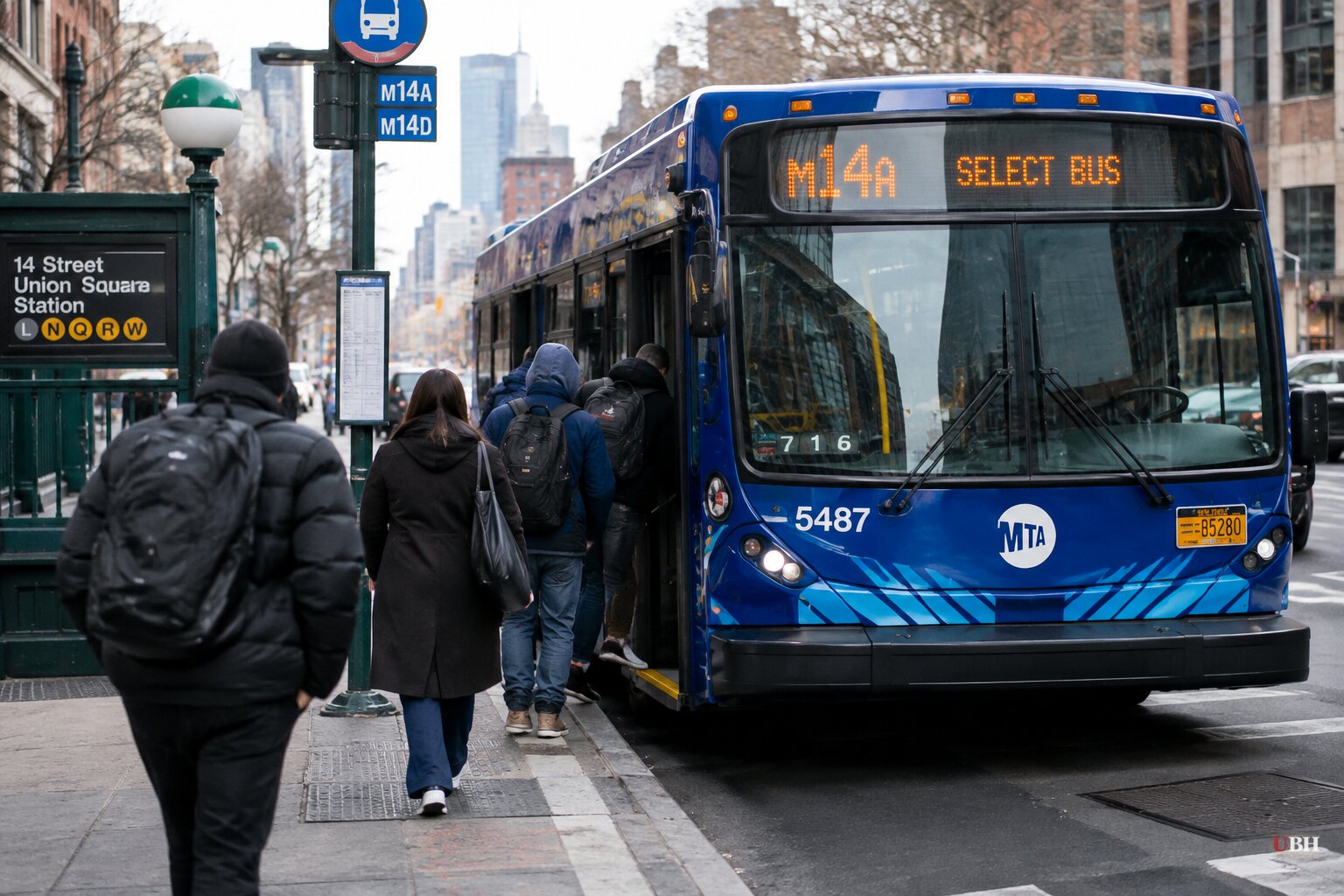
The MTA has taken its fare inspectors off city buses with nearly half of riders not paying and a long-term budget gap growing.
Chairman Janno Lieber ordered the temporary suspension of bus fare checks by the Evasion and Graffiti Lawlessness Eradication teams, known as EAGLE, last week. The order followed two incidents in which inspectors got physical with riders. New York City Transit President Demetrius Crichlow told the authority's board on Monday, Oct. 26, that the teams will come back. He gave no date.
Two incidents, one late report
The more recent confrontation happened Oct. 6 in Brownsville, Brooklyn. Surveillance footage shows fare checkers pushing Kyle Taylor, a Brooklyn school aide, against a bus shelter. He fell to the ground twice. Four checkers were removed from duty.
Taylor says he paid with a transfer. According to the MTA's account of the footage, he tried to push past the checkers as they inspected proof of payment.
The earlier incident was Aug. 6 on a Bx39 bus near White Plains Road and Gun Hill Road in the Bronx. A passenger became combative during a fare check and was escorted off. The passenger returned and allegedly threatened staff with a knife. Video shows the passenger and an EAGLE member falling from the bus's front door, then two more team members trying to pin the passenger down.
Lieber said he was not happy about the delay in reporting. "I was not happy that leadership of the MTA and New York City Transit didn't even hear about that episode until more than a week afterward," he said.
Crichlow said physical contact with customers is not Transit policy. "It can't be like this. We have to do better," he said. The MTA has reassigned the employees involved. EAGLE members are now doing graffiti investigations, train yard inspections and facility patrols.
The teams are unarmed and, under state law, have no peace officer status. They can check proof of payment and issue tickets. Many members are former police officers.
The money
The suspension lands on a revenue line that was already bleeding. MTA data put the share of bus riders who pay at slightly more than half. A state Comptroller's estimate puts evasion at 49% in the second quarter, up from 45% a year earlier. The nonpartisan Citizens Budget Commission put the cost of bus fare evasion at $568 million in 2024.
The comptroller's office estimates that cutting evasion by 10% could bring in as much as $150 million a year. The 350-member EAGLE force is the tool the agency had been using toward that goal. A New York Post column says collection rose 7% where the teams were deployed.
The Post column also argues the retreat makes buses de-facto free and could hurt the MTA's ability to sell bonds backed by fare revenue. It says NYPD spokespeople told the paper there are "no plans" to step in and that district attorneys have stopped prosecuting fare-beating. The MTA has not confirmed any of that.
The broader budget picture comes from State Comptroller Thomas DiNapoli's office:
- A projected deficit of $295 million next year, rising to $507 million in 2028, $707 million in 2029 and nearly $897 million in 2030.
- Revenue growth averaging 2.1% a year from 2027 through 2030, against spending growth of 3.2%.
- Overtime of $821 million through August, $141 million over projections. Full-year overtime could end $225 million above the $993 million budget.
- Debt rising from $45.3 billion in 2025 to $88.9 billion by 2033.
The gaps are projected even with fare and toll increases planned for March 2027 and March 2029. The standard fare went from $2.90 to $3 in January. MTA Finance Committee Chairman Neal Zuckerman said the widening gap between income and expenses is not a sustainable business model.
The agency is balancing 2026 with help that won't last. Payroll mobility tax revenue is projected to run $109 million above estimates. Albany approved an additional $542 million in tax allocations. Federal COVID-era reimbursements reached $747 million, $147 million above budget, and the comptroller's report notes those funds are not permanent. Congestion pricing has brought in about $550 million through September, but that money is dedicated to capital projects, not operations.
What riders' advocates want
The sides in this fight do not agree on the fix. Danny Pearlstein, policy and communications director of the Riders Alliance, said the MTA "made the right decision last week when it pulled the EAGLE teams" and that retraining is unlikely to help riders or fix the bus. He called on the mayor and governor to "find new, reliable sources of revenue to replace the dwindling bus fare."
Organizers writing in the New York Daily News go further. They say the teams are frightening immigrant riders, whom they describe as a majority of bus riders, and "must end now." They point to Mayor Zohran Mamdani's campaign promise of fast and free buses, and say Gov. Kathy Hochul has shown the state can back the system financially.
Others want the teams kept, with changes. Rev. Kevin McCall, who is advocating for Taylor, supports the program's return. He wants inspectors trained to deal with hostile riders and says they should not be aggressive. David Sarni, a retired NYPD detective and John Jay College professor, says inspectors need more authority, including peace officer status and arrest power, as Taxi and Limousine Commission inspectors have. Without it, he said, civilians are being asked to do something extremely hazardous.
Crichlow said the MTA is sticking with unarmed inspectors. He cited the recommendation of a 2023 MTA panel on fare evasion.
What comes next
The MTA is reviewing training and investigating both incidents. The return of the teams depends on those reviews. The authority has set no date.
A free-bus plan would put the cost on state and city budgets, and no funding source has been announced. Mamdani and Hochul have not announced one in the material from this week. Meanwhile, the next scheduled fare increase is March 2027.
Sources used for this briefing
6 links from 5 independent newsrooms (syndicated copies of the same report count once)
These are the sources it draws on, linked so you can verify.


