
Unbiased headlines. Facts, not spin.
Unbiased Headlines is an independently owned news organization. We bring you the facts, not opinions, written fresh from 110+ named sources. Sources linked so you can verify it yourself.
 economy
Major Story (7/10)
Event date: November 1, 2026 ·
South Korea's October Exports Rose 93.7% to $115.3 Billion on Chip Sales, Days After the Tech-Stock Selloff
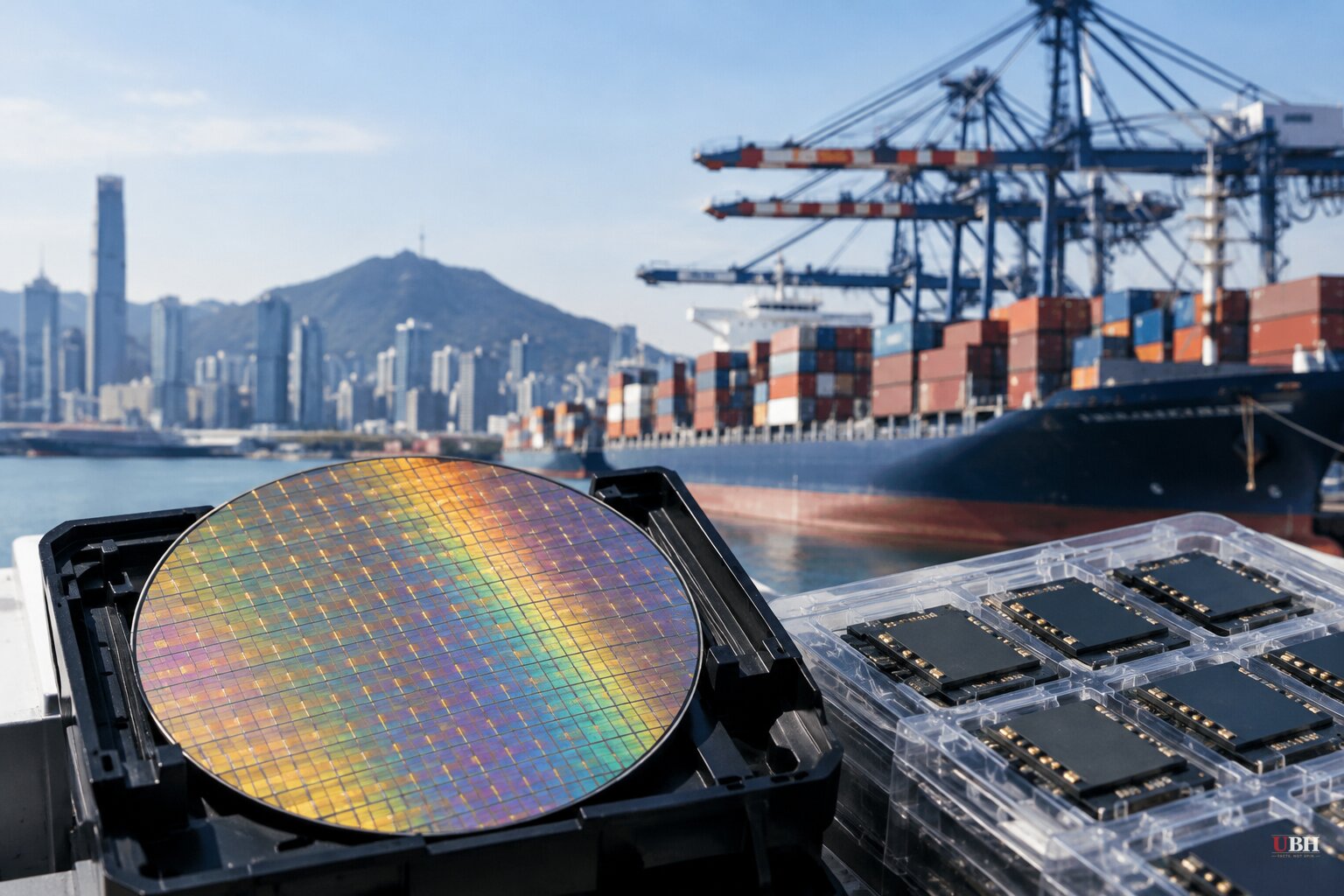
Since the Oct. 29-30 selloff in tech stocks put the return on AI spending in question, one of the biggest beneficiaries of that spending has reported its latest numbers.
South Korea's Ministry of Trade, Industry and Resources said Sunday, Nov. 1, that October exports hit $115.28 billion, up 93.7% from a year earlier. That is the second-highest monthly total on record, behind September's $121.1 billion.
Imports rose 36% to $72.78 billion. The trade surplus was $42.5 billion.
Chips are doing the heavy lifting
Semiconductor exports jumped 259.4% to $56.44 billion. Memory chips alone rose 360.5% to $50.14 billion.
Chips made up 49% of all Korean exports in October. That share stayed in the 30% range from January through April and hit 49.8% in September.
Computer exports, tied to AI servers and server solid-state drives, rose 496.6% to $5.85 billion.
The ministry attributes the surge to strong global demand and continued investment by major technology companies in AI infrastructure. Shipments to the United States rose 185.8% to $24.9 billion. Shipments to China rose 133.6% to $26.98 billion.
Exports of everything other than chips rose 34%, and 18 of Korea's 20 major export categories posted gains. Automobile exports reached a record $6.55 billion for an October.
Adjusted for working-day differences, October exports rose 76.1%. The Chuseok holiday fell in September this year and in October last year, which inflates the unadjusted comparison.
The $1 trillion mark
Exports from January through October totaled about $930 billion. That leaves roughly $70 billion to reach $1 trillion for the year. The ministry projects Korea could cross the line as early as November.
Only the United States, Germany and China have done it before. Bank of Korea Governor Shin Hyun Song has also said the country is on course to pass the milestone this year.
Where the money goes
President Lee Jae Myung used the moment in a Monday, Nov. 2, address to parliament seeking approval of next year's budget. He said annual exports of $1 trillion are now within reach.
He also warned that the gains are lopsided. "We must make a great transition from 'growth for the few,' in which opportunities and gains are concentrated among certain regions, classes and a small number of companies, to 'growth for all,'" Lee said.
The proposed budget totals 820.9 trillion won, a record 12.8% increase. Lee said the government would put 21.3 trillion won (US$15.97 billion), nearly twice this year's amount, into AI and three megaprojects: semiconductors, physical AI and AI data centers.
It also includes a 162.3 trillion won Future Response Fund, financed largely by extra tax revenue from the chip boom. Lee said the fund would support growth industries, young people, regional development and education, and act as a buffer against future revenue shortfalls.
The doubt that remains
The export figures arrived after a rough stretch for the AI trade. Investors have grown wary of whether the massive spending on data centers and other AI infrastructure will generate sufficient returns.
Tech Times argued the Oct. 29-30 selloff was not a verdict on AI demand but on whether the capital needed to serve it can earn returns that justify current valuations. It pointed to Microsoft's guidance of fourth-quarter capital expenditure above $50 billion and its $25 billion bond sale.
On Friday, Oct. 30, the spillover hit Asia. A Bloomberg gauge of regional chipmakers fell as much as 4.8%. The Kospi dropped 3.5%, with SK Hynix down 7% and Samsung Electronics down 3%.
That followed strong results earlier in the week. SK Hynix reported a seven-fold jump in quarterly profit. Samsung said it plans to raise capital spending by more than 60% this year because demand for advanced chips outstrips supply.
Industry Minister Kim Jung-kwan did not dwell on the boom. He cited a "global trade environment" that remains uncertain, with small and medium-sized enterprises struggling amid rising protectionism, shifting supply chains and Middle East tensions. He said the government will step up trade cooperation with major partners and work to remove export barriers.
What comes next
The numbers cut two ways. Korean exporters are being paid now for chips that Big Tech is buying now. But with half of exports in one product category, the country's trade and tax revenue depend on whether American and other hyperscalers keep spending at this pace.
The near-term test is monetary. Korean inflation data is due Tuesday, Nov. 3. The Bank of Korea held rates in October after hikes in July and August, and its next decision is Nov. 26. The strength of the export data adds to the case for another increase.
The ministry's November trade report, due in early December, will show whether Korea crossed $1 trillion and whether the chip surge held through the selloff.
Sources used for this briefing
7 links from 7 independent newsrooms (syndicated copies of the same report count once)
These are the sources it draws on, linked so you can verify.


