
Unbiased headlines. Facts, not spin.
Unbiased Headlines is an independently owned news organization. We bring you the facts, not opinions, written fresh from 110+ named sources. Sources linked so you can verify it yourself.
 economy
Major Story (8/10)
Event date: November 1, 2026 ·
Inflation Hits 3.7%, Outpacing 3% Wage Growth, as Voters Head to Midterms
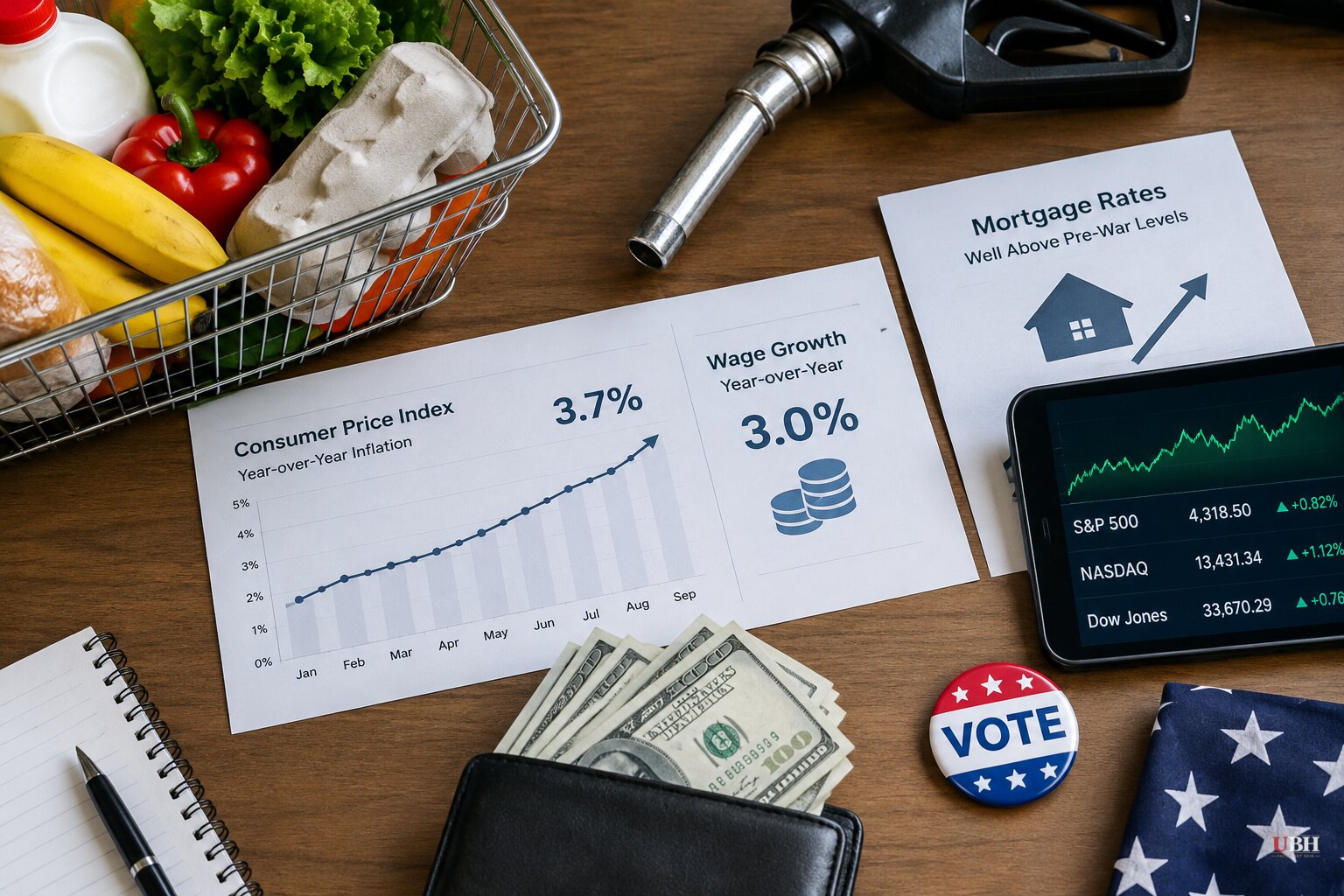
Americans vote Tuesday, Nov. 3, with a split-screen economy. The big macro numbers are strong. The household numbers are not.
The Bureau of Labor Statistics reported that consumer prices in September were 3.7% higher than a year earlier, up 0.6% in the month alone. In February, before the war with Iran began, the annual rate was about 2.4%. Wages rose just 3% over the same year, so for roughly six months paychecks have lost ground to prices.
A Pew Research Center survey taken Sept. 28 to Oct. 4 found 84% of registered voters called the economy very important to their vote, more than any other issue.
Fuel is doing the damage
Energy is the main driver. Energy prices rose 5.2% in September, and the gasoline index jumped 9.1% for the month, according to the September CPI. Gasoline is up 34.2% over the year.
AAA put the regular gas average at $2.98 right before the war and $3.12 when Trump started his second term. On Oct. 12 it was $4.33, against $3.06 a year earlier. The peak so far was about $4.50 in mid-May.
Diesel is worse. It averaged $3.75 when the war began and is now above $6, an all-time high. Diesel moves trucks, trains and tractors, so it feeds into the cost of nearly everything else.
Brent crude traded above $100 a barrel on Oct. 14. The war is approaching its ninth month, and attacks on shipping in the Strait of Hormuz have kept global supply tight.
Core inflation, which strips out food and energy, was 2.6% in September, close to where it stood a year ago. Grocery prices slipped 0.1% in September and are up 1.8% year over year. Electricity is up 4.4% and piped natural gas 5%. The shelter index rose 3.2%.
Housing, jobs and the mood gap
Freddie Mac data show the 30-year mortgage rate dipped below 6% just before the war. It now sits above 7%, and one chart put it at 7.40%. The National Association of Realtors says the average single-family home cost $422,700 in September, and home prices are up 57% since January 2020.
Employers added only 29,000 jobs in September.
Yet the broader economy is not in recession. GDP grew 3.8% from July through September. RBC economists Mike Reid, Carrie Freestone and Imri Haggin wrote that spending is robust, layoffs remain very low and unemployment has been stable for a year. The S&P 500 is up more than 26% in Trump's second term. The Federal Reserve says homeowners hold more than $35 trillion in real estate equity, though most of that is paper wealth.
People are not feeling it. The University of Michigan consumer sentiment index is lower than during the early-1980s recessions or the 2008-09 financial crisis. Labor economist Kathryn Anne Edwards told CBC that 74% of Americans now say the government is doing a bad job managing the economy. Only three times since the 1970s has even a majority said that. "It's so completely unprecedented," she said.
An NBC News Decision Desk poll found the economy is the top issue for voters and that a majority are deeply frustrated with Trump on it.
Who gets the blame
Trump campaigned on lowering costs. Inflation is rising, and he is out on the trail for GOP candidates anyway. That is a record he has to answer for.
Republicans and conservative analysts make a different argument. They point to the war as the cause of the price spike and to Biden's record as the baseline. Inflation peaked at 9.1% in June 2022 under Biden and was 1.4% when he took office. Republicans in Congress blamed his energy policies, including the canceled Keystone XL permit and the pause on new federal oil and gas leases. Former Democratic Treasury Secretary Larry Summers also pointed to the $1.9 trillion American Rescue Plan as an inflation driver.
The gas price record cuts both ways. The national average hit an all-time high of $5.02 in 2022, and it did not drop below $3 until late 2025 under Trump.
Economists cited by CBC blame tariffs as well as the war for the current mood.
The pain also shows up outside the macro data. In Lorain County, Ohio, county workers have been on strike since February 2026. Striker Gina Jones said family health coverage that cost $35 a month will cost $600 a month in January. Deputy director Daniel Petticord said management "recognizes the important efforts" of staff while "maintaining fiscal responsibility," and blamed the union for leaving negotiations. Polls show Democrat Sherrod Brown with a slight lead over Republican Sen. Jon Husted in that state's Senate race.
What decides the next number
Headline inflation depends largely on oil. If crude falls, the annual rate could come down quickly, since core inflation is only 2.6%. If it stays above $100, fuel costs tend to spread into shipping and other prices. Lower inflation would still mean prices rising more slowly, not falling.
Voters settle the political question Tuesday. Brent crude and the Strait of Hormuz will settle the price question afterward.
Sources used for this briefing
7 links from 7 independent newsrooms (syndicated copies of the same report count once)
These are the sources it draws on, linked so you can verify.


