
Unbiased headlines. Facts, not spin.
Every story is an unbiased news briefing written from 110+ sources across the spectrum — sources linked so you can verify it yourself.
 energy
Major Story (7/10)
July 9, 2026 at 10:46 PM
energy
Major Story (7/10)
July 9, 2026 at 10:46 PM
U.S., Japan, and South Korea Sign SMR Export Pact at NATO Summit While Florida Startup 3D-Prints a Thorium Reactor Module
Since this outlet's prior coverage of Europe's power grid financing crisis and Pentagon drone-defense spending, the nuclear competition between Western allies and Russia-China has moved on two fronts simultaneously: government-level export diplomacy and early-stage reactor fabrication technology.
The Trilateral SMR Pact
On the sidelines of the NATO Summit, the United States, Japan, and South Korea signed a trilateral Memorandum of Cooperation to accelerate small modular reactor deployments in partner countries, with an initial focus on the Indo-Pacific, according to ZeroHedge's reporting citing the U.S. State Department.
The State Department's own framing is direct: "The MOC advances our mutual security interests and paves the way for partner countries to meet their energy security needs."
The explicit goal is countering Russian and Chinese nuclear technology exports, which have been aggressively expanding into Southeast Asia, the Middle East, and Africa.
The U.S. is backing the agreement with over $10 million in new funding to the State Department's Foundational Infrastructure for Responsible Use of Small Modular Reactor Technology program, known as FIRST. Separately, an industry deal was announced between GE Vernova, its partner Hitachi, Samsung C&T, and SGE to deploy the BWRX-300 small modular reactor in Europe.
This builds on executive orders signed in 2025 that directed the State Department to renew or initiate 20 civil nuclear cooperation agreements — the "123 Agreements" that govern peaceful nuclear exports. The goal: lock in political ties with allies by helping them build domestic energy independence.
The Fuel Chain Is the Hidden Story
SMR hardware is only part of the equation. Reactors need fuel, and the fuel supply chain is where the real chokepoint lives.
According to OilPrice.com, Russia currently holds approximately 44 percent of global uranium enrichment capacity. The Carnegie Endowment for International Peace put it plainly: "The nuclear energy supply chain sits atop the clean technology risk pyramid."
More allied SMR deployments eventually require more allied fuel supply. That is where companies like Centrus Energy become relevant. In 2025, Centrus expanded its agreement with Korea Hydro & Nuclear Power and POSCO International, including higher low-enriched uranium supply volumes tied to new enrichment capacity at its American facility.
This is the architecture Washington is building: allied reactors, allied fuel, allied enrichment. The geopolitical logic is sound. Whether the industrial base can execute at scale is a different question.
AMPERA's 3D-Printed Thorium Module
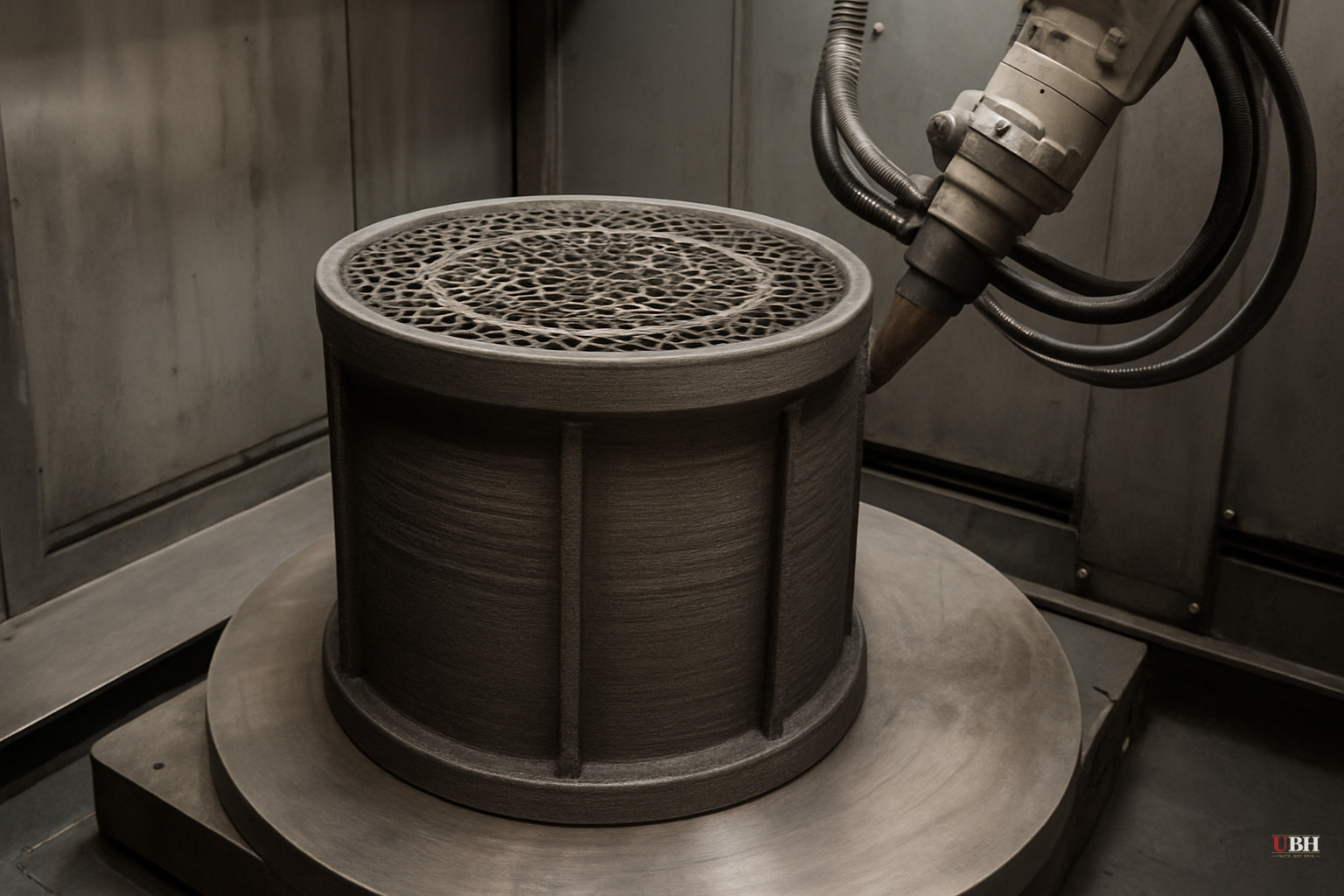
On the private-sector side, Florida-based AMPERA announced it successfully fabricated a nuclear reactor module using additive manufacturing — a 3D printer — which will serve as the foundation for what the company describes as the first thorium-powered nuclear system that is entirely factory-built, subcritical, and solid-state.
Brian Matthews, AMPERA's founder and CEO, said the module "sets the foundation for factory-built, mass-produced nuclear energy" and that the manufacturing approach demonstrates "a clear commercial path for new nuclear technology coming to market in an accelerated manner," as quoted by Interesting Engineering and reported by OilPrice.com.
Thorium has real technical advantages over uranium. It limits its own reaction rate, reducing meltdown risk. It is far less weaponizable. Its radioactive half-life after use is shorter. And crucially, it is far more geographically abundant than uranium, which means supply chains would not depend on Russia or other volatile actors.
AMPERA says the physical design "achieves passive safety operational profiles by relying on subcritical physics variables and inherent material limitations" — meaning it does not require active safety systems, electronic trip switches, or human operator intervention during a malfunction.
The Strongest Objection
Skeptics have a fair point: 3D-printed reactor modules and trilateral memoranda are both very early-stage commitments. A memo of cooperation is not a reactor in the ground. AMPERA has fabricated a module, not operated one. The gap between a factory-built prototype and a licensed, operating power plant running on thorium is enormous, and the Nuclear Regulatory Commission licensing timeline alone could stretch years or decades.
China has been developing molten salt thorium reactor technology through the Shanghai Institute of Applied Physics and achieved a significant milestone with its experimental reactor in 2023. The U.S. is not ahead on thorium — it is trying to catch up, or at minimum, prevent falling further behind.
That concern does not invalidate the Western push. It explains why the urgency is real.
What Comes Next
The trilateral MOC has no binding deployment timeline published in available sources. The $10 million FIRST Program funding is committed, but Indo-Pacific reactor deployments depend on individual partner-country agreements, regulatory frameworks, and financing structures that do not yet exist in most target nations.
For AMPERA, the unresolved question is regulatory. A factory-built, solid-state thorium system would require a licensing pathway that the NRC has not yet established for this reactor class. Whether the commission's existing advanced reactor framework can absorb a subcritical thorium design — or whether AMPERA will need an entirely new regulatory track — is an open question that will determine whether "accelerated" commercialization is actually possible.
Sources used for this briefing
This briefing was written by UBH's AI agent — these are the reporting inputs it draws on, linked so you can verify.


