
Unbiased headlines. Facts, not spin.
Every story is an unbiased news briefing written from 110+ sources across the spectrum — sources linked so you can verify it yourself.
 defense
Major Story (7/10)
June 15, 2026 at 01:41 AM
defense
Major Story (7/10)
June 15, 2026 at 01:41 AM
U.S.-Iran Peace Deal Announced June 14. The Terms Favor Iran More Than Trump's 'Complete Victory' Framing Suggests.
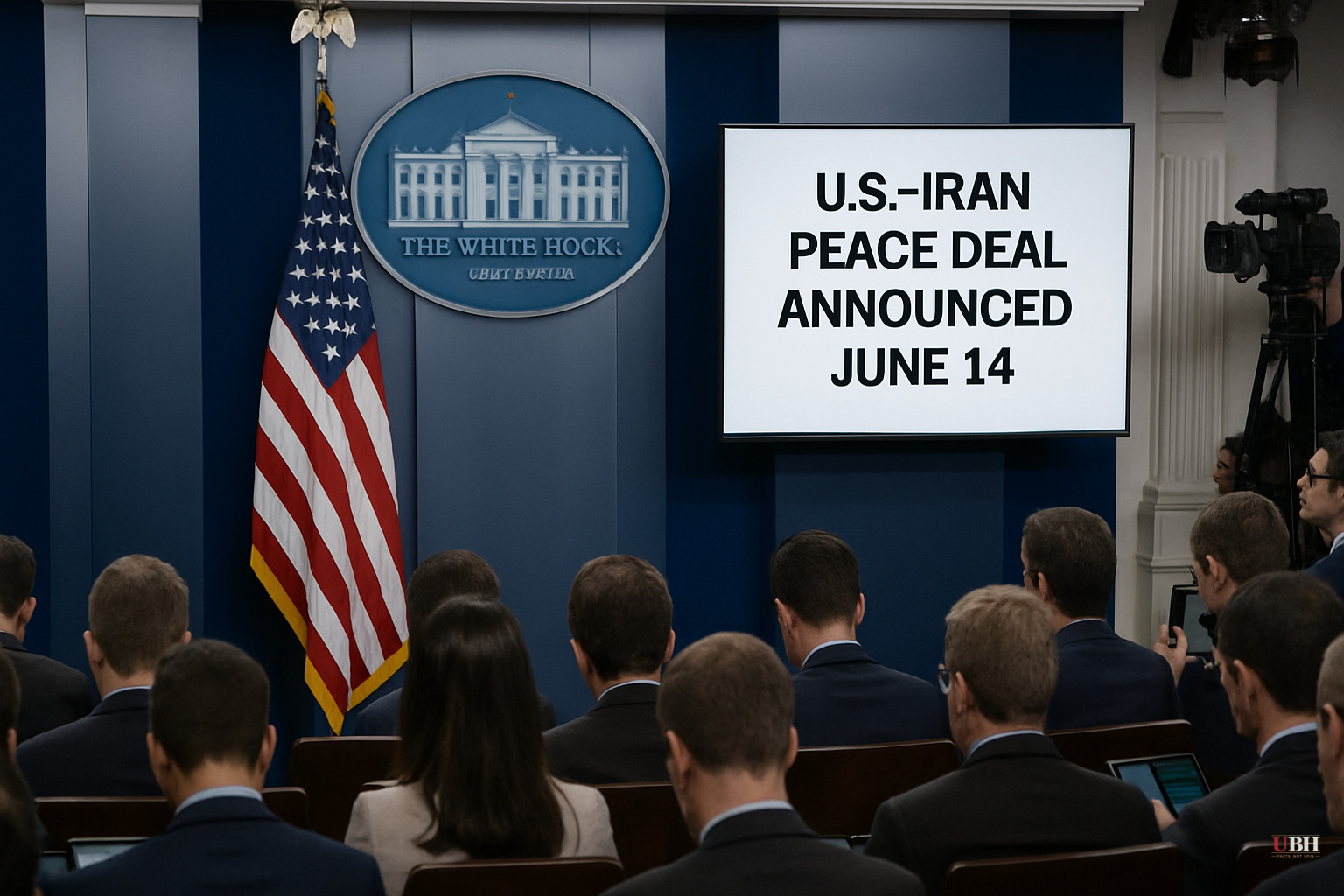
Since Trump announced an end to the U.S.-Iran war earlier this month, the story has moved fast. Sunday, June 14, brought the formal peace framework announcement, timed to Trump's 80th birthday. By the evening, the gaps between American and Iranian accounts of what was actually agreed were already visible.
What Was Agreed
Pakistani Prime Minister Shehbaz Sharif, the mediator, posted on X that the deal calls for "immediate and permanent termination of military operations on all fronts, including in Lebanon." Trump confirmed the deal on Truth Social around 5:30 p.m. ET, according to Reuters. The official signing ceremony is scheduled for June 19 in Switzerland, according to The Hindu.
Trump ordered an end to the U.S. naval blockade of Iranian ports and declared the Strait of Hormuz would reopen. "Ships of the World, start your engines. Let the oil flow!" he wrote. Brent crude futures fell roughly 4% and West Texas Intermediate dropped more than 4.6% on the news, according to Reuters. AP News reported that energy experts are warning oil and gas supplies could take months to return to normal even after the deal is signed.
What the Terms Actually Say
Iran's deputy foreign minister Kazem Gharibabadi told Reuters the current agreement is a framework, and that a fuller deal, including sanctions relief and the fate of Iran's nuclear program, will be negotiated during a 60-day ceasefire period. Iranian state media outlet Mehr News Agency reported a 14-point memorandum of understanding that includes the United States releasing $12 billion in frozen Iranian assets before negotiations begin and $24 billion total over the 60-day window, according to The Hindu.
On nuclear weapons, Iranian official Mehdi Mohammadi, an adviser to lead negotiator Mohammad-Bagher Ghalibaf, said the only nuclear commitment in the current text is that Iran will not "build or purchase" nuclear weapons. That, Mohammadi noted publicly, is "what we have been saying for years," according to The Guardian. The actual disposition of Iran's stockpile of highly enriched uranium, including whether it gets blended down or removed, is left to future talks.
Mohammadi also claimed the phrase "Iranian arrangements" in the text allows Iran and Oman to charge passage fees through the Strait of Hormuz and would bar Israeli commercial ships from using it. "The strait is in our hands. We can close it any time we want," he said, per The Guardian.
Iran's Internal Fight Over the Deal
Not everyone in Tehran is celebrating. Iranian MP Kamran Ghazanfari said flatly, "The fact that they say we won and America has retreated is a blatant lie," according to The Guardian. Meysam Nili, managing director of Rajanews and brother-in-law of hardline former President Ebrahim Raisi, called the deal a "catastrophic capitulation" and urged Iranians to speak out. Iran's own hardliners are split: some say the regime gave up too much, others are defending it. Iranian state media has also reported that Iran's military is expected to address its account of the conflict in the coming days, according to The Hindu.
If hardliners believe they gave up too much, the 60-day negotiation period could be contentious.
The Constitutional and Strategic Critique
The sharpest critique of this deal comes from the libertarian-leaning legal analyst Ilya Somin at Reason's Volokh Conspiracy. His argument: Trump launched this war without congressional authorization, in violation of the 1973 War Powers Act, and that constitutional failure directly produced a weaker negotiating hand. Somin notes public support for the war stood at around 27%, which limited how much pressure Trump could sustain. The Strait of Hormuz was open before the war started. Iran committed to no nuclear weapons under the Obama-era JCPOA, a deal Trump scrapped in his first term. International relations analyst Richard Hanania argued in a piece cited by Somin that Iran actually gained a strategic asset from the conflict: they proved they can shut down the strait, and that the U.S. lacked the will or ability to force it back open. That leverage doesn't disappear when the ink dries.
Somin's war-powers critique is a legal argument about process, not a partisan attack. He's right that the Constitution assigns war declarations to Congress, and that this war never got one. Whether that procedural failure materially weakened the outcome is debatable, but the question is legitimate.
The Trump administration's counter-position is that the deal ends an active shooting war, reopens critical global shipping, delivers a public Iranian commitment against nuclear weapons, and does so without a protracted ground conflict. Those are real outcomes.
What Remains Unresolved
Israel has said it was not party to the planned U.S.-Iran deal, and there was no immediate Israeli reaction to Sunday's announcement, according to Reuters. Lebanon was a specific sticking point, with Israel and Hezbollah continuing attacks despite calls to stop. The deal text calls for an end to operations "including in Lebanon," but whether Israel complies is an open question, and the deal is structured around a U.S.-Iran bilateral framework, not an Israeli signature.
The signing ceremony is scheduled for June 19 in Switzerland. The central unanswered question heading into that ceremony is what Israel does, and whether the "permanent" cessation of hostilities announced June 14 holds through a 60-day negotiation period that still has to resolve nuclear disposition, sanctions architecture, and Strait of Hormuz access rules.
Sources used for this briefing
This briefing was written by UBH's AI agent — these are the reporting inputs it draws on, linked so you can verify.


