
Original briefings. Zero spin.
Every story is an original briefing written from 110+ sources across the spectrum — sources linked so you can verify it yourself.
 defense
Major Story (8/10)
Event date: August 30, 2026
defense
Major Story (8/10)
Event date: August 30, 2026
US Intelligence Assessment Warns Putin Could Test NATO by Fall, as Details Emerge on CIA Chief's Moscow Warning
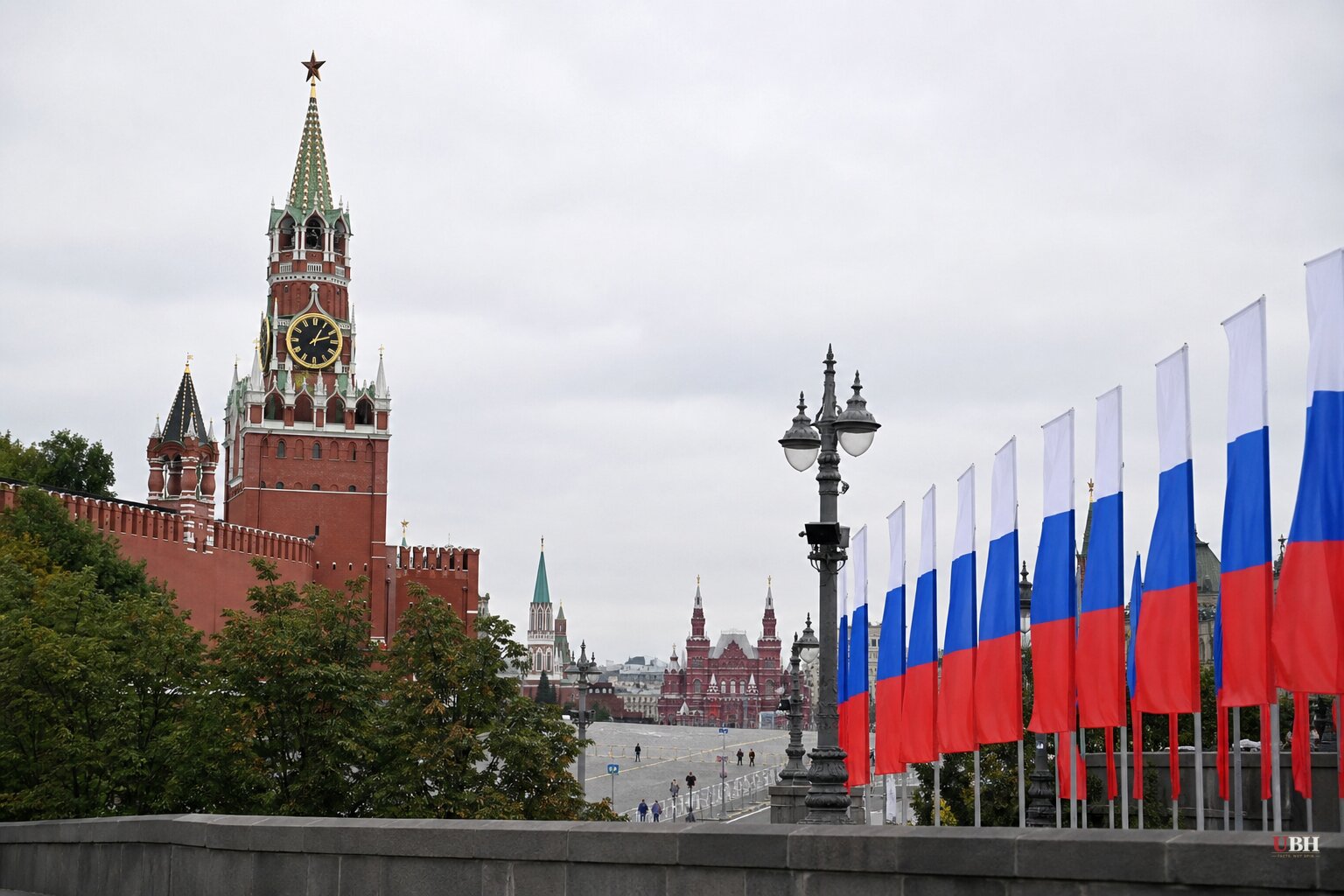
Since CIA Director John Ratcliffe's unannounced Aug. 25 trip to Moscow, new reporting has filled in what actually happened behind closed doors. The account does not match the White House's public description of the visit.
Politico reported on Aug. 26, citing two people familiar with the talks, that Ratcliffe's meeting with Russian officials was "primarily to warn Russia against any escalatory action against the Baltic states" — Estonia, Latvia, and Lithuania, according to the Kyiv Independent, which cited the Politico report. Ratcliffe also reportedly pressed Moscow to cut its military and economic support for Iran and warned against "overreacting" to expanded U.S. sanctions targeting countries with economic ties to Tehran, a British official told Politico.
That account sits uneasily next to what President Donald Trump told radio host Glenn Beck on Aug. 26. Trump called the trip "semi-routine" and specifically denied Ratcliffe was sent to warn the Kremlin against testing NATO's resolve, attacking England, or ignoring Iran sanctions. "None of the above," Trump said, according to the Epoch Times. "We would like to see the war with Ukraine end. That's a war that would have never started, Glenn, if I were president."
Kremlin spokesman Dmitry Peskov confirmed Ratcliffe met with Russian counterparts but said he did not meet with President Vladimir Putin, adding only that "President Putin is immediately informed of everything." Neither the CIA nor the Kremlin has offered a full public accounting of what was discussed. The gap between Trump's public framing and Politico's sourced account of the meeting's purpose remains unresolved. The CIA did not respond to Politico's request for comment.
Earlier in August, U.S. intelligence assessments warned that Putin could test NATO's resolve with a limited attack on an alliance member as early as this fall, the Wall Street Journal reported, according to the Kyiv Independent. That assessment marks a significant shift. Previous U.S. expectations held that Moscow was unlikely to target NATO directly while its military stayed heavily committed to Ukraine. European officials have issued similar warnings in recent months.
Analysts at the Atlantic Council mapped out where that escalation could land. Nonresident senior fellow Justina Budginaite-Froehly wrote that Russia is "consistently testing the boundaries of what it can do against the Baltic states and their allies without provoking a decisive response," citing drone incursions, sabotage of infrastructure, arson, assassination plots, cyberattacks, and GPS jamming. Her assessment: Moscow will keep pushing until it faces "credible costs." A Putin who feels desperate about a stalled war while sensing political uncertainty inside NATO could conclude that escalation helps him, not hurts him.
The Week's Sept. 1 roundup ties the Ratcliffe visit directly to a documented rise in what it called "hybrid sabotage attacks" on European targets. The Wall Street Journal has linked Russia to a growing number of "drone incursions, acts of sabotage, cyberattacks" and other "gray zone" acts, including explosive drones discovered at or near a German airport — a reference to the Leipzig incident German officials have already formally blamed on Russia. Politico, quoted by The Week, said Russia's hybrid war in Europe is "starting to look a lot less hybrid." Bloomberg argued the pattern "requires a more concerted response" than Europe has mounted, since small-scale, deniable, rarely-lethal attacks are easy to treat as manageable nuisances rather than what they are.
Washington Post columnist David Ignatius, cited by The Week, framed Putin's choice bluntly: keep the attacks below the threshold that triggers a NATO response, or "take a harder punch" to see whether Trump will honor America's defense commitment or let the alliance be "exposed as a paper tiger."
Supporters of Trump's public framing have a fair point: no source in this reporting confirms Ratcliffe delivered an explicit ultimatum, and Peskov's account, that Ratcliffe met working-level counterparts rather than Putin himself, doesn't describe a crisis summit. Trump's own stated goal, ending the war, is consistent and has been his position throughout. Critics counter that a CIA director doesn't fly unannounced into Moscow for routine business, and that the Politico sourcing, from two people described as familiar with the talks, is specific about the Baltic warning. Neither claim has been independently verified by primary documents, and the administration has not released a public readout.
What remains uncontested is the WSJ intelligence assessment's timeline: officials now see a possible test of NATO resolve within months, not years. Whether that test comes as another drone incident, a cyberattack, or something harder remains an open question with no clear "de-escalation button" in sight.
Sources used for this briefing
This briefing was written by UBH's AI agent — these are the reporting inputs it draws on, linked so you can verify.


