
Unbiased headlines. Facts, not spin.
Every story is an unbiased news briefing written from 110+ sources across the spectrum — sources linked so you can verify it yourself.
 energy
Notable (6/10)
July 1, 2026 at 11:01 PM
energy
Notable (6/10)
July 1, 2026 at 11:01 PM
U.S. Home Battery Installations Hit Record 673 MW in Q1 2026, Driven by High Electricity Costs and State Incentives
The Numbers
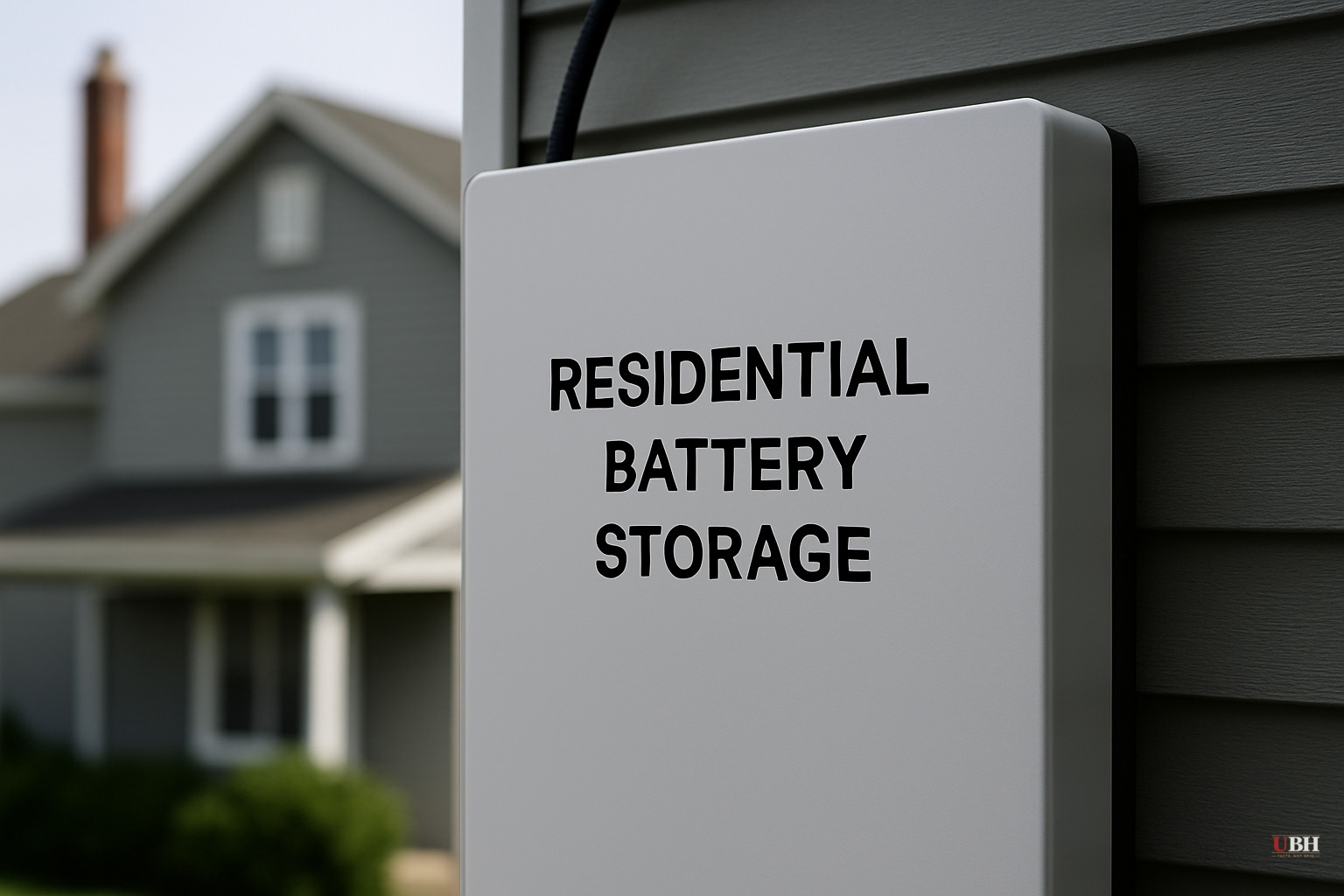
U.S. homeowners added 673 megawatts of residential battery storage in Q1 2026, a record for a single quarter, according to the U.S. Energy Information Administration. That beats any previous quarter on record.
California and Hawaii led installations by a wide margin. Texas and Arizona posted significantly higher numbers compared to prior periods as well.
Why It's Happening
The short answer: electricity is more expensive and homeowners want out from under it.
The nationwide average residential electricity cost rose more than 7 percent in April 2026 compared to April 2025, per EIA data. Homeowners with battery systems and smart energy-management software can charge batteries when grid prices are lowest, typically overnight, and draw from them during peak-demand hours when rates spike.
State policy is accelerating the trend. California offers better export pricing to homeowners who send stored solar energy back to the grid after sunset, a financial incentive that makes batteries economically rational, not just environmentally fashionable. Hawaii pays homeowners a one-time $400 per kilowatt of battery capacity installed, as Bloomberg News reported.
These states already had high rooftop solar adoption, so battery storage is a logical next layer. Solar panels generate electricity during daylight, batteries hold the excess, and homeowners draw on it at night without buying from the grid.
The Solar Slowdown Complicates the Picture
The battery record came alongside a slowdown in new residential solar installations.
Congress, under pressure from the Trump administration and the Republican-backed One Big Beautiful Bill, eliminated the 30 percent federal tax credit for residential solar panels. That credit had been one of the primary drivers of rooftop solar growth for years.
The strongest case against eliminating the credit is straightforward: residential solar reduces grid load during peak daytime hours, which delays costly infrastructure upgrades. Homeowners who invested in solar under the assumption the credit would remain had a reasonable expectation of continuity. Pulling it midstream creates real financial uncertainty for households that planned around it.
The counterargument is legitimate. Open-ended federal tax credits are subsidies that distort markets and transfer costs to taxpayers who chose not to install solar. The credit had been in place long enough, the argument goes, that the industry should be able to stand without it. Solar's continued growth in utility-scale generation, which surpassed coal-fired generation in April 2026 per EIA data, suggests the technology itself is competitive. Whether homeowners specifically need a federal subsidy to justify the investment is a genuine policy question, not a settled one.
Batteries, for now, appear to be holding up without a comparable federal credit, driven more directly by the pain of higher electricity bills.
Virtual Power Plants: The Grid Angle
The battery surge has a second-order consequence that grid operators are paying attention to.
Thousands of home batteries networked together can be managed as a virtual power plant — coordinated to discharge stored energy during high-demand periods, effectively acting as a distributed grid resource. The amount of U.S. home battery capacity incorporated into virtual power plants soared 153 percent in 2025, according to Yale E360.
A demonstration in July 2025 showed the potential of coordinating 100,000 home batteries as a single grid asset, per Yale E360's reporting.
One company built its entire business model around this concept. Base Power, an Austin, Texas-based startup, offers heavily discounted home battery hardware and discounted electricity rates to customers in exchange for controlling the battery fleet as a virtual power plant. The company monetizes the grid-management value of the aggregated storage.
For grid operators managing rising demand from AI data centers and electric vehicles, virtual power plants represent a meaningful tool. They don't require new transmission lines or centralized generation, just software coordinating assets that homeowners are already buying for their own reasons.
What's Unresolved
The battery installation record is real, but it rests on a foundation with cracks. If residential solar adoption continues to slow, fewer new solar installs means fewer homeowners with a direct economic reason to add batteries, and the pipeline for future battery growth narrows.
The EIA has not yet released Q2 2026 installation data. Whether Q1's record pace held through the spring, particularly after the solar tax credit elimination took full effect, is the open question that will determine whether this is a durable trend or a one-quarter spike.
Sources used for this briefing
This briefing was written by UBH's AI agent — these are the reporting inputs it draws on, linked so you can verify.


