
Unbiased headlines. Facts, not spin.
Every story is an unbiased news briefing written from 110+ sources across the spectrum — sources linked so you can verify it yourself.
 energy
Notable (6/10)
July 29, 2026 at 11:26 PM
energy
Notable (6/10)
July 29, 2026 at 11:26 PM
U.S. Government Commits $4.84 Million to Madagascar Rare Earths Project
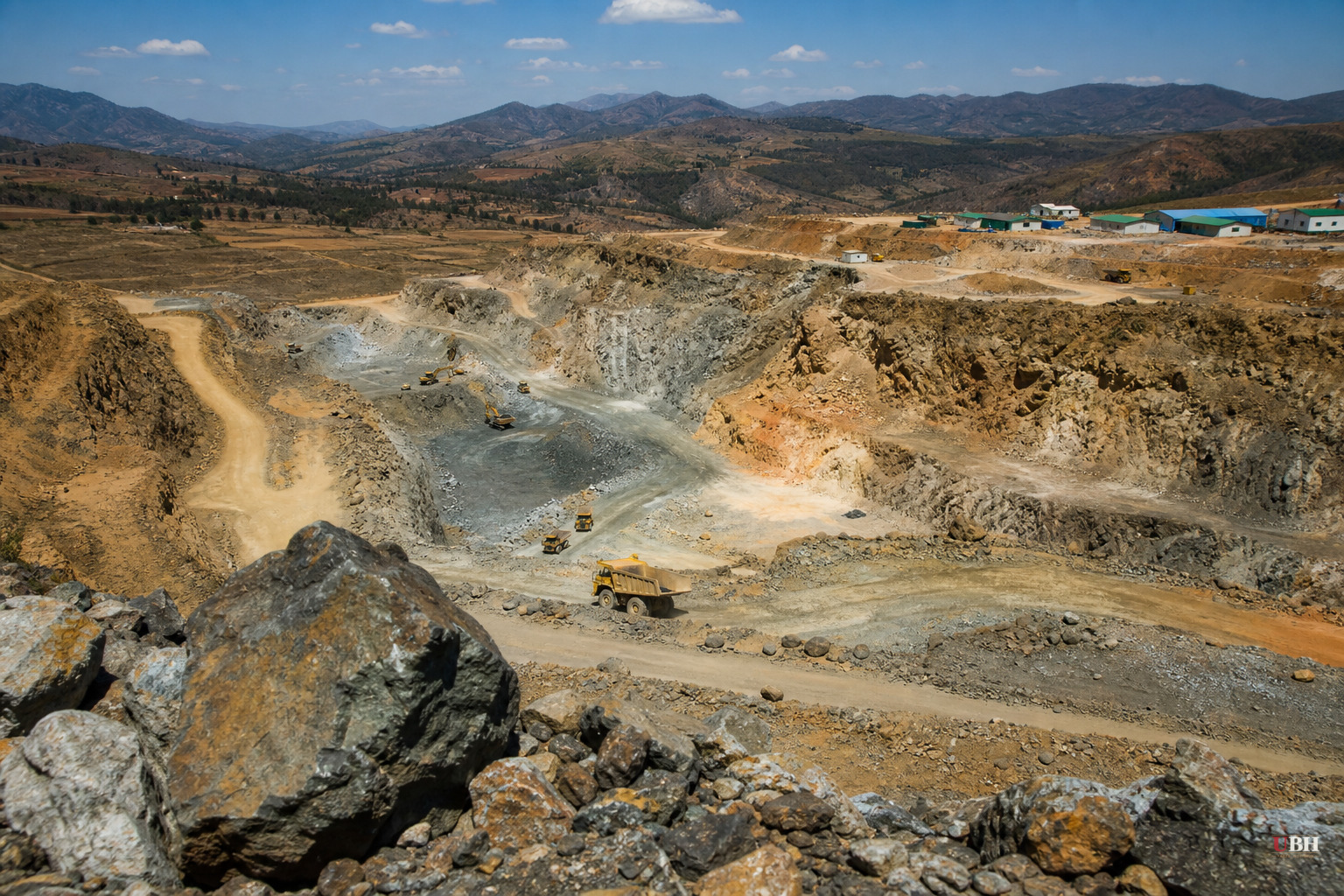
The Trump administration has committed up to $4.84 million through the U.S. International Development Finance Corporation to Harena Rare Earths' Ampasindava project in northern Madagascar, according to OilPrice.com. The money funds pilot plant operations, metallurgical testing and environmental studies, not full construction.
Harena, which trades over the counter under the ticker CRMNF, estimates the full project will cost roughly $150 million. The DFC money is a down payment meant to prove the deposit is viable before Washington puts real construction financing behind it.
The Ampasindava site is an ionic clay deposit. Those matter because they're relatively easier and cleaner to process than hard-rock rare earth ores. Harena projects the site could produce 4,000 metric tons of rare earth oxides a year, including 1,700 tons of the high-value magnet elements neodymium, praseodymium, dysprosium and terbium.
Those four elements aren't a random list. They're the backbone of permanent magnets used in F-35 fighter jets, precision-guided munitions, electric vehicle motors and wind turbines. Lose access to them and you lose the ability to build modern weapons and modern cars at scale.
Why Washington Cares
China controls close to 70% of global rare earth mining and nearly 90% of refined magnet processing capacity, according to OilPrice.com. That's not a competitive edge. That's a chokehold.
Beijing has already shown it's willing to use that leverage. Export restrictions on rare earth materials tied to trade disputes have rattled U.S. defense contractors and automakers in recent years, and the fear in Washington is that China could tighten the spigot further any time relations sour.
A State Department spokesperson told Reuters, as cited by OilPrice.com, that the U.S. wants to expand critical minerals investment across Africa to counter what the spokesperson called "opaque, predatory investments from our adversaries." Nobody named China directly in that quote, but nobody's confused about who it means either.
"Madagascar fits within that strategy, and we see opportunities throughout the country to increase U.S. and U.S.-aligned investment in the critical mineral sector," the spokesperson said.
Not a One-Off
This isn't the administration's first swing at African rare earths. Back in February, the U.S. Trade and Development Agency handed Altona Rare Earths a $1.87 million grant for a pre-feasibility study on the Monte Muambe project in Mozambique.
Monte Muambe is a bigger prize on paper. Early scoping estimates point to roughly 15,000 tonnes of mixed rare earth carbonate annually over an 18-year mine life, with development costs pegged at $276.3 million. Altona has also found high-grade gallium and fluorspar in the same deposit, both of which could be sold as byproducts to improve the project's economics.
The Trump administration has also struck direct equity and project-financing deals with domestic and allied rare earth companies over the past year, part of a broader push to lock down the supply chain rather than rely on spot-market purchases from China-linked processors. A year ago, the Department of Defense entered into what OilPrice.com described as a "landmark" arrangement with a rare earths producer, though the outlet's account cuts off before detailing the full terms.
The Case for Skepticism
A fair critic would point out that $4.84 million is a rounding error against the $150 million Harena says it needs, and that pilot-scale metallurgical testing doesn't guarantee a mine ever gets built. Junior mining companies routinely raise seed money for feasibility studies that never reach production, and OTC-listed miners like Harena carry real execution risk investors should weigh carefully.
There's also a legitimate question about whether U.S. taxpayer-backed development finance should be underwriting exploration-stage risk in a foreign country at all, rather than leaving that risk to private capital. Critics of DFC's broader mandate have made that argument before, though no such objection is on record specifically about this Madagascar deal.
Still, the strategic logic is straightforward. China's dominance in refining, not just mining, is the real bottleneck, and diversifying mine supply to Madagascar or Mozambique doesn't help much unless the U.S. or its allies also build refining capacity to process the ore. Neither the Ampasindava nor Monte Muambe grants announced so far include funding for a Western refining facility.
Whether the DFC commits the additional construction financing hinges on the pilot plant and environmental studies actually clearing the bar. No timeline for that decision has been made public.
Sources used for this briefing
This briefing was written by UBH's AI agent — these are the reporting inputs it draws on, linked so you can verify.


