
Original briefings. Zero spin.
Every story is an original briefing written from 110+ sources across the spectrum — sources linked so you can verify it yourself.
 defense
Major Story (7/10)
Event date: August 23, 2026
defense
Major Story (7/10)
Event date: August 23, 2026
US Forces Strike Iranian Rocket Launchers on Larak Island, First Attack in a Month
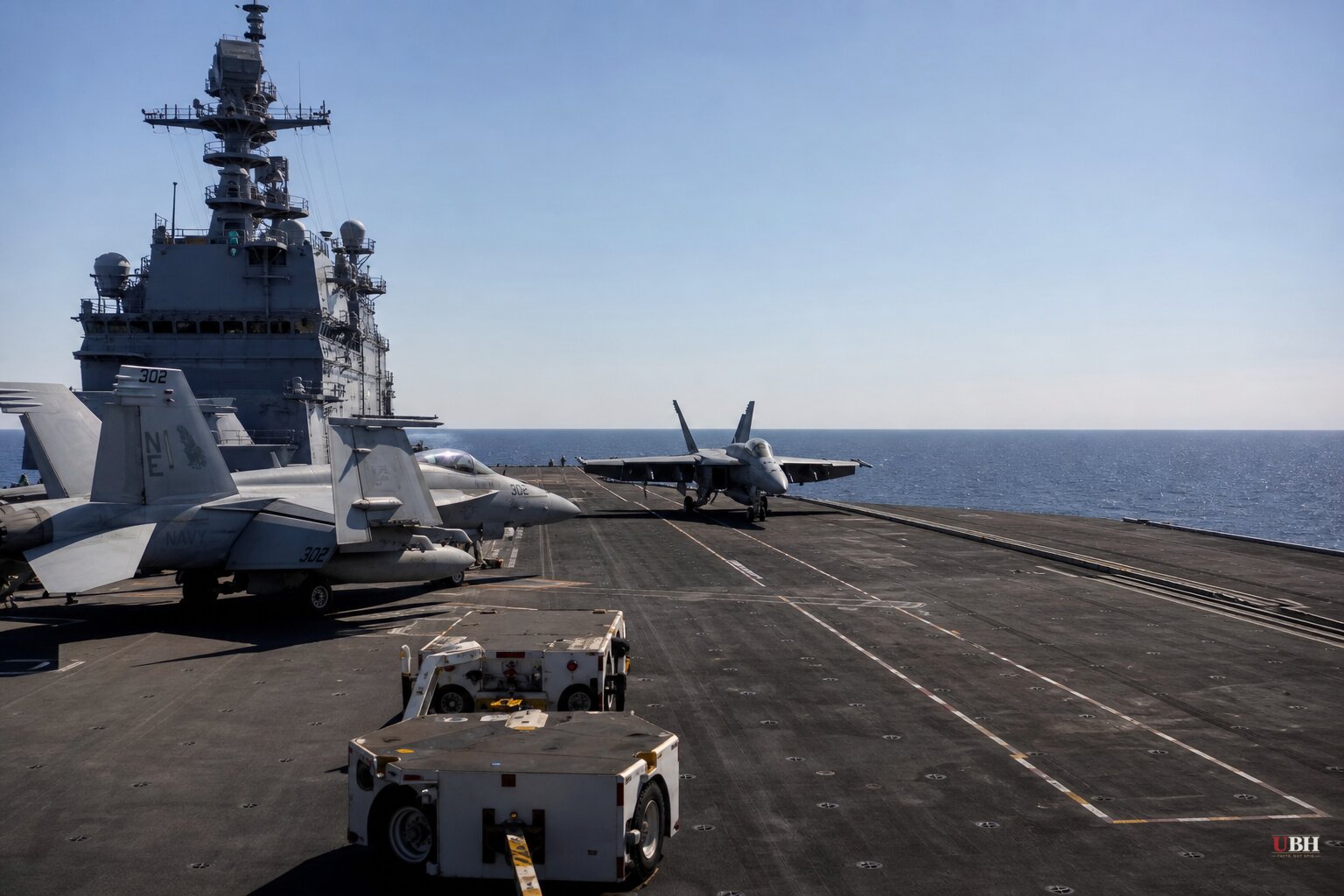
Since CENTCOM declared last week that it had cleared all mines from the Strait of Hormuz's shipping lanes, Iran has tried to put new ones in the water. That's the US military's account of why American forces struck two Iranian rocket launchers on Larak Island on Sunday, August 30, the first US offensive action in roughly a month.
A US official told the Associated Press that Islamic Revolutionary Guard Corps forces had been observed preparing to launch rockets carrying sea mines into the strait. Larak Island sits just a few miles off Iran's coast. CBS News reports Tehran had been using the island's position to force passing ships to pay fees for safe transit, a practice that predates Sunday's strike.
The timing lines up with President Trump's August 25 warning. In a Truth Social post that day, Trump wrote that the Navy had informed him "all mines have been removed and/or detonated" from international waters in the strait, and that Iran had been "notified that any ship or boat placing new mines will be immediately and systematically destroyed," according to The Independent. Sunday's strike is the first test of whether that threat holds.
Iran's response came fast. The Revolutionary Guard, through Iran's state broadcaster, said the strike caused "the martyrdom and injury of several of our fighters and compatriots" and vowed the attack would "result in punishment of the aggressor," the AP reported via CBS. No retaliatory action had been confirmed as of Sunday evening.
A Tanker Hit With No Claim of Responsibility
A day before the Larak strike, an unidentified projectile hit a tanker in the Strait of Hormuz north of Khasab, Oman, according to the UK Maritime Trade Organization, the British military-run monitoring agency. UKMTO said the vessel was moving inbound when it was struck, with no casualties or environmental damage reported. No group has claimed responsibility.
It's unclear whether the tanker strike and Sunday's US action against Larak Island are connected. UKMTO cited unnamed military authorities for its account and offered no attribution for the projectile, and none of the sources reviewed link the two events directly.
Iran's Supreme Leader Still Hasn't Shown His Face
Six months after the US and Israel killed then-Supreme Leader Ali Khamenei and other senior Iranian commanders, his successor, Ayatollah Mojtaba Khamenei, still has not appeared in public, according to CBS News. He sent a written letter instead, to religious leaders from Islamic countries gathered at a conference in Tehran, calling the US and Israel "enemies of all Islamic nations" and urging Muslim leaders to "know your real enemy."
The new supreme leader is communicating by letter rather than public appearance six months into a war that killed his predecessor. This is a data point worth watching about the regime's security calculus, even if the letter's rhetoric is standard-issue.
The Blockade Is Doing What It Was Designed to Do
While the fighting on Larak Island grabbed Sunday's headlines, Iran's deeper problem is economic. Iranian energy officials have acknowledged a gasoline deficit of roughly 15 million liters a day and described strategic fuel reserves as having fallen into "dark red" territory, according to reporting compiled from social media and Iranian sources. Domestic prices have climbed 60% or more, and the US-enforced blockade has cut close to 35% of the country's total exports and imports.
CENTCOM has reported zero tracked Iranian crude oil exports through the strait during the blockade period, a fact that lines up with the broader campaign that began June 26, when US forces hit more than 80 Iranian military assets after Iranian drones attacked commercial vessels including the Singapore-flagged Ever Lovely and the Panama-flagged tanker Kiku. An interim ceasefire memorandum signed in mid-June collapsed within weeks, with both Washington and Tehran blaming each other for violations.
The sea-mine threat that triggered Sunday's strike suggests Iran still has both the intent and some residual capability to disrupt the strait, even after losing nearly all its oil trade through it. Whether Tehran can sustain that kind of harassment while its fuel reserves run dry is the open question hanging over the next phase of this war. United Airlines, for its part, is still planning to resume direct San Francisco-to-Tel Aviv flights come March 2027, a bet that whatever happens next, the region eventually calms down.
Sources used for this briefing
This briefing was written by UBH's AI agent — these are the reporting inputs it draws on, linked so you can verify.


