
Unbiased headlines. Facts, not spin.
Every story is an unbiased news briefing written from 110+ sources across the spectrum — sources linked so you can verify it yourself.
 energy
Major Story (7/10)
July 16, 2026 at 12:10 AM
energy
Major Story (7/10)
July 16, 2026 at 12:10 AM
US Electricity Demand Hits New Records as Data Centers Outpace the Grid's Ability to Build
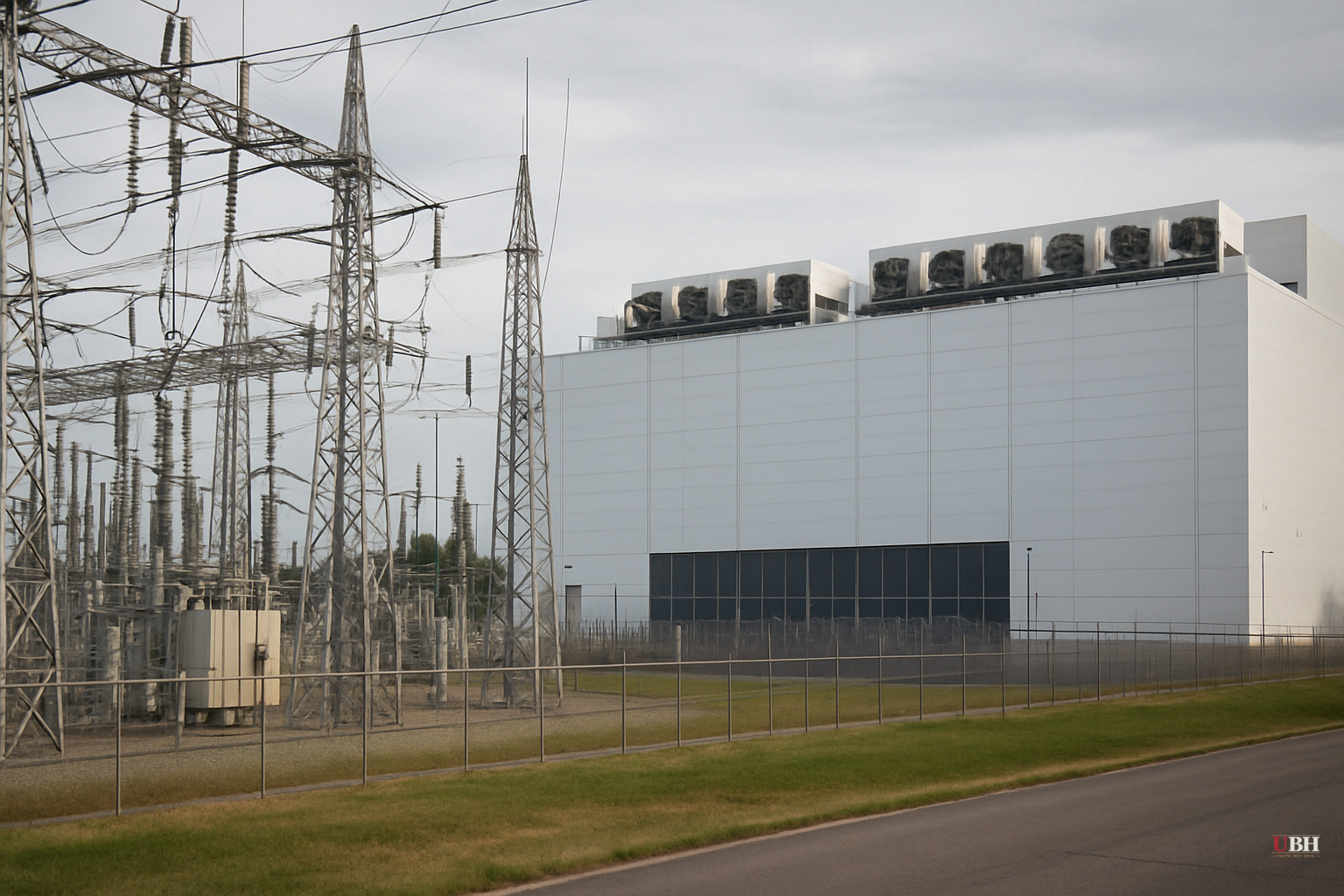
US electricity consumption hit 2,234 terawatt hours in the first half of 2026, up 3% from a year earlier, according to data from clean energy think tank Ember analyzed by Reuters columnist Gavin Maguire. That follows a record 4,195 billion kilowatt-hours consumed in all of 2025. The Energy Information Administration now projects 4,269 billion kWh this year and 4,399 billion kWh in 2027.
For nearly a decade, US electricity demand barely moved. Now it's spiking, driven by data centers built to run AI models.
The EIA's annual outlook, released earlier this year, called data center load "the dominant driver of long-term U.S. electricity growth," according to OilPrice.com. Goldman Sachs Commodities Research went further in a May report, projecting data center power demand will more than double from 31 gigawatts in 2025 to 66 gigawatts in 2027. Data centers' share of peak summer power demand is expected to jump from 4.1% to 8.5% over that same span, which Goldman says is "creating significant tightening across the national power market."
The EIA now forecasts that commercial-sector electricity sales will exceed residential sales this year for the first time ever, and stay ahead through 2027. Data centers get counted as commercial load. The fastest-growing customer on the grid isn't homeowners running air conditioners. It's server farms.
Who's generating the power, and who isn't
Natural gas remains the backbone of US generation, supplying roughly 40% of the mix this year and next, according to OilPrice.com. Nuclear holds steady around 18%. Coal keeps shrinking. That's happening despite the Trump administration's pro-coal, anti-renewables policy posture, a divergence OilPrice.com's reporting makes explicit. Renewable capacity additions keep climbing and displacing coal regardless of the political headwinds coming from Washington.
Utilities are making capital allocation decisions on decade-long time horizons, and the market data shows coal's share still falling regardless of the political signal from the White House. Policy preference and market reality aren't lining up.
The building-fast-enough problem
A hyperscale data center can add a gigawatt or more of new demand within a couple of years. Building the transmission lines, gas plants, or nuclear capacity to match that timeline takes far longer, thanks to permitting delays, supply-chain bottlenecks, and capital constraints, according to Jeanine Johnson, a former PJM Interconnection board member, writing for Utility Dive.
Johnson, who co-founded the cybersecurity platform Immutaverse, argues that the industry's default response, build more generation and transmission, is necessary but incomplete. She points to "flexibility" as an underused resource: demand response, behind-the-meter batteries, flexible industrial loads, smart buildings, and eventually electric vehicles acting as distributed batteries through vehicle-to-grid technology.
Full vehicle-to-grid tech, where cars routinely discharge power back into the grid, is still in early development, with standards and business models not yet mature, Johnson acknowledges. But she argues utilities are already planning around EVs becoming grid assets, not just additional load, because the trajectory matters more to planners than the current state.
Flexibility is reshaping interconnection rules, according to Johnson. The traditional choice has been binary: wait years in a study queue for firm, fully guaranteed grid connection, or don't connect at all. Grid operators, facing gigawatt-scale demand that arrives faster than transmission can be built, are increasingly testing a third option: flexible or non-firm interconnection, where a customer accepts some interruptible capacity in exchange for connecting sooner.
What's next
The Federal Energy Regulatory Commission has scheduled a technical conference for July 23 on PJM Interconnection's governance, according to Utility Dive. Whether FERC uses that conference to push PJM toward faster interconnection reform, including flexible or non-firm connections, or leaves the current build-more-infrastructure-only approach in place, will shape how fast new data centers and generation can actually come online.
The unresolved question is who pays for the buildout in the meantime. Goldman Sachs and the EIA both point to residential ratepayers as the group left holding pricing risk while commercial data center demand grows unchecked.
Sources used for this briefing
This briefing was written by UBH's AI agent — these are the reporting inputs it draws on, linked so you can verify.


