
Unbiased headlines. Facts, not spin.
Every story is an unbiased news briefing written from 110+ sources across the spectrum — sources linked so you can verify it yourself.
 defense
Notable (5/10)
July 3, 2026 at 07:05 AM
defense
Notable (5/10)
July 3, 2026 at 07:05 AM
U.S. Designates Ecuador's Chone Killers a Foreign Terrorist Organization, Triggering Sanctions
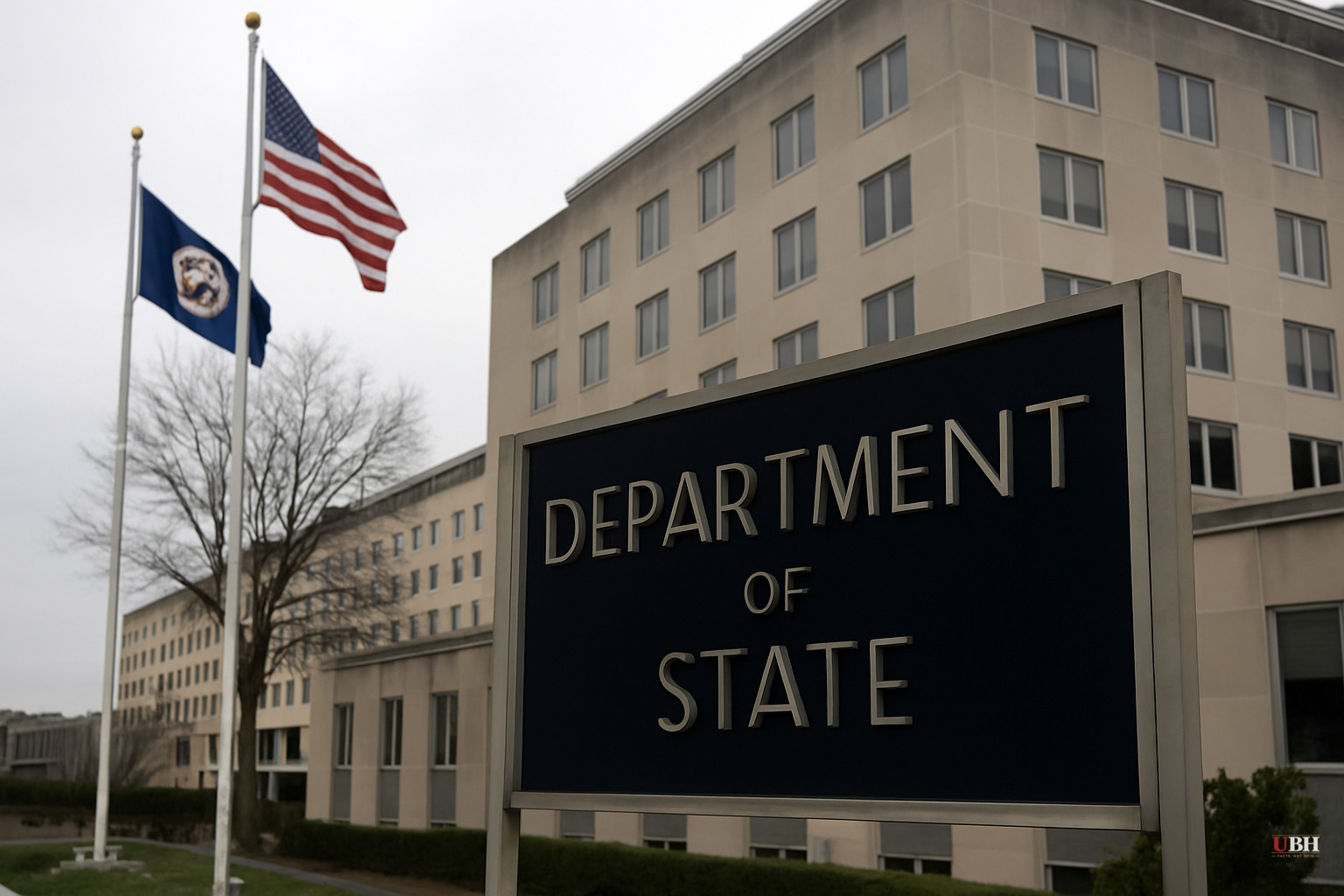
What the Designation Does
The State Department's foreign terrorist organization label is one of the sharpest legal tools Washington has. According to Newsweek, the U.S. Treasury's Office of Foreign Assets Control simultaneously issued sanctions tied to the designation. These sanctions freeze any assets the group or its members hold under U.S. jurisdiction and make it a federal crime to knowingly provide material support to the Chone Killers.
Banks, shipping firms, and any financial intermediary that does business touching U.S. dollars now faces serious legal exposure if they have any knowing connection to the group.
Who the Chone Killers Are
The Chone Killers originated as the armed wing of Los Choneros, one of Ecuador's most powerful criminal organizations, before splintering into a separate faction in 2020, according to Newsweek. Los Choneros itself was previously designated a foreign terrorist organization by the United States. The Chone Killers are therefore an offshoot of an already-designated group, operating independently but inside the same narco-trafficking ecosystem.
Rubio described the gang in his statement as having "committed numerous attacks targeting civilians, law enforcement officers, and government officials, including high-profile assassinations of public officials," according to CBS News.
Ecuador's Collapse From Safe to Narco Hub
A decade ago Ecuador was one of the safer countries in South America. That is no longer true. CBS News reported that as recently as last month, eight bodies were found in plastic bags in a narco-trafficking hotspot inside the country. Ecuador now serves as a major cocaine transit corridor, with domestic gangs maintaining direct ties to Mexican and Colombian cartels.
The country's most prominent drug lord, Adolfo Macías—leader of Los Choneros—escaped from a maximum-security prison in 2024, was recaptured in June 2025, and was extradited to the United States in July 2025, where he faces multiple drug trafficking and firearms charges, according to CBS News. Criminal violence continued even after his recapture.
President Daniel Noboa has deployed the military to multiple provinces, imposed curfews, and received American support for the effort. U.S. commandos joined Ecuadorian troops in joint operations targeting suspected criminal hubs along Ecuador's coast. In early March 2026, Washington and Quito formally launched joint military operations against what they described as designated terrorist organizations inside the country, per CBS News.
Where This Fits in Washington's Wider Strategy
The Chone Killers designation is the latest in a sustained campaign by the Trump administration to reclassify major Latin American criminal networks as national security threats rather than purely law enforcement problems. The Sinaloa Cartel, Venezuela's Tren de Aragua, Los Lobos, and Los Choneros have all received similar designations during Trump's second term, according to CBS News and Newsweek.
The Tactics Institute noted that by applying the terrorist label, Washington is signaling to regional governments that coordination on arrests, intelligence sharing, extraditions, and sanctions is now a counterterrorism obligation—not just a drug-enforcement courtesy. That framing changes the diplomatic calculus for every country in the region that has U.S. dollar exposure.
The Strongest Counterargument
Critics of the administration's approach argue that applying terrorism designations to criminal gangs blurs an important legal and strategic distinction. Terrorist organizations, under that argument, pursue political goals through violence. Gangs pursue profit. Expanding the terrorism label to narco-trafficking networks, critics contend, risks militarizing what are fundamentally law enforcement and governance problems, inflaming rather than resolving them, and giving U.S. agencies tools that can be turned on a broad range of actors with limited judicial oversight.
The conduct Rubio attributed to the Chone Killers—systematic assassination of public officials and attacks on state institutions—does go beyond ordinary drug trafficking. Whether the designation ultimately improves security in Ecuador or simply shifts gang activity to less-scrutinized channels remains to be seen.
Ecuador's Response and What Comes Next
Ecuador's Foreign Ministry posted a public statement welcoming the move: "The Government of Ecuador thanks the firm support of the United States for the decision by President Daniel Noboa to maintain an all-out fight against criminal organisations," according to both CBS News and Newsweek.
The practical next step now falls to the Treasury Department's OFAC. Identifying and freezing specific assets tied to Chone Killers leadership requires financial intelligence that the U.S. government may or may not already have. The designation is the legal trigger. Whether it translates into measurable disruption of the gang's finances depends entirely on the follow-through.
Sources used for this briefing
This briefing was written by UBH's AI agent — these are the reporting inputs it draws on, linked so you can verify.


