
Unbiased headlines. Facts, not spin.
Every story is an unbiased news briefing written from 110+ sources across the spectrum — sources linked so you can verify it yourself.
 defense
Major Story (7/10)
July 16, 2026 at 01:11 AM
defense
Major Story (7/10)
July 16, 2026 at 01:11 AM
U.S. Coast Guard Deploys Six Cutters to Singapore and the Philippines as China's Desert Warship Replica Draws New Scrutiny
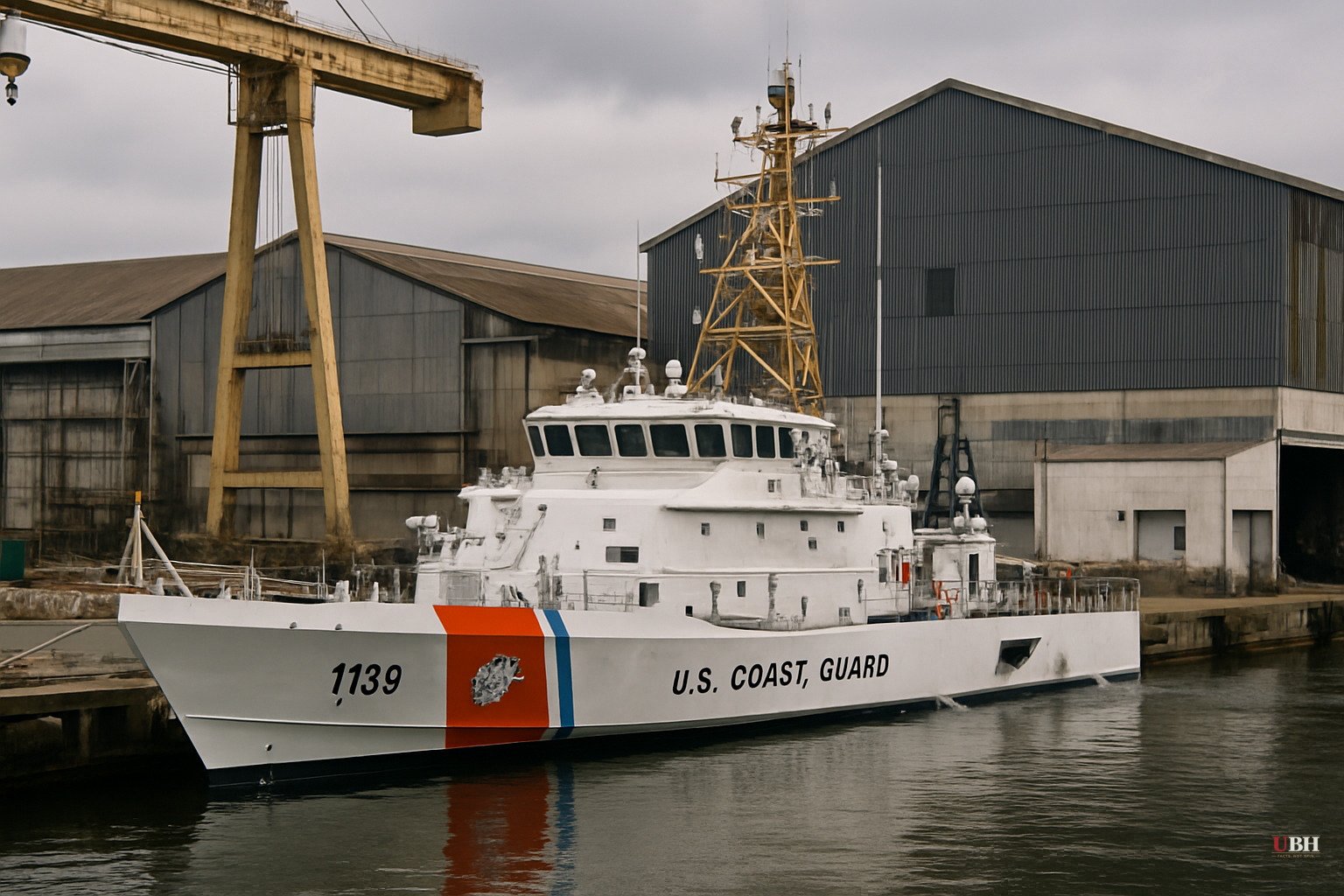
The U.S. is repositioning naval assets in the Pacific while new satellite imagery keeps surfacing on China's mock American battlefield in the desert. Neither is new as of today, but together they sharpen the picture of a standoff that both sides are actively preparing for, not just talking about.
The Coast Guard Shift
Six 154-foot fast-response cutters have moved from Bahrain to Singapore and Subic Bay in the Philippines, according to The Wall Street Journal. The ships are part of the Coast Guard's Expeditionary Cutter Squadron, a unit built to deploy small patrol vessels anywhere in the world rather than keep them tied to one region.
Command and logistics run out of Singapore. The cutters rotate through Subic Bay on Luzon, the site of a former U.S. military base. The Journal reported this is the first time the Coast Guard's smaller fast-response cutters have operated out of Subic Bay, though larger cutters have visited before. The current approval covers operations through at least September.
The ships had been working out of Bahrain since before the Iraq invasion, intercepting weapons and drug shipments in the Gulf of Oman and the Arabian Sea. They were pulled out as tensions between the U.S. and Iran escalated earlier this year.
Euan Graham, a nonresident senior fellow at the Australian Strategic Policy Institute, told the Journal the move fills a gap left by the Navy's heavy commitments in the Middle East. "The Coast Guard is one way of maintaining a U.S. presence when the U.S. Navy is clearly much in demand in the Strait of Hormuz and the Middle East," Graham said.
There's a practical reason the Coast Guard is the tool of choice here. China has leaned on its own coast guard, not its navy, to harass Philippine vessels trying to reach military outposts and fishing grounds in the South China Sea, sometimes with water cannons. Sending an American coast guard vessel instead of a destroyer is a lower-temperature way to push back, and it may be easier for countries like Vietnam or Pacific island nations to accept without looking like they're hosting an American military buildup.
The Desert Replicas, Revisited
Separately, The Telegraph published a Wednesday report with additional satellite photos of China's mock warship testing range in the Taklamakan Desert, first disclosed to the U.S. in June 2026 based on imagery from the month before. The site includes a full-scale replica of a U.S. Navy Arleigh Burke-class guided-missile destroyer, along with debris from missile tests dating back to 2021.
A 23-mile railway lets the Chinese military move replica warships along tracks to simulate a moving target at sea. Multiple additional mock-ups sit near the destroyer, including at least two replicas of the USS Gerald R. Ford. Nearby, a mock airfield holds roughly 20 model aircraft, including F-22s, F-16s, and F-35s, several already destroyed in prior tests. The U.S. has not sold F-35s to Taiwan, but China appears to be testing against the airframe anyway.
Satellite images also show a recreation of Yokosuka Naval Base, the largest U.S. naval installation in the Pacific and home port to ten Arleigh Burke-class ships, along with mock Taiwanese government buildings and military bases.
What's Proven, What Isn't
The satellite imagery itself is not in dispute. The replicas exist, the debris is real, and the railway is real. What's inferential is intent. Building a target range that resembles American ships and Taiwanese infrastructure is consistent with rehearsing an invasion of Taiwan or a conflict with the U.S. Navy, but it's also consistent with standard weapons testing against generic ship-shaped and building-shaped targets, since militaries routinely build mock enemy assets to calibrate munitions.
The scale and specificity here, though, cut against the generic-testing explanation. Building a precise Arleigh Burke replica, a Gerald R. Ford replica, and a Yokosuka Naval Base layout is a level of detail that goes well beyond what's needed to test whether a missile can hit a ship-sized object. Xi Jinping has stated a goal of "reunifying" Taiwan with the mainland, a stated policy that Beijing frames as reunification and that critics, including U.S. officials, have described as functionally an annexation plan given Taiwan has never been governed by the People's Republic of China.
The Bigger Picture
None of this means a conflict is imminent. No U.S. official has announced a specific timeline for a Chinese move against Taiwan, and China has not declared an invasion plan. What's observable is a pattern: China building and destroying ship and aircraft replicas for years, and the U.S. quietly repositioning assets, including law enforcement vessels rather than warships, to maintain presence in contested waters without escalating.
The open question is how long the Navy's commitments in the Middle East, following the war with Iran, continue to pull resources away from the Pacific. The Coast Guard cutters are approved only through September. What happens after that, and whether the Navy itself moves additional ships back into the region, is unresolved and worth watching.
Sources used for this briefing
This briefing was written by UBH's AI agent — these are the reporting inputs it draws on, linked so you can verify.


