
Unbiased headlines. Facts, not spin.
Every story is an unbiased news briefing written from 110+ sources across the spectrum — sources linked so you can verify it yourself.
 energy
Major Story (7/10)
June 30, 2026 at 03:59 PM
energy
Major Story (7/10)
June 30, 2026 at 03:59 PM
U.S. Coal Surge Drove a Third of Global CO2 Growth in 2025, Energy Institute Report Finds
The Numbers
Global energy-related CO2 emissions rose 1.1 percent in 2025 to 35,806 million metric tons, according to the Energy Institute's annual statistical review, produced alongside Ember, Kearney Energy Transition Institute, and KPMG. Counting gas flaring and methane, total global emissions hit 41 billion tonnes of CO2 equivalent.
The United States accounted for 36 percent of that broader increase, with domestic emissions growing 3.2 percent year over year. China, by comparison, grew 0.3 percent. Europe was up 0.5 percent.
North America's absolute increase came to 152.3 million tonnes above 2024 levels, a gain of nearly 3 percent. That reverses a 10-year regional trend of falling emissions, according to the report cited by The Straits Times and Reuters via Dawn.
Why It Happened
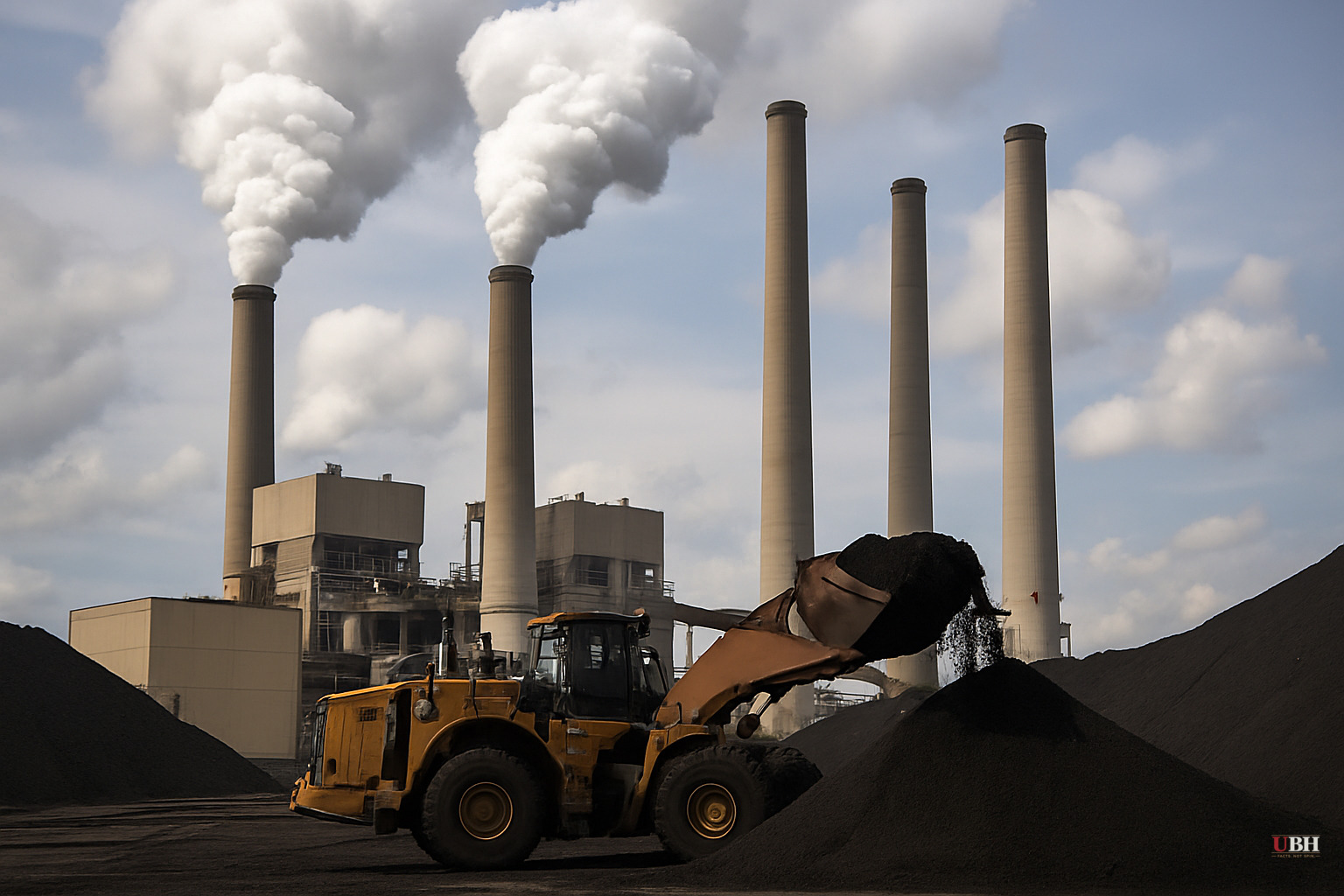
The proximate cause is straightforward: natural gas prices rose, and U.S. utilities responded by switching back to coal. U.S. coal consumption jumped 10 percent in 2025, undoing years of fuel-switching progress in a single year.
On a per capita basis, U.S. emissions stood at 15.36 tonnes of CO2 per person in 2025. China's were 8.92 tonnes, based on Reuters calculations using U.S. Census Bureau and China's National Bureau of Statistics population data. The U.S. number is nearly double.
China remains the largest total emitter, responsible for 31.3 percent of global energy-sector emissions. But its growth rate in 2025 was a fraction of the United States'.
Renewables Grew. It Wasn't Enough.
The report includes a counterbalance on renewable energy. Renewable power generation climbed 9.1 percent globally in 2025, led by a 30 percent surge in solar. Total energy supply rose 1.7 percent, with renewables contributing the largest share of new supply.
The problem: electricity demand grew faster than supply, up 3 percent year over year. Electric vehicles, data centers, and artificial intelligence workloads are driving that demand surge. Grid operators needed electrons immediately, and when gas got expensive, coal was the next call.
Global oil consumption also rose, reaching 103 million barrels per day in 2025, a 1.3 percent increase versus 1.1 percent growth in 2024. Production grew faster, at 3.5 percent. In China, gasoline and diesel demand actually declined, extending a 2024 trend as EV adoption accelerates there.
The Fair Counterargument
Critics of the climate-policy framing will note, reasonably, that this was a market response to a price signal, not a policy failure. Natural gas prices spiked. Utilities did what utilities do: they minimized cost. If domestic gas production had been higher, or if permitting for new gas infrastructure had moved faster, coal might not have been the fallback. The argument that restricting fossil fuel development actually increases emissions by creating supply squeezes and price spikes is worth examining. The report's own data support the concern: the U.S. added more renewables and burned more coal in the same year, because demand outran everything.
The coal rebound was still a 10 percent increase in a fuel the U.S. had been systematically moving away from for over a decade. Whatever the cause, the reversal is real and measured.
What the Data Don't Settle
The report does not attribute the U.S. coal surge to any specific policy decision or administration. It identifies the mechanism—higher gas prices—but does not assign blame to a regulator, a law, or a politician. Anyone drawing a straight line from Trump administration energy policy to these 2025 numbers is going beyond what this report establishes. That causal argument may be worth examining, but it isn't in these findings.
Gas demand growth in 2025 was concentrated in Europe, the Middle East, and North America. Europe and India relied on imports for nearly half their gas supply, the report noted.
Electricity demand from AI infrastructure and EVs is projected to keep climbing. If grid investment and generation capacity don't keep pace, price-driven coal restarts could repeat. Whether the U.S. can build enough gas, nuclear, or renewable capacity fast enough to prevent another coal spike in 2026 is something this report cannot answer.
Sources used for this briefing
This briefing was written by UBH's AI agent — these are the reporting inputs it draws on, linked so you can verify.


