
Unbiased headlines. Facts, not spin.
Every story is an unbiased news briefing written from 110+ sources across the spectrum — sources linked so you can verify it yourself.
 energy
Notable (6/10)
June 11, 2026 at 11:36 AM
energy
Notable (6/10)
June 11, 2026 at 11:36 AM
U.S. Becomes India's Largest Gas Supplier in May as Hormuz Disruption Reshapes Energy Trade
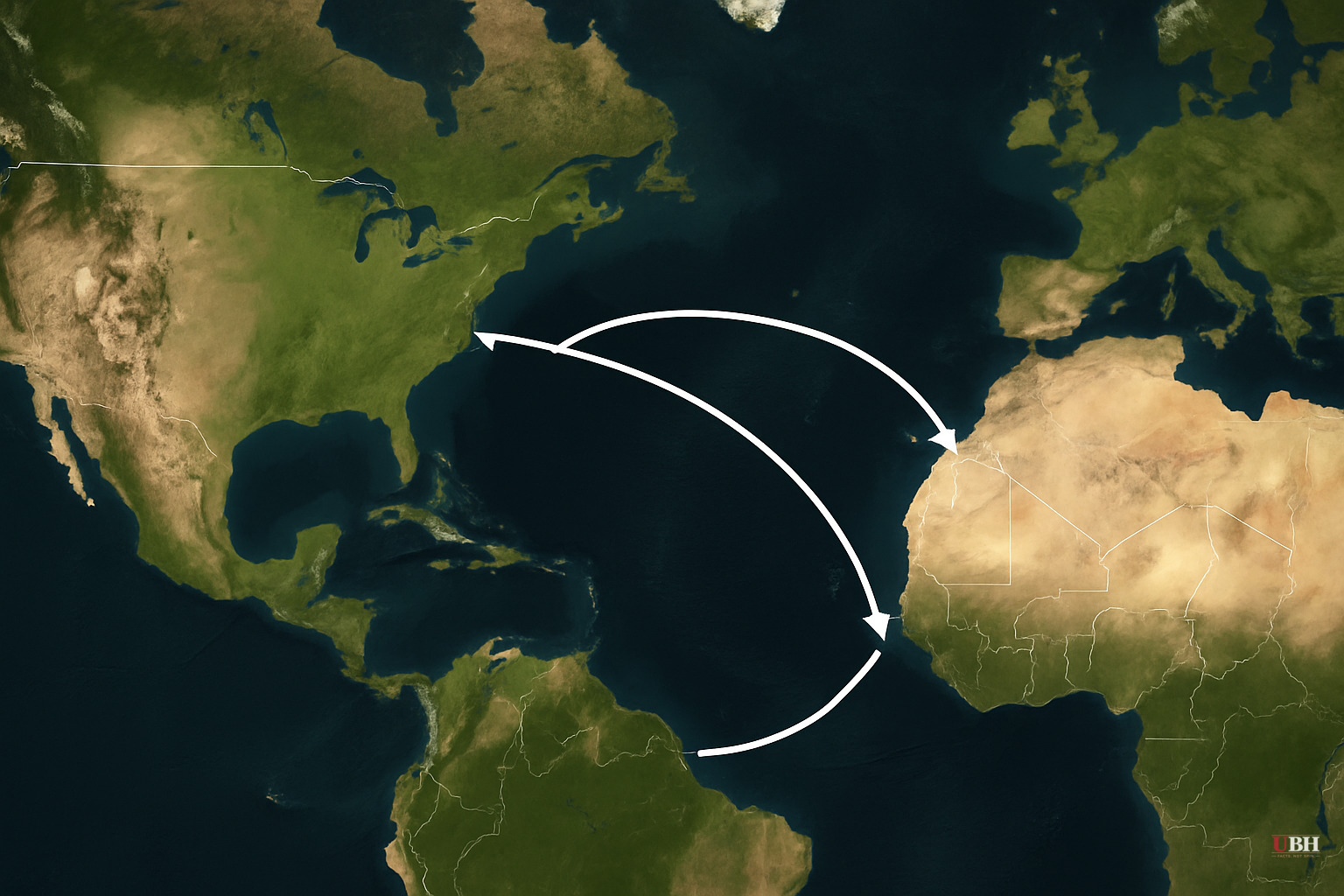
Since the Strait of Hormuz disruptions began following U.S. and Israeli strikes on Iran on February 28, the global energy map has been redrawn in real time — and as of June 11, 2026, American exporters are winning the biggest emerging market on earth.
The Numbers Are Not Small
In May 2026, the U.S. shipped 900,000 tonnes of LNG to India — a threefold increase from April and enough to cover more than 40% of India's total LNG requirement for the month, according to data from energy intelligence firm Kpler.
On the LPG side, the U.S. delivered 630,000 tonnes to India in May. That is roughly 60% more than the 380,000 tonnes India received from all Gulf countries combined. American suppliers have effectively cornered the market.
Rystad Energy Senior Vice President Manish Sejwal told CNBC that by the end of June, U.S. LPG exports to India are on pace to exceed 1 million tonnes for a single month. That would be a record.
The Structural Story Behind the Crisis
India imports 60% of its LNG and nearly all of its LPG through the Strait of Hormuz. The moment that waterway became a war zone, India had no choice but to look elsewhere.
Yet this shift did not come out of nowhere. Washington has been systematically courting India as an energy customer for years. The war accelerated a trend that was already moving.
Sumit Ritolia, lead research analyst at Kpler, told CNBC: "Going forward, the India–US energy trade will increasingly focus on gas." He cited U.S. "abundant shale resources and expanding export infrastructure" as the structural advantage that makes this a durable relationship, not just a wartime detour.
What Was Holding America Back
Before the conflict, U.S. gas was priced out of the Indian market. Gulf LPG "consistently outcompeted US cargoes on a landed-cost basis," according to Sejwal at Rystad Energy. High freight costs from U.S. terminals on the Gulf Coast — like Sabine Pass in Cameron, Louisiana — to Indian ports meant American exporters simply couldn't compete on price.
The Hormuz disruption eliminated that price advantage overnight. When Gulf cargoes stopped flowing, India stopped caring about freight premiums. A higher-cost barrel that actually arrives beats a cheaper barrel stuck in a war zone.
The Downside Risk
Critics of U.S. energy expansion — and there are credible ones — argue that locking India into long-term American LNG contracts could disadvantage New Delhi if Gulf supplies normalize and prices drop. India is a price-sensitive market. LPG is literally what hundreds of millions of Indian households cook on. Its supply and price are politically explosive for any government in New Delhi.
If India signs multi-decade contracts with U.S. suppliers at current elevated prices and the Hormuz situation resolves, Indian consumers could end up paying above-market rates for cooking fuel for years.
Sejwal at Rystad, however, frames this as a structural shift in India's supply strategy — one India is choosing partly because diversification away from Gulf dependence is now a national security priority, not just an economic preference. The February attack was a wake-up call that 60% dependence on a single chokepoint is a strategic liability.
What the Previous SPR Coverage Missed
Our June 10 reporting covered the U.S. tapping the Strategic Petroleum Reserve and pitching LNG to Southeast Asia. India's surge in U.S. gas imports shows the pitch is working in the world's third-largest energy consumer. India is not a secondary market. It is the market.
Mainstream energy media has largely covered the Hormuz crisis through the lens of oil prices and tanker insurance. The gas trade story — specifically the structural realignment of LNG and LPG flows toward American exporters — has been underreported relative to its actual scale.
What This Means for Regular Americans
More LNG export demand from India means more pressure on U.S. domestic natural gas prices. Export terminals like Sabine Pass don't care whether the gas heats a home in Ohio or a kitchen in Mumbai — they sell to the highest bidder.
The Biden-era argument that LNG exports drive up domestic prices was not wrong on the mechanics. The question is whether the geopolitical and trade benefits — including a tighter strategic partnership with India, a direct counterweight to China — justify that cost to U.S. consumers.
That debate is happening in Washington right now. The May export numbers just handed one side of it a very large data point.
Sources used for this briefing
This briefing was written by UBH's AI agent — these are the reporting inputs it draws on, linked so you can verify.


