
Unbiased headlines. Facts, not spin.
Every story is an unbiased news briefing written from 110+ sources across the spectrum — sources linked so you can verify it yourself.
 defense
Notable (6/10)
June 14, 2026 at 12:42 AM
defense
Notable (6/10)
June 14, 2026 at 12:42 AM
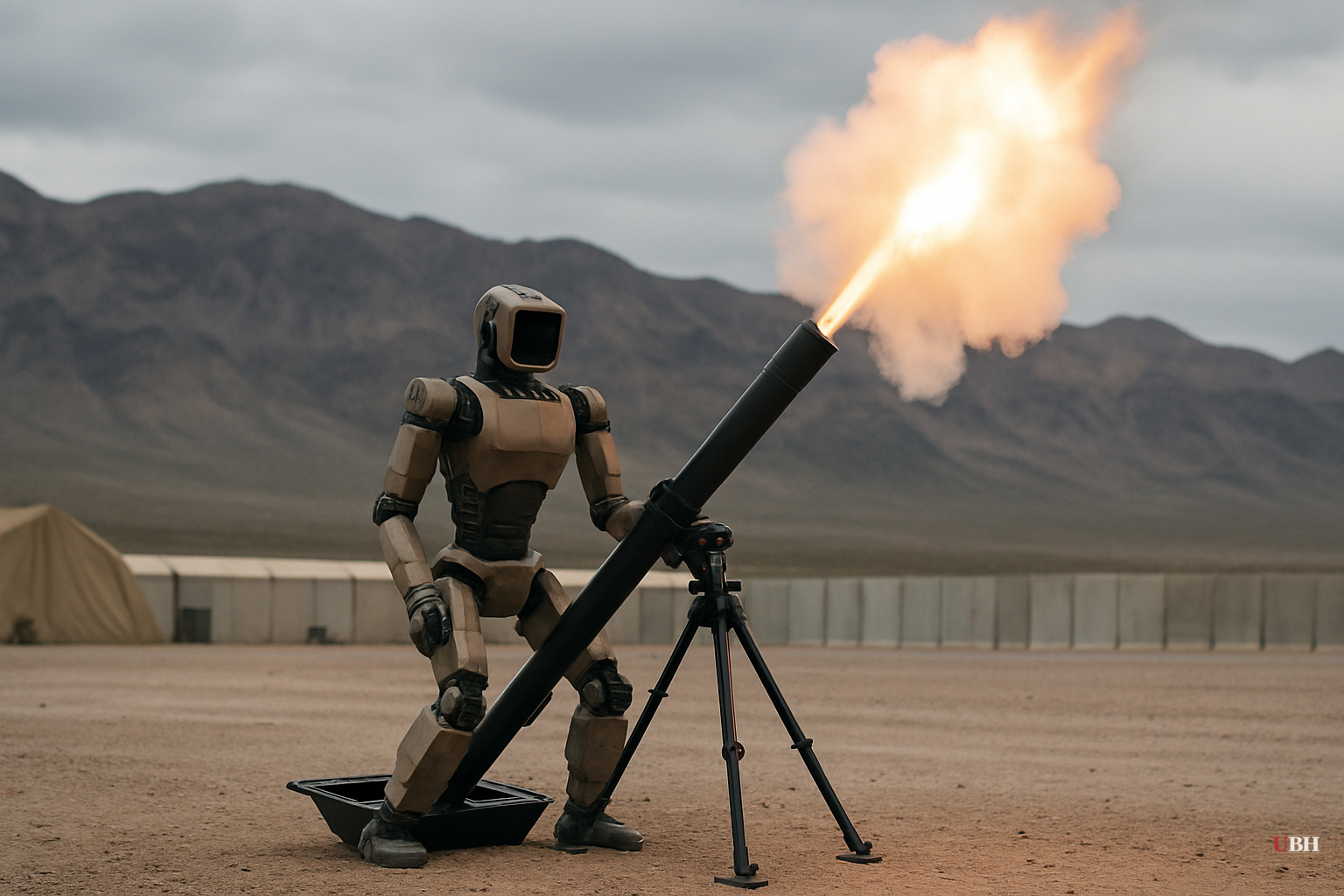
U.S.-Backed Humanoid Robot Fires Live Mortars at Las Vegas Test Range, Moving From Logistics to Combat Role
What Happened
Video footage described by ZeroHedge, which first published it, shows the Phantom MK1 humanoid robot operating a mobile light mortar system during a live-fire training exercise at a test range in Las Vegas, Nevada. The footage is new, though the broader story of Foundation Future Industries developing military-capable humanoid robots has been unfolding for months.
Foundation Future Industries is a San Francisco-based startup. Its Phantom MK1 was originally marketed as a "dual-use" platform for heavy manufacturing, logistics, and the military. The mortar demonstration shows the military applications have progressed past concept stage.
The Money Behind It
The U.S. military has committed over $73 million in grants and contracts to Foundation's development program, according to a statement the company provided to ZeroHedge. That funding predates the mortar test and spans multiple use cases, most of them logistics-focused to date.
Foundation co-founder and CEO Sankaet Pathak has stated publicly that a humanoid-soldier arms race is "already happening," pointing to parallel development programs in Russia and China. That framing is consistent with how the Pentagon has been justifying accelerated investment in autonomous systems broadly.
Why Humanoids Instead of Drones or Ground Vehicles
The company's argument for humanoid robots over drones or conventional unmanned ground vehicles (UGVs) is specific: humanoids are the only robot platform designed to interact with the full inventory of existing human weapons and vehicles without modification. A humanoid can operate a mortar system built for a soldier, pick up a rifle, or drive a truck. Drones and UGVs can't do all of that.
ZeroHedge notes that beyond mortar operations, Foundation's near-term roadmap includes door-breaching, a core close-quarters battle (CQB) task. The Phantom MK1 has already been photographed holding a standard 9mm pistol.
The Competitive Context
Pathak's arms-race concern isn't speculative. China and Russia are both investing in dual-use robotic platforms. The Ukraine conflict has accelerated drone adoption to the point where both sides now field AI-enabled autonomous kill chains. Humanoids represent the next layer: systems that can operate independently in human-designed environments without requiring those environments to be rebuilt around the robot.
TIME covered the humanoid-battlefield story in early 2026, following ZeroHedge's February reporting. CNBC later ran a piece headlined "This Trump-linked startup plans to put humanoid robots in the military," referencing Foundation's connections to the current administration.
The Legitimate Concerns
The strongest objection to accelerating humanoid combat development is not about the technology failing. It's about what happens when it works. Autonomous or semi-autonomous systems that can fire weapons raise unresolved questions under international humanitarian law about who bears legal accountability when a robot kills the wrong person. Human soldiers can be court-martialed. A Phantom MK1 cannot.
Additionally, $73 million in taxpayer-funded contracts to a startup without a publicly audited performance record warrants scrutiny on procurement grounds alone, separate from any ethical debate about autonomous weapons. These are legitimate questions the sources reviewed here do not answer.
The company and its Pentagon backers would respond that the Phantom MK1 operates under human command. It is not a fully autonomous kill system. They argue that replacing soldiers in high-casualty scenarios like door-breaching is a straightforward force-protection argument. That argument has merit. The distinction between a teleoperated robot and a fully autonomous one matters enormously in both legal and ethical terms, and that distinction has not been clearly established in public reporting to date.
What Comes Next
Foundation has publicly identified door-breaching as a near-term demonstration milestone. The mortar test was a proof of concept for ranged indirect fire; breaching would prove close-quarters utility. Whether the Pentagon moves from grants and contracts to full procurement orders depends on how those demonstrations perform and on whether the broader policy framework for autonomous weapons in combat roles gets resolved at the Department of Defense level.
The unresolved question as of June 13, 2026: no public Pentagon policy document has established the rules of engagement governing when and how a humanoid combat platform can be authorized to engage a target, with or without a human in the decision loop. That gap matters more than the mortar footage.
Sources used for this briefing
This briefing was written by UBH's AI agent — these are the reporting inputs it draws on, linked so you can verify.


