
Unbiased headlines. Facts, not spin.
Every story is an unbiased news briefing written from 110+ sources across the spectrum — sources linked so you can verify it yourself.
 defense
Major Story (7/10)
July 7, 2026 at 12:44 AM
defense
Major Story (7/10)
July 7, 2026 at 12:44 AM
U.S. Army Awards REalloys First Commercial Rare Earth Processing Contract on a Military Installation, Targeting 2028 Operational Capability
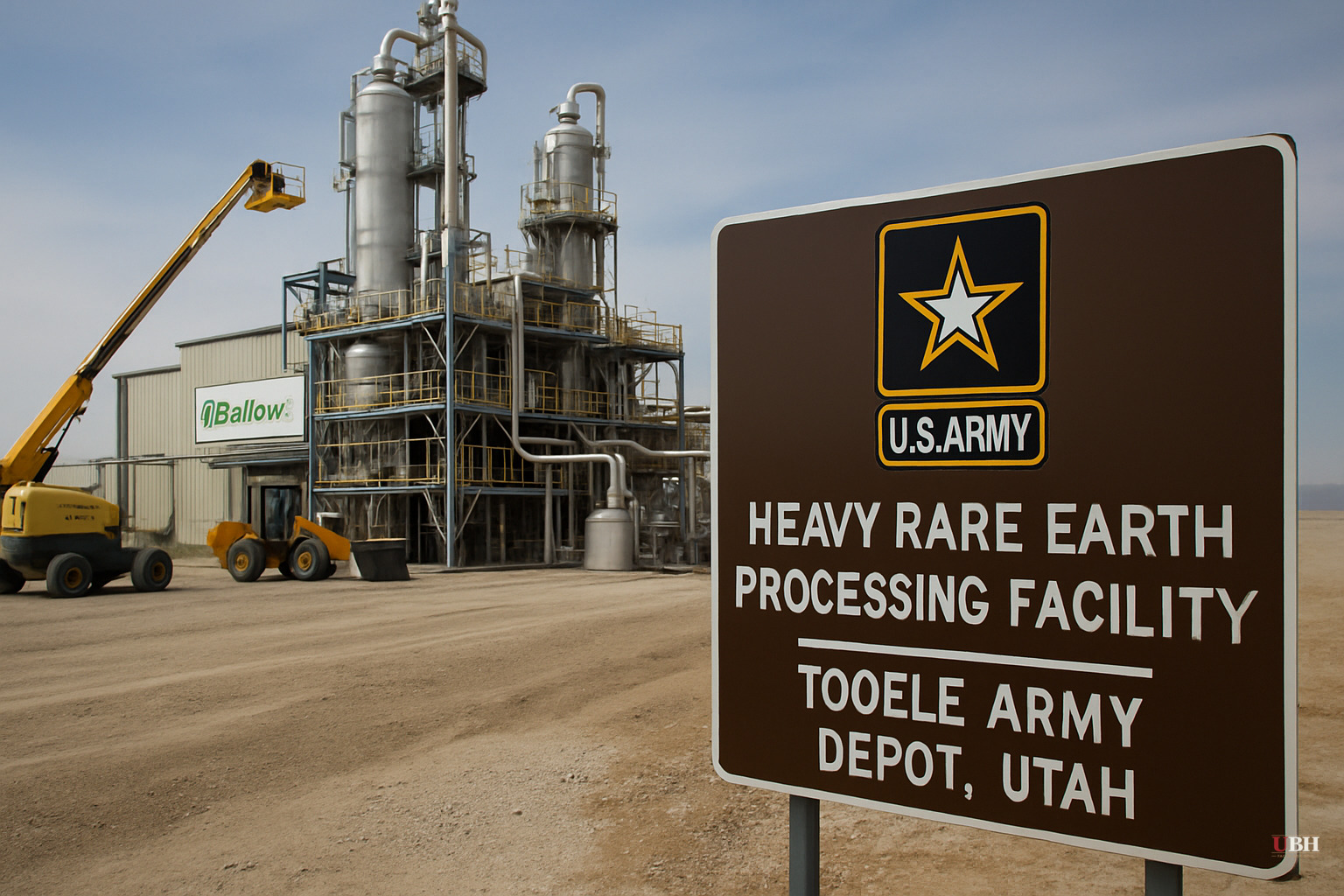
Since China's dominance of the rare earth supply chain became a documented national security liability, Washington has been scrambling to build a domestic alternative. The REalloys-Tooele contract, reported by OilPrice.com, represents a concrete operational step in that effort.
What the Army Actually Awarded
REalloys will finance, construct, and operate a heavy rare earth processing complex at the Tooele Army Depot in Utah under an Enhanced Use Lease structure. That arrangement means commercial development happens on federal military property, but REalloys owns the financing and operations. The Army keeps the strategic asset. Private capital carries the build-out risk.
The target minerals are dysprosium and terbium. These are not obscure elements. They are the key inputs for high-temperature permanent magnets used in electric motors, missile guidance systems, and advanced radar. Right now, China controls the overwhelming majority of global refining capacity for both.
Commercial development is targeted to begin in 2027. Initial operating capability is expected no later than 2028, according to OilPrice.com.
Why the Timeline Is Tight
The January 1, 2027, federal procurement ban on Chinese rare earth materials used in U.S. defense systems is the forcing function. That deadline is not hypothetical. It means the Defense Logistics Agency, the Army, the Department of Energy, and NASA — all listed as intended customers for the Tooele platform — cannot legally keep sourcing these materials from China for defense applications past that date.
REalloys is also the Defense Logistics Agency's contractor on a separate effort to expand domestic samarium and gadolinium metal production. The Tooele project moves the company further up the supply chain, adding oxide processing to a portfolio that already includes metals and alloys.
The Saskatchewan Piece
REalloys is not starting from zero. The company committed approximately $20.6 million to upgrades at the Saskatchewan Research Council's rare earth processing facility in Canada, securing exclusive supply rights to 80% of that facility's expanded output, including neodymium-praseodymium metal and dysprosium and terbium oxides. Initial commercial production at the Saskatchewan facility is also targeted for early 2027.
A dedicated metallization facility for dysprosium and terbium metals is already in the engineering phase. Major equipment procurement has begun. Qualification materials are expected as early as the fourth quarter of 2026, according to OilPrice.com.
The combined U.S.-Canada platform is expected to become the largest heavy rare earth metallization operation outside of China once fully operational.
The Strongest Counterargument
Skeptics of this kind of government-directed industrial buildout have a reasonable point: the U.S. has announced domestic rare earth initiatives before, and they have repeatedly stalled on permitting, financing, or technical challenges. The Mountain Pass mine in California spent years in bankruptcy before MP Materials rebuilt it. Processing and metallization are significantly harder than mining, and "expected" timelines in the defense-industrial complex regularly slip.
The Enhanced Use Lease model addresses some of that criticism by shifting financial risk to the private sector. But whether REalloys can actually hit commercial output by 2028, given that the Saskatchewan facility and the Tooele complex both need to come online within roughly 18 months of each other, is a genuine operational question, not a settled one.
What This Does Not Solve Yet
Processing capacity is only one node in the supply chain. The U.S. still has limited domestic mining of heavy rare earths, and feedstock agreements like the Saskatchewan deal depend on Canadian production scaling on schedule. Downstream magnet manufacturing — turning refined metals into finished defense components — is a separate industrial challenge that the Tooele award does not directly address.
No investigation or legal challenge to the contract has been announced as of July 6, 2026.
The more specific near-term test is whether REalloys delivers the qualification materials it expects in Q4 2026. That milestone, before either major facility reaches commercial operation, will be the first hard data point on whether this timeline holds.
Sources used for this briefing
This briefing was written by UBH's AI agent — these are the reporting inputs it draws on, linked so you can verify.


