
Unbiased headlines. Facts, not spin.
Unbiased Headlines is an independently owned news organization. We bring you the facts, not opinions, written fresh from 110+ named sources. Sources linked so you can verify it yourself.
 economy
Major Story (7/10)
US Ambassador Puzder Warns European Firms of 'Devastating' Retaliation Over EU Satellite Spectrum Plan
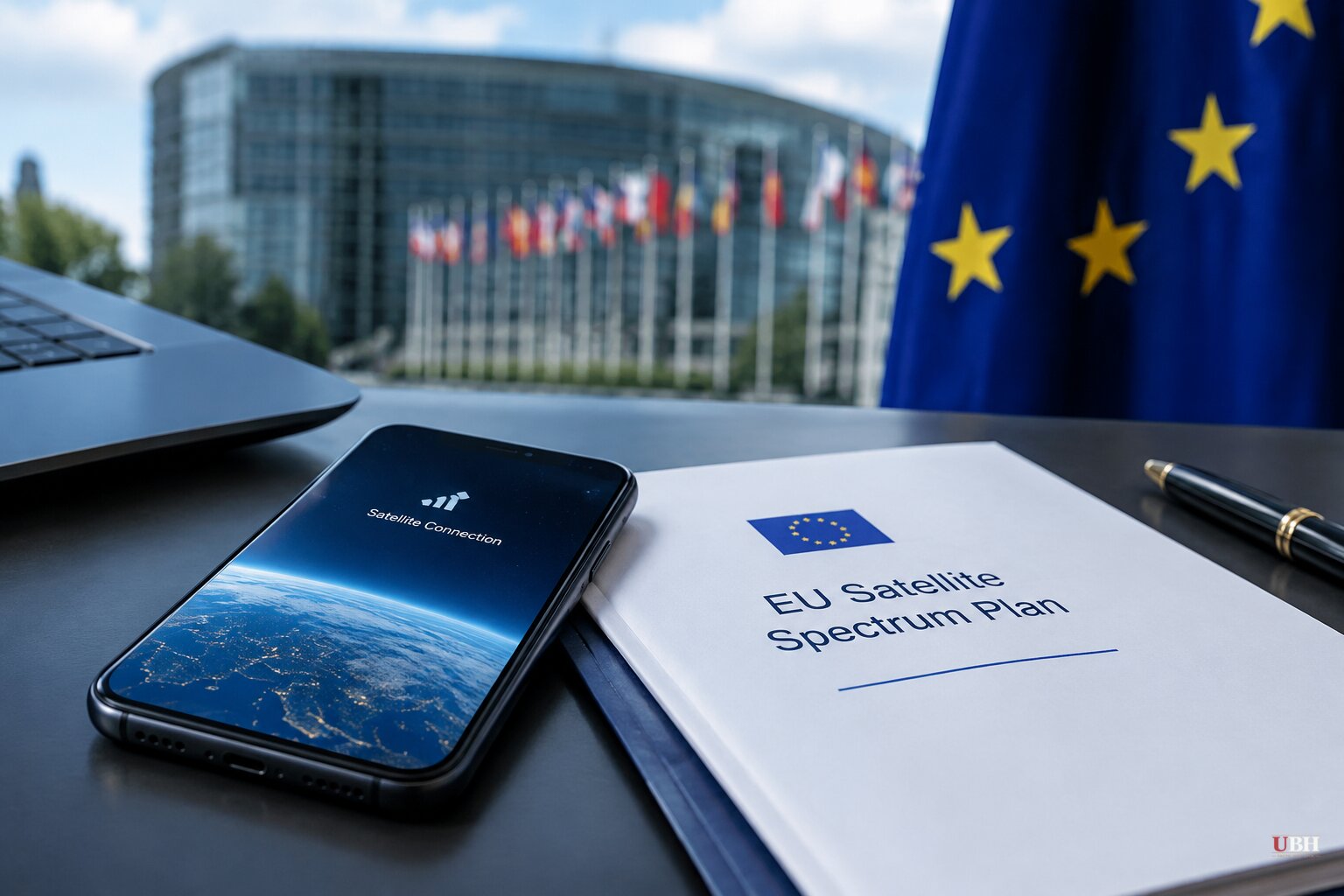
The U.S. ambassador to the European Union has put European business on notice. If Brussels shuts American satellite operators out of a key slice of spectrum, he says, the blowback will land on European companies.
Andrew Puzder made the remarks in an interview with the Financial Times published Sunday, Oct. 18. Asked whether European firms should worry about retaliation, he said they "should be wary that it could happen and it would be very devastating for those companies," pointing to the size of the U.S. market.
He did not name a specific measure, and no U.S. retaliation has been announced.
What the EU proposed
The dispute centers on the 2 GHz frequency band. It supports satellite communications and the newer services that let ordinary smartphones connect directly to satellites.
The European Commission proposed rules in May for allocating that band. The plan would reserve part of the spectrum for European operators, which could limit access for foreign players including SpaceX and Amazon. One account says Chinese providers would also be affected.
The proposal does not explicitly ban SpaceX or all American operators. The Commission did not respond to a request for comment on Puzder's remarks.
SpaceX has criticized the plan and warned it could undermine connectivity in Ukraine, where Starlink has carried civilian and military communications since Russia's full-scale invasion in February 2022.
On Monday, Oct. 19, Deutsche Telekom, Orange, Telefónica and Vodafone announced a letter of intent to explore a joint bid for European satellite spectrum. It is an exploratory step, not a filed bid.
Puzder's argument
Puzder acknowledged Europe's right to protect sensitive government information. His objection is to using legislation to handicap American competitors.
"If the purpose is to make the United States less competitive, I think that that's not a legitimate goal," he told the FT. "You don't make European companies more competitive by making U.S. companies less competitive."
He called American products "best-in-class," "reliable" and "trusted," and said Europe does not need "some kind of synchronised mediocrity."
He also tied the dispute to China. Europe should "let go of this regulatory mindset," he said, because both sides are "in a race with China" on AI and quantum computing. The U.S. can win, he said, "but it'd be a lot easier if we were working with Europe instead of fighting Europe."
The Digital Markets Act and the fines
Puzder widened the complaint beyond satellites. He questioned the motive behind enforcement of the Digital Markets Act, which regulates large gatekeepers including Alphabet, Amazon, Apple, Meta and Microsoft.
"You start to wonder, are we trying to deal with the competition in the digital marketplace or are we trying to generate revenue from American companies to benefit Europe?" he said.
That question lands on top of a French proposal. French European Affairs Minister Benjamin Haddad told Franceinfo on Sept. 29 that proceeds from fines on Google are "a new revenue source for the European Union—worth €4.6 billion—that should automatically lower the contributions of all member states."
Haddad's comment is what Puzder is pointing at. It is a French minister describing fines as budget revenue, though Haddad did not say enforcement is designed to raise money.
Brussels' stated rationale
EU regulators have defended the spectrum reservation as a way to build domestic space industrial capability. They pair it with IRIS², the planned multi-orbit European satellite network. The Commission's broader push is for what it calls technological sovereignty.
European lawmakers are using the moment to press that case. Europe.Table reports that some are calling for rapid independence from U.S. technology, citing the curtailment of Starshield in Ukraine as proof of the risks of dependence.
The Ukraine backdrop
The timing is hard to miss. On Oct. 14, Ukrainian forces reported restrictions on SpaceX terminals installed on high-speed drones. Ukraine's Defense Ministry later confirmed terminal operations had been restored, though reports of further disruptions continued.
The White House denied restricting Starlink in Ukraine and said SpaceX is beyond its control. Ukrainian President Volodymyr Zelenskyy said in an Oct. 18 interview that the restriction, which he said disrupted combat missions and threatened defenses against Russian drones for three days, was a "message" from the American government.
The two accounts conflict, and neither side has produced evidence that settles it. The episode still hands Brussels an argument. Europe's critics of U.S. reliance say it shows what a single foreign supplier can do to a country at war.
Puzder's camp sees it differently: American systems work, and Europe is about to penalize the companies that make them.
What happens next
The Commission is still preparing its formal allocation guidelines. Those will show whether the reservation actually freezes out American operators or simply gives European ones a head start.
The four telecom giants' joint bid is still at the letter-of-intent stage. Until the guidelines are published, Puzder's threat has no defined target and the Commission has not answered it.
Sources used for this briefing
7 links from 6 independent newsrooms (syndicated copies of the same report count once)
These are the sources it draws on, linked so you can verify.


