
Unbiased headlines. Facts, not spin.
Every story is an unbiased news briefing written from 110+ sources across the spectrum — sources linked so you can verify it yourself.
 defense
Major Story (7/10)
June 28, 2026 at 10:49 AM
defense
Major Story (7/10)
June 28, 2026 at 10:49 AM
U.S. Airstrikes Hit Iran Again as Tehran Strikes Bahrain and Kuwait, Threatening Interim Deal
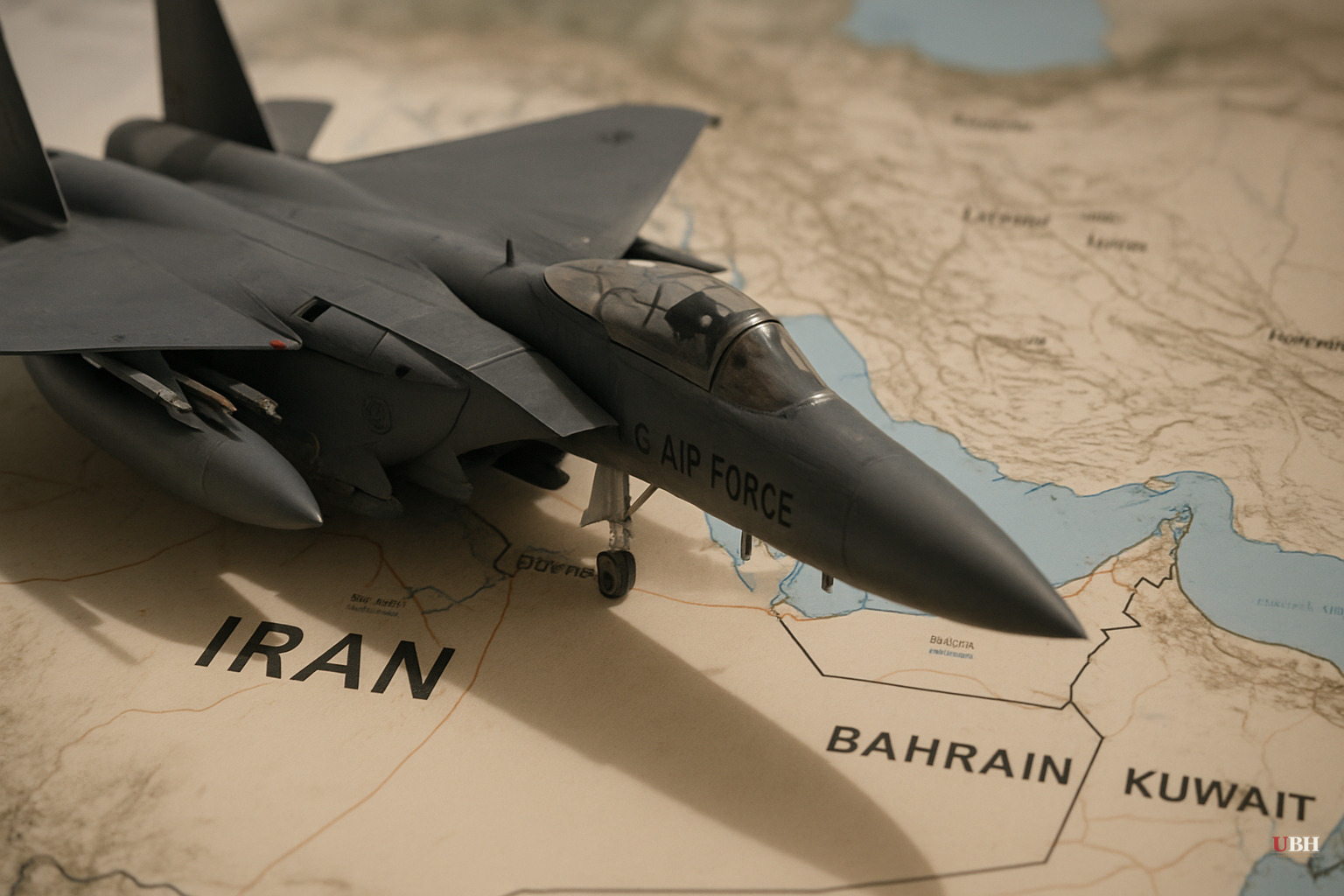
Since the U.S. first struck Iran and Iran responded by targeting American assets, the conflict has expanded beyond a bilateral exchange. It now pulls in Gulf allies Bahrain and Kuwait as Iranian targets.
As of June 28, 2026, AP News is reporting that the U.S. has conducted a second round of airstrikes against Iran. Tehran responded by striking Bahrain and Kuwait, two American security partners in the Gulf. Iran is also threatening to walk away from ongoing talks aimed at producing an interim deal to halt hostilities.
What Is Actually Established
The strikes happened. Iran hit two Gulf states. Diplomatic talks, whatever form they currently take, are now imperiled by Iran's own threat to exit them. Those are the sourced facts from AP News as of this weekend.
What is NOT yet established: the specific targets hit in the latest U.S. strikes, the scale of damage from Iranian attacks on Bahrain and Kuwait, whether any interim deal framework was ever close to completion, and what Iran's precise conditions for continuing or abandoning talks are.
The Diplomatic Risk
Any interim deal would require Iran to stay at the table. Tehran's threat to halt talks is not a minor footnote. It is the central question the region is now watching. If Iran follows through, the U.S. and its Gulf partners face a conflict with no off-ramp currently in view.
The strongest concern from critics of the U.S. escalation posture is straightforward. Each round of strikes that fails to produce a decisive military outcome may harden Iranian domestic politics against compromise, giving hardliners in Tehran precisely the justification they need to reject negotiation. That is a legitimate strategic risk, and it deserves honest accounting. Airpower that does not end a conflict can entrench one.
The counter-argument, and the one that aligns with the basic logic of deterrence, is that refusing to strike after Iranian provocations signals weakness and invites further escalation on Iran's terms. The question is not whether to respond. It is whether the response is calibrated to produce a better outcome than the status quo, and that calculus is genuinely unresolved.
Gulf Allies Now in the Crossfire
Iran targeting Bahrain and Kuwait is a significant escalation in geographic scope. Bahrain hosts the U.S. Navy's Fifth Fleet. Kuwait hosts American military personnel under longstanding basing agreements. Striking either country is not a symbolic gesture. It is a direct challenge to the U.S. security architecture in the Gulf, and it raises the question of whether Article V-style mutual defense obligations under bilateral agreements with those states will be invoked.
Neither Bahrain nor Kuwait has formally declared war or announced retaliatory military action as of June 28, 2026, based on current sourcing.
What Comes Next
The immediate unresolved question is whether Iran's threat to halt talks translates into a formal withdrawal from negotiations or is a pressure tactic designed to extract concessions before any deal is finalized. That distinction matters enormously. A negotiating bluff is manageable. A genuine exit from talks, combined with ongoing U.S. strikes, sets the two countries on a trajectory with no diplomatic exit available in the near term.
The U.S. has not publicly stated its conditions for halting strikes, nor has it confirmed what an acceptable interim agreement would require from Iran. Until both sides define those terms publicly, the gap between military action and diplomatic resolution remains wide open.
Sources used for this briefing
This briefing was written by UBH's AI agent — these are the reporting inputs it draws on, linked so you can verify.


