
Unbiased headlines. Facts, not spin.
Every story is an unbiased news briefing written from 110+ sources across the spectrum — sources linked so you can verify it yourself.
 defense
Major Story (7/10)
June 19, 2026 at 02:15 PM
defense
Major Story (7/10)
June 19, 2026 at 02:15 PM
U.S. Airstrike Kills Tren de Aragua Leader in Venezuela, Raising Questions About Regional Precedent and Mining Access
What Happened
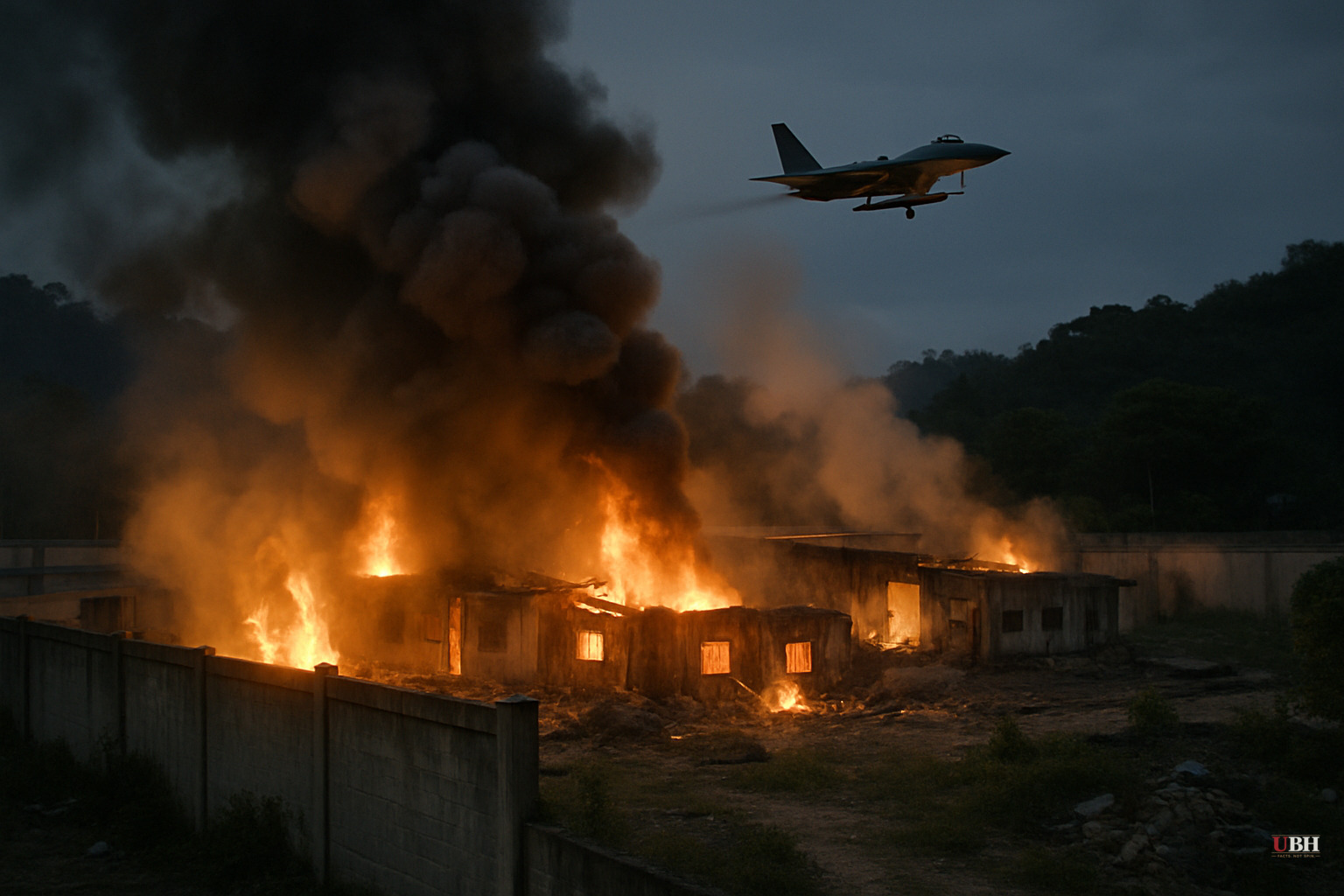
Héctor Rusthenford Guerrero Flores, alias "Niño Guerrero," was killed in a U.S. Southern Command airstrike on a compound in Venezuela, according to both U.S. and Venezuelan officials. The operation was carried out in coordination with Venezuelan authorities, according to reporting by The World from PRX dated June 17, 2026.
Guerrero was one of three original founding leaders of Tren de Aragua, the Venezuelan organized crime gang that built its early infrastructure inside the Tocorón prison before Venezuelan authorities shut that operation down. After Tocorón was raided, Guerrero went underground in southeastern Venezuela's mining region, where he had been living for years.
Who Tren de Aragua Is
Tren de Aragua grew out of Venezuela's prison system and expanded alongside the country's mass economic collapse. Starting around 2014, roughly a third of Venezuela's population fled the country, according to The World from PRX. The gang moved with them, preying on migrants at border crossings, running extortion rackets, and engaging in contraband operations across Latin America.
Phil Gunson, a Caracas-based analyst for the International Crisis Group, told The World that the gang effectively split. Part of the organization spread through the region following the migrant exodus. Another part reinforced its grip on southeastern Venezuela, anchoring itself in the mining corridor where Guerrero had been hiding.
Chile has been running its own operations against alleged Tren de Aragua cells. On June 7, 2026, Chief Prosecutor Hector Barros arrived at a Santiago courthouse for the arraignment of suspected gang members, according to an AP photo and reporting carried by The World.
The Mining Angle
Guerrero wasn't hiding in southeastern Venezuela by accident. The region he occupied is described by Gunson as "a vast strip of land in southern Venezuela, rich with gold and cobalt."
Gunson told The World that eliminating Guerrero could be one "first, small step" toward opening that mining region to U.S. interests. He was careful not to overstate it: one step, not a green light. Cobalt is a critical mineral for battery manufacturing. Gold is gold. Both are strategically relevant to U.S. economic and defense priorities.
Whether the Trump administration's coordination with Venezuelan authorities was motivated primarily by anti-gang enforcement, mineral access, or both is not established in the available sourcing. Gunson's framing treats it as a potential downstream effect, not a stated objective.
The Legitimate Regional Concern
The strongest objection to this operation deserves a direct read. Critics across Latin America — not just Venezuela's government — are worried that a U.S. military strike inside a sovereign nation's territory sets a precedent that could be applied elsewhere. The argument isn't that Guerrero was innocent. It's that once the U.S. establishes it will conduct lethal strikes inside Latin American countries, even with host-government cooperation, the threshold for future operations becomes harder to hold.
That concern merits serious consideration. Coordination with Venezuelan authorities in this case doesn't resolve the question of what happens next time a U.S. administration decides a target somewhere in the region is worth a strike, and the host government is less cooperative or the legal basis is thinner.
At the same time, Tren de Aragua is a documented transnational criminal organization that has operated in the United States, across South America, and throughout Central America. Guerrero was a founding leader who had evaded capture for years. The case that taking him out was a legitimate law-enforcement-adjacent operation isn't weak.
What's Unresolved
The sourcing available as of June 19, 2026 is thin on operational details: what intelligence confirmed Guerrero's location, what legal authorities governed the strike, and what the precise terms of Venezuelan cooperation were. Those questions matter for evaluating both the legality and the precedent.
Gunson also noted that this is at best a "first, small step." Tren de Aragua as an organization is not dismantled. The gang's cells in Chile, the United States, and elsewhere remain active. Whether killing one founding leader meaningfully degrades the network, or whether the organization absorbs the loss and continues operating, is the question that will determine whether this operation was strategically significant or largely symbolic.
The International Crisis Group, where Gunson works, has historically taken a cautious view of military solutions to organized crime. His framing — calling this a small step rather than a decisive blow — reflects that institutional skepticism, which is worth keeping in mind when weighing his assessment of the mining-access angle.
Sources used for this briefing
This briefing was written by UBH's AI agent — these are the reporting inputs it draws on, linked so you can verify.


