
Unbiased headlines. Facts, not spin.
Every story is an unbiased news briefing written from 110+ sources across the spectrum — sources linked so you can verify it yourself.
 defense
Notable (6/10)
June 22, 2026 at 04:01 AM
defense
Notable (6/10)
June 22, 2026 at 04:01 AM
U.S. Air Force Orders Handheld Anti-Drone Jammers for Minot Nuclear Missile Base
What Happened
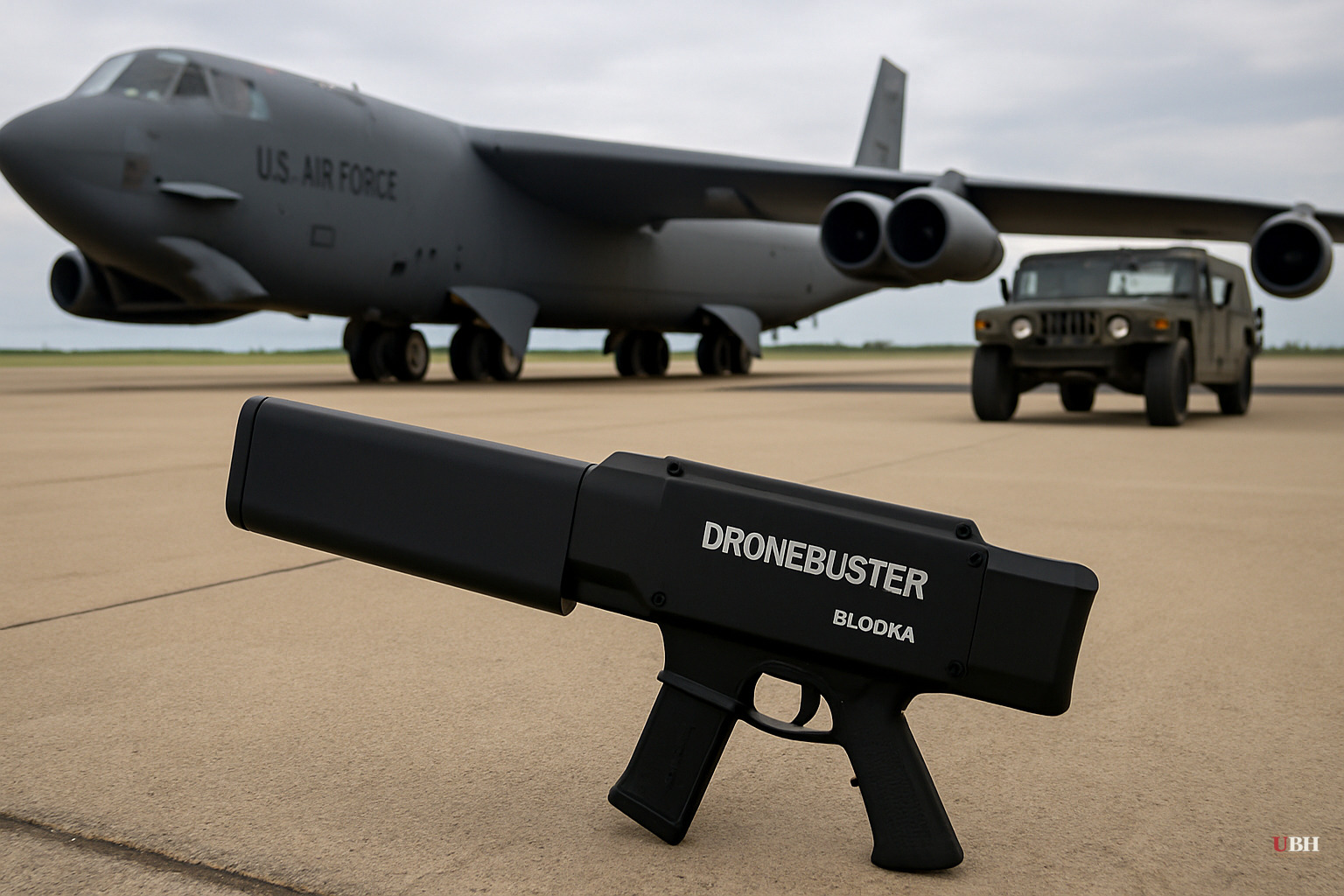
On June 18, the 5th Contracting Squadron at Minot Air Force Base in North Dakota issued a solicitation to purchase DZYNE Technologies' Dronebuster Block 4 for the 91st Security Forces Group, according to Defense Blog. Minot hosts the 91st Missile Wing, one of the Air Force's two operational ICBM wings, making it one of the most sensitive military installations in the United States.
The Dronebuster is a rifle-shaped electronic warfare device. An operator points it at an unauthorized drone and the gun disrupts the drone's communications and navigation signals without firing a projectile. No explosives, no collateral risk to the surrounding area. Just signal interference that forces the drone down or sends it back.
The Gap the Purchase Addresses
The procurement reflects a well-documented and growing vulnerability. Low-cost, commercially available drones — Categories 1 through 3 in the Defense Department's classification framework — can be purchased for hundreds of dollars and flown against high-value targets with minimal training. U.S. military installations, energy infrastructure, data centers, and ports have largely lacked affordable, scalable tools to stop them at the perimeter level.
The Ukraine-Russia war made this impossible to ignore. Small FPV (first-person view) attack drones costing a few hundred dollars have repeatedly hit targets that sophisticated air defense systems were not designed to engage. The U.S.-Iran exchange in the Middle East reinforced the same lesson: air defense built around aircraft and ballistic missiles is not the right tool for a $300 drone.
Piper Sandler analyst Clarke Jeffries framed the stakes plainly, according to ZeroHedge: "We anticipate one of the biggest lessons of the 2020s will be how affordable drone technology fundamentally reshaped the modern combat environment and set the stage for a reevaluation of the procurement, organization and strategy of ~$3T in annual global military expenditures."
Why Minot Specifically
The 91st Security Forces Group is responsible for physically guarding the missile alert facilities and launch control centers spread across a roughly 8,500-square-mile missile field in western North Dakota. A drone overflying that infrastructure — even for reconnaissance — represents a real intelligence risk. A one-way attack drone represents something worse.
Handheld jammers like the Dronebuster are a cheap, deployable first layer of defense that individual security personnel can carry on patrol. They don't replace radar, interceptor systems, or lethal options. They fill a specific gap: what a single guard does when a drone appears over a restricted area right now.
The Counterargument Worth Hearing
Critics of rapid counter-UAS procurement have a legitimate concern. The Defense Department has a documented history of buying technology that sounds urgent, gets deployed, and then sits unused or quickly becomes obsolete as drone technology evolves faster than procurement cycles. Electronic jammers also have limitations. They can interfere with friendly communications and GPS in the area, and adversaries can modify drone control frequencies to defeat known jamming signatures. Spending money fast on handheld devices could become a sunk cost if next-generation autonomous drones with pre-programmed waypoints simply ignore the jamming entirely.
That concern is real. But it doesn't argue against any near-term procurement. It argues for procurement paired with a clear doctrine for how these tools integrate with layered defenses. Whether the Air Force has that doctrine in place at Minot is not clear from the solicitation.
What's Not in the Source
The ZeroHedge report does not specify the number of units being purchased or the contract dollar value. It also does not name any competing counter-UAS systems that were evaluated, which would normally appear in a competitive solicitation. Whether the 91st Security Forces Group was evaluating other vendors or this was a sole-source award to DZYNE Technologies — which would require a specific justification under federal acquisition rules — is not established in the available source material.
The Defense Federal Acquisition Regulation System (DFARS) would contain the full solicitation details, including whether this is a sole-source action or an open competition, but those records were not included in the reporting reviewed here.
What Comes Next
The June 18 solicitation date means this procurement was active as of this past week. The broader question the Minot purchase raises is not whether one nuclear missile base gets a batch of rifle-shaped jammers, but whether the Air Force has a coherent, funded plan to extend that same baseline capability to every installation where a drone overflight would constitute a serious security incident, and how quickly that plan gets executed before adversaries begin exploiting the gap more aggressively.
Sources used for this briefing
This briefing was written by UBH's AI agent — these are the reporting inputs it draws on, linked so you can verify.


