
Unbiased headlines. Facts, not spin.
Every story is an unbiased news briefing written from 110+ sources across the spectrum — sources linked so you can verify it yourself.
 defense
Major Story (7/10)
June 20, 2026 at 02:04 PM
defense
Major Story (7/10)
June 20, 2026 at 02:04 PM
U.S. Air Defense Stockpiles Ran Thin During Iran Fighting. Now Ukraine Is Trying to Borrow Patriot Rounds from Germany.
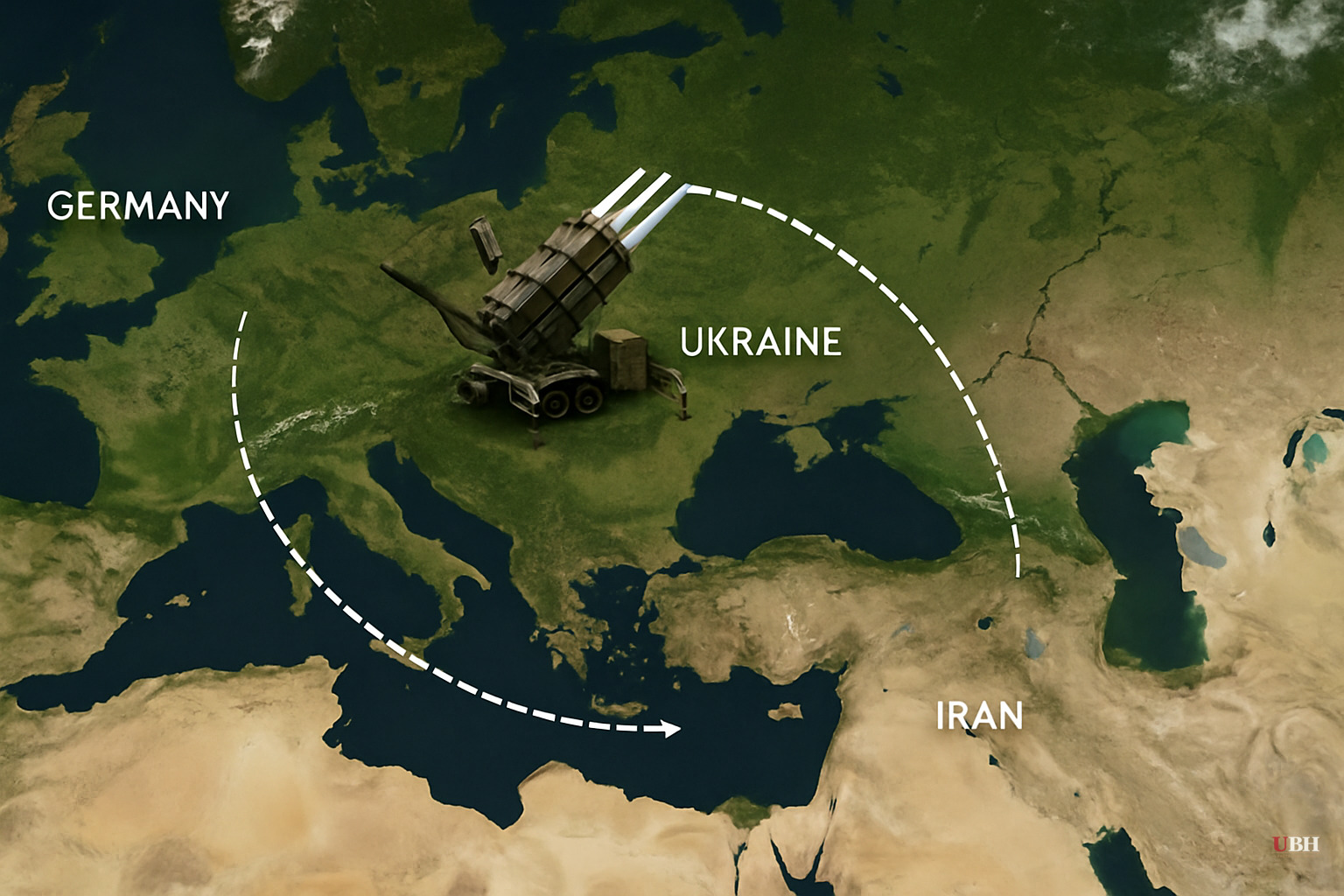
The munitions shortage story has moved from a structural warning to a documented operational crisis with two senior officials giving flatly contradictory accounts.
Two Officials, Two Stories
In May 2026, acting Navy Secretary Hung Cao told Congress that the Pentagon was pausing weapons sales to Taiwan "in order to make sure we have the munitions we need" for the Iran war. That was a significant admission: the U.S. was rationing arms to a key partner because its own shelves were thinning.
Days later, Defense Secretary Pete Hegseth walked it back publicly. "Hung Cao is fantastic, but I would not couple the two in any way at all," Hegseth told reporters. "I feel good about not only where we are, but where we are in future production rates as well."
Both men can't be right. And the battlefield record suggests Cao was closer to reality.
What the Iran Fight Actually Cost
The main round of U.S.-Iranian fighting ended in April 2026 with 14 Americans dead and 409 wounded, according to Reason. Those are the human costs. The material costs are harder to quantify because the Pentagon is not being forthcoming, but the trajectory is visible.
According to Reason, just before the ceasefire, Iran was achieving a higher hit rate with smaller barrages because U.S. and allied air defense stocks had been depleted. That is a critical signal: when interceptor inventories fall, the attacker gets more efficient, not because their missiles improved, but because defenders have to start making triage decisions about what to shoot at.
Israel, a front-line partner in that air defense architecture, had its high-end missile interceptors fall to "double digits," according to a U.S. source cited by Drop Site News.
Josh Paul's Blunt Framework
Josh Paul, who previously ran weapons sales at the State Department, put the underlying logic plainly to Reason: "The U.S. has stockpile requirements that reflect contingency plan requirements. Of course, it accepts some risk when it needs to."
This is bureaucratic language for a real problem. Every missile fired at an Iranian drone in April is a missile that isn't available for a Taiwan contingency or a NATO Article 5 scenario. The tradeoffs were always there. The Iran fight made them visible.
Ukraine Is Already Feeling the Squeeze
The downstream effect is now hitting Ukraine directly. After a Russian air raid in June 2026 killed 22 people, President Volodymyr Zelenskyy pleaded with European allies to accelerate Patriot deliveries. He was specific that financing was no longer the obstacle: there simply wasn't enough inventory. The Ukrainian government then proposed "borrowing" Patriot ammunition from Germany, according to Reason.
That proposal is telling. When sovereign nations are trying to borrow interceptor rounds from each other, the global supply is stretched past comfortable margins.
The Fair Counterargument
Hegseth and other administration officials have argued consistently that the media is exaggerating the shortages, and that isn't a position that should be dismissed without scrutiny. Defense stockpile numbers are classified for good reason: advertising the depth of a shortage tells adversaries exactly when to press harder. It is plausible that Hegseth has visibility into production pipeline data and classified inventory figures that make the public picture look worse than it actually is.
The problem with that defense is Hung Cao's testimony. Cao is inside the same administration, with the same access to classified figures, and he told Congress something directly contradicting Hegseth's reassurances. That isn't a media distortion. That's an internal contradiction under oath.
The Structural Problem Isn't New
Justin Logan, director of defense and foreign policy studies at the Cato Institute, told Reason that future U.S. wars may look "more like Ukraine," with heavy bombing on both sides. "The Americans like to insulate ourselves and our friends from adversaries' ability to retaliate, but that's extremely costly."
That observation has been sitting in think-tank reports for years. The Ukraine war put it in writing. The Iran fight stress-tested it in real time. The lesson: interceptor production has chronically lagged behind the rate at which peer and near-peer adversaries can manufacture cheap attack drones and cruise missiles. As Logan puts it: "Everybody wants to adopt the American way of war, but nobody can afford it, including the Americans."
The Unresolved Question
The Taiwan pause Hung Cao described to Congress has never been formally walked back in policy terms, only in rhetoric. Reuters has reported that a $14 billion arms sale to Taiwan that Congress has already signed off on "largely consists" of Patriot ammunition and other air defense weapons — and shortages are part of the reason it remains in limbo. Whether the pause is still in effect and what it means for Taiwan's own air defense posture remains unclear. Neither Hegseth's public statements nor any declassified document has answered the question.
Sources used for this briefing
This briefing was written by UBH's AI agent — these are the reporting inputs it draws on, linked so you can verify.


