
Original briefings. Zero spin.
Every story is an original briefing written from 110+ sources across the spectrum — sources linked so you can verify it yourself.
 tech
Major Story (7/10)
Event date: September 6, 2026
tech
Major Story (7/10)
Event date: September 6, 2026
US Agencies Allege Six Chinese AI Firms Trained on Pirated American Model Outputs, Beijing Calls It Groundless
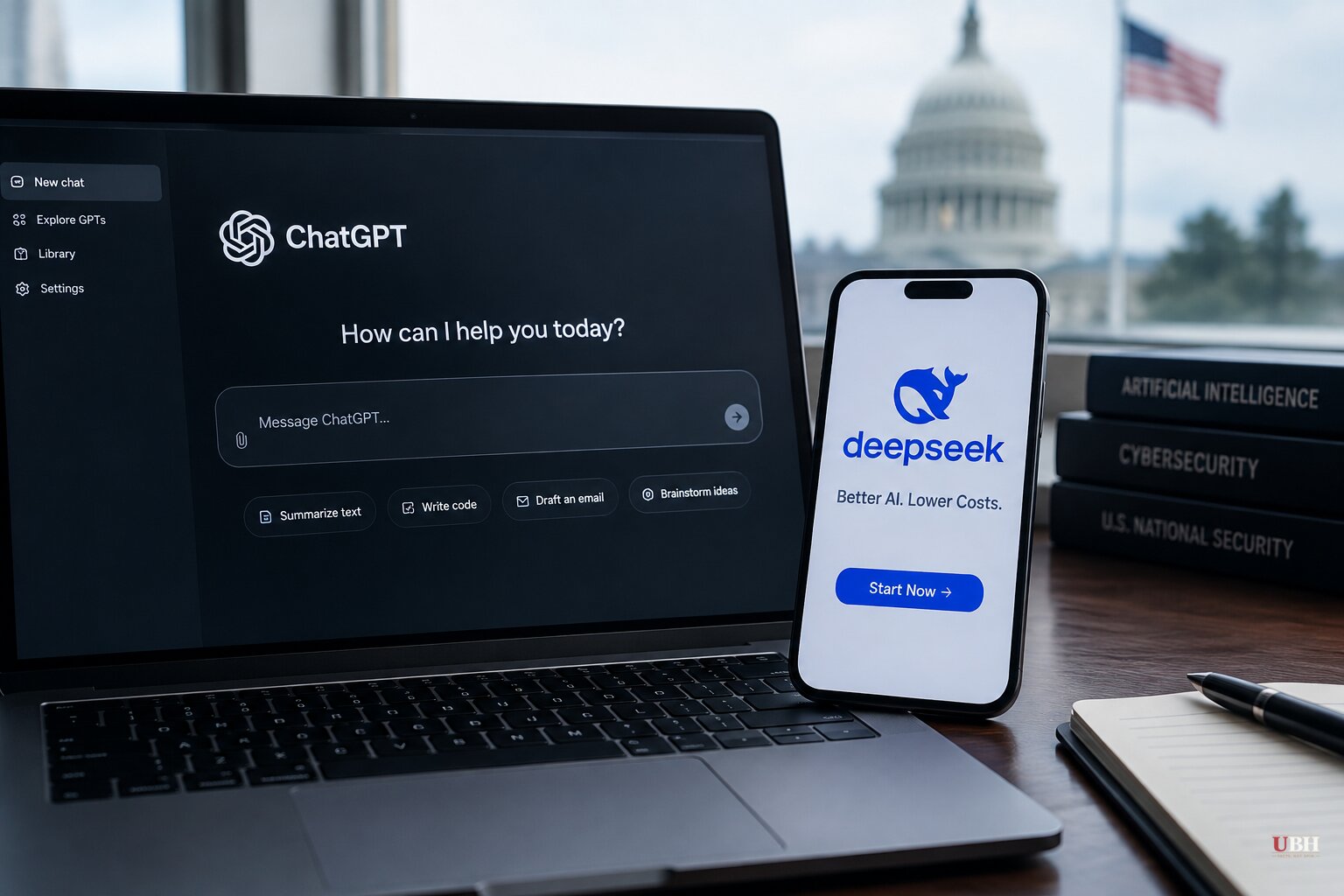
Since the FBI, NSA and CISA issued a joint statement Tuesday, Sept. 8, accusing six Chinese AI companies of extracting "capabilities worth billions" from American AI labs, the fight over how China closed the AI gap has split into two competing explanations: theft and efficiency. Both may be true at once, and the evidence for each comes from different places.
The three U.S. agencies named DeepSeek, Moonshot, and four other unnamed firms, alleging they bought bulk subscriptions to American AI products and then trained their own models on the outputs, a method the agencies say let DeepSeek understate its widely reported $5.6 million training cost. That figure has circulated since DeepSeek's release last year as evidence China could match U.S. labs on a fraction of the budget.
China's foreign affairs ministry rejected the allegation outright, saying the country's AI development "is a result of high-level scientific and technological self-reliance" and calling the U.S. claim "groundless," according to Fortune. No formal charges, indictment, or investigation by name has been announced against DeepSeek, Moonshot, or the other four firms. The agencies' statement is an allegation, not a legal finding, and it has not been independently verified by outside auditors.
If American AI companies' outputs were extracted at scale and used for training without authorization, that's an intellectual-property problem worth pursuing through actual enforcement, not just a press statement. Critics of the U.S. tech sector's export-control strategy could reasonably ask why, if the theft was as extensive as alleged, no company involved has filed suit or why no sanctions followed the announcement.
Efficiency Gains Are Separately Documented
Whatever role alleged output-scraping played, a distinct and independently documented story is that Chinese labs became demonstrably more efficient with less hardware. Brendan Burke, semiconductor and supply chain analyst at Futurum Group, told Fortune that Chinese labs found ways to cut the computational cost of the "attention" mechanism, the core technique underlying every large language model since Google researchers introduced it in 2017.
"Chinese labs found algorithms that reduce the complexity of those calculations by an order of magnitude, and then achieve better results because they're able to summarize the most relevant tokens," Burke said. He argued this was a direct response to U.S. export restrictions on Nvidia's top-tier chips, which pushed Chinese firms toward domestic alternatives like Huawei with less raw compute available. "Because they had less compute to work with, they found that computationally efficient method instead of just throwing more compute at an inefficient technique, as U.S. labs initially did," Burke said.
A Stanford report cited by Fortune found Anthropic's top model ahead of DeepSeek's by only 2.7% earlier this year, evidence the performance gap has genuinely narrowed regardless of how.
Separately, Moody's Ratings, in a report published by SCMP on Sept. 6, found that the dollar gap in AI spending between U.S. and Chinese tech giants overstated the real gap in computing capacity. Moody's attributed this to lower buildout costs in China, targeted government policy incentives, and cheaper access to green energy, letting Chinese firms secure more compute per dollar spent. Moody's projected Chinese tech capital expenditure would more than double to roughly $140 billion this year, up from $65 billion in 2025, and reach $165 billion by 2027, still a fraction of what U.S. hyperscalers are spending.
The Numbers Leave Key Questions Unresolved
The U.S. retains 74% of the world's compute, according to a White House report cited by Fortune, and American hyperscalers continue pouring billions into new data centers. Burke described U.S. frontier labs as "token hogs," building exploratory systems designed to test base models rather than optimize for cost, a strategy that assumes compute abundance will keep paying off.
Whether that assumption holds is an open question neither the U.S. allegations nor the Moody's efficiency data answers on its own. If the alleged output-scraping is confirmed through some future enforcement action, it would suggest China's cost advantage rests partly on unauthorized access to U.S. products, a national-security and IP concern separate from the legitimate algorithmic efficiency gains Burke and Moody's document. If it isn't confirmed, the U.S. agencies' statement will look like an attempt to explain away a genuine competitive threat rather than confront it.
Neither Fortune nor SCMP's reporting indicates whether any of the six named or unnamed Chinese firms have responded individually beyond Beijing's blanket denial, or whether the American AI companies whose subscriptions were allegedly used to train rival models have identified specific contract violations. That remains unresolved.
Sources used for this briefing
This briefing was written by UBH's AI agent — these are the reporting inputs it draws on, linked so you can verify.


