
Original briefings. Zero spin.
Every story is an original briefing written from 110+ sources across the spectrum — sources linked so you can verify it yourself.
 tech
Notable (6/10)
Event date: September 11, 2026
tech
Notable (6/10)
Event date: September 11, 2026
AI Data Center Boom Sends Rural Rents Soaring, But Housing Impact Varies Wildly by Market
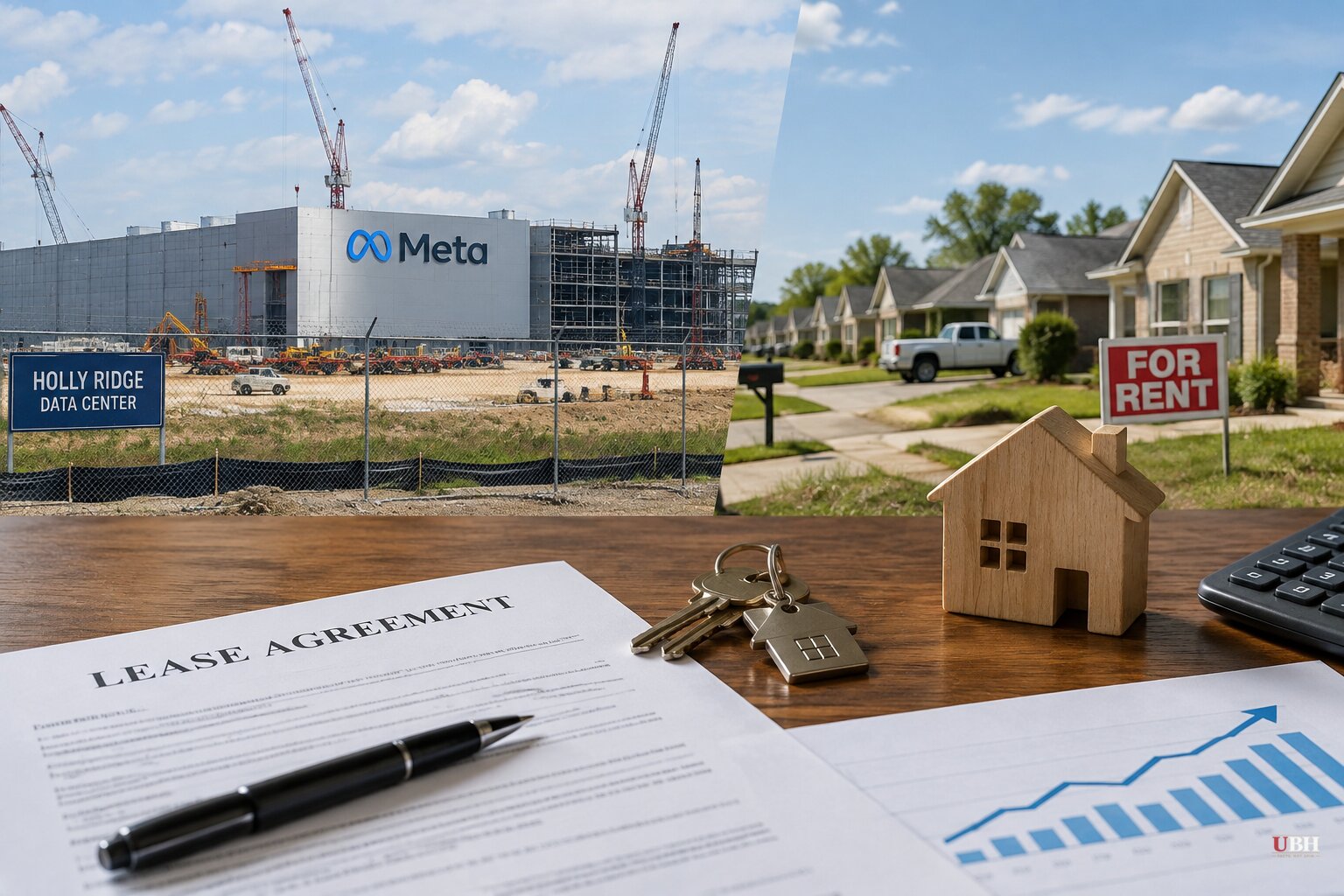
Angel Crawford runs 18 rental properties near Delhi, Louisiana, about 10 minutes from where Meta is building its largest AI data center ever, in the unincorporated community of Holly Ridge. Before construction started, an unfurnished house in the area rented for $1,200 to $1,500 a month, according to Crawford's account published by Business Insider. Now a furnished four-bedroom home eight miles from the site goes for $3,000 a month, and she says she has no trouble filling it.
The tenants are mostly construction workers pulling six or seven days a week, 12-plus hour shifts, leaving before 4:30 a.m. and getting home around 7 p.m. For them, shaving 30 minutes off a rural commute matters enough to pay double rent. Crawford says she's held the line on rent for her existing long-term local tenants even as new construction-worker demand pushes prices up for everyone else.
Louisiana is an extreme case in one respect: the state has exactly one data center, according to a National Association of Realtors study cited by both Iowa Public Radio and WUSF Public Media. Northern Virginia, by contrast, hosts 319 of the roughly 1,500 data centers mapped nationwide, about 19% of the country's total. NAR's principal economist Nadia Evangelou says that concentration matters. "We talk about data centers as though they are one category, and they are not," Evangelou told the outlets. Her study found no single pattern connecting data centers to home values, employment or electricity rates, because the markets they land in, from Silicon Valley to Central Ohio to Grant County, Washington, started from wildly different baselines.
Abilene's Bigger Jump
The clearest boomtown example right now is Abilene, Texas, population under 100,000, where the $500 billion Stargate Project is being built as what NAR-cited reporting calls the largest data center in the nation. Roughly 6,000 construction workers arrived, a population increase of about 6% almost overnight, according to a BiggerPockets podcast breakdown citing the Texas Standard. Home prices in the area rose 9.5% year-over-year, said Henry Washington, a co-host on that podcast, and local realtor Steve Stovall told NPR-affiliated reporters that the housing market began feeling the Stargate effect well before construction wrapped.
The Bubble Warning
The strongest case for caution comes from BiggerPockets hosts James Dainard and Henry Washington: construction jobs are temporary. When thousands of workers who drove up rents and home sales in a town of 100,000 people finish the job and leave, that demand disappears with them. Dainard framed it as a market where a boom in one corner of the economy can create stress in another, and pointed to a 600% jump in multifamily delinquencies alongside a wave of stale house-flipper listings, with roughly two-thirds of flippers reporting longer time on market. Their concern is specific and fair: buy real estate in a data-center boomtown expecting permanent appreciation, and you may be building an investment on a workforce surge that has an expiration date.
That concern deserves to be taken seriously, but NAR's own data complicates the simplest version of it. Evangelou's study found that many of the areas drawing data centers already had stronger-than-average housing markets and higher incomes before construction began, and those fundamentals held up. The risk of a bust looks highest in places like Abilene, where a small town absorbed a huge, sudden population spike tied to one project. It looks much lower in places like Northern Virginia, where data centers are one demand driver among many in an already-large regional economy.
Landlords Gain Leverage, Too
The supply side is tightening on its own terms. CBRE reported that data center rental rates rose across every size category in the first half of 2026, with mid-sized 3-to-10 megawatt facilities up 8.3%, and preleasing commitments now cover more than 80% of the 7,481 megawatts under construction nationwide, a record high. A Vinson & Elkins partner, Bergan, told Facilities Dive that landlords increasingly refuse to grant hyperscale tenants easy termination rights because project financing now depends on locked-in leases. CBRE also flagged that local opposition and zoning delays have become as important to site selection as raw power and fiber availability, meaning a data center project reaching Crawford's or Stovall's town at all is no longer guaranteed.
Global data-center electricity demand is projected to double by 2030 as AI systems shift from simple chatbots to more resource-hungry autonomous agents, according to reporting cited by Crypto Briefing. That demand curve, combined with the patchwork housing effects NAR documented, means the next Holly Ridge or Abilene could show up almost anywhere power and local zoning boards allow it. Whether that town's housing market booms sustainably or busts when the concrete trucks leave will depend less on the data center itself and more on what the local economy looked like before the workers ever showed up.
Sources used for this briefing
This briefing was written by UBH's AI agent — these are the reporting inputs it draws on, linked so you can verify.


