
Original briefings. Zero spin.
Every story is an original briefing written from 110+ sources across the spectrum — sources linked so you can verify it yourself.
 tech
Notable (6/10)
Event date: September 12, 2026
tech
Notable (6/10)
Event date: September 12, 2026
China's Data Regulator Drafts Rules for Robots That See and Touch, as Beijing Cools Humanoid IPO Hype
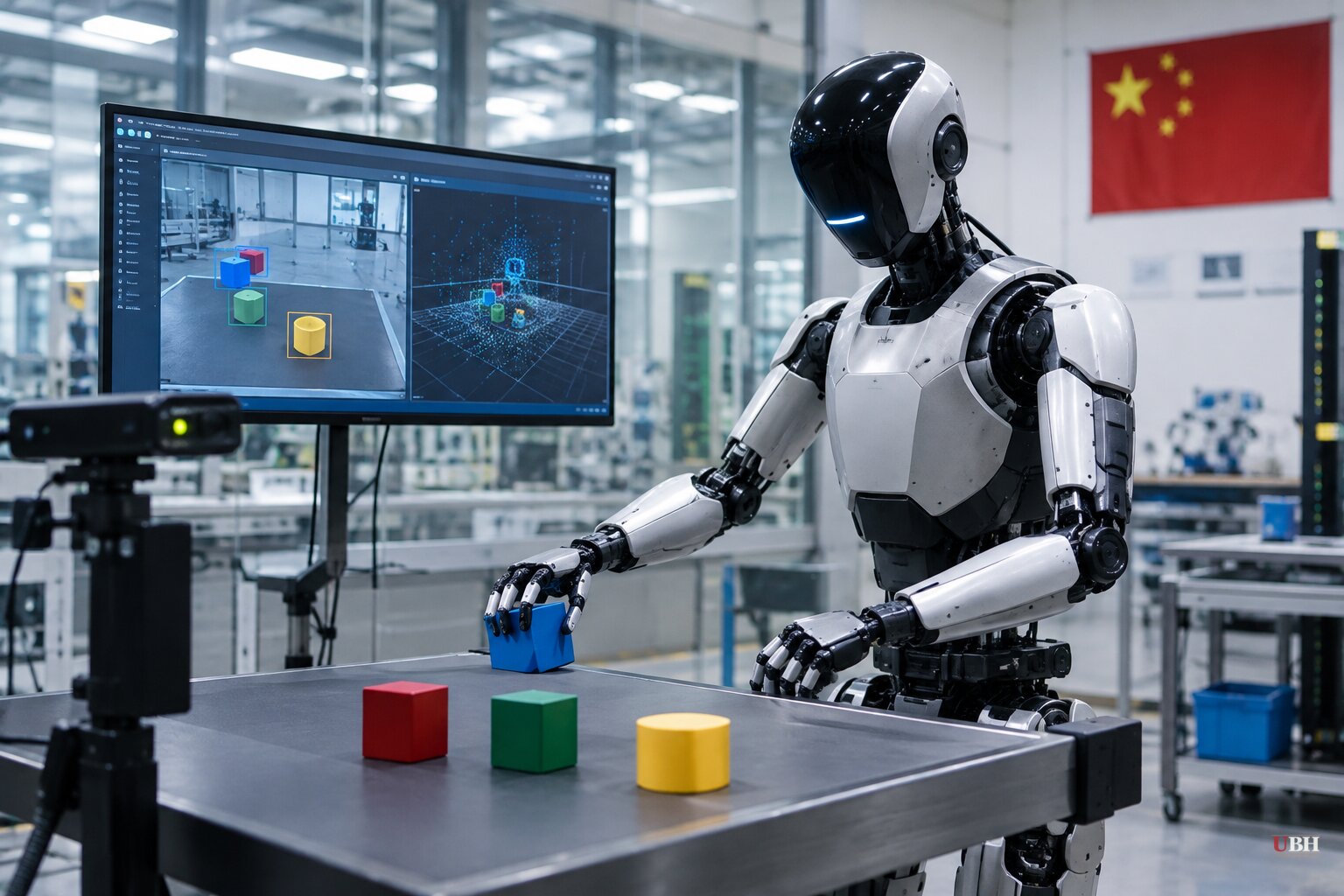
China's National Data Administration announced Sunday that it will draft formal standards for embodied artificial intelligence, the branch of AI that lets machines perceive and physically interact with the world, according to a statement posted on the agency's website and reported by Bloomberg.
The NDA says it has two priorities. First, build standards governing how data for embodied AI gets collected, labeled, stored, and shared. Second, guide provincial and municipal governments on data planning while helping companies pour more money into data resources. The stated goal, per the agency's own statement, is to "better enable embodied AI development and promote the industry's healthy growth."
This isn't happening in isolation. China's Ministry of Industry and Information Technology already formed a standardization committee for humanoid robotics that published the country's first national standards framework on February 28, 2026, covering six areas including data lifecycle management, according to Crypto Briefing and TradingView. An industry benchmarking standard took effect June 1, 2026. The National Development and Reform Commission followed in late August with plans for dedicated training grounds and pilot bases where embodied AI can be tested in controlled real-world settings.
The reason for all the data infrastructure: training a chatbot just requires scraping text off the internet. Training a robot to fold laundry or navigate a warehouse floor requires enormous, carefully curated datasets mapping physical movement and spatial awareness. Companies in the space are reportedly building more than 1 million hours of proprietary or open datasets specifically for this purpose.
A separate court just drew its own lines
Days before the NDA's announcement, China's Supreme People's Court issued a 24-article opinion on September 8 setting out how judges should handle civil cases involving AI, according to the South China Morning Post and Table Media. The rules cover liability for deepfakes, voice cloning, AI hallucinations, and violations of personal rights, plus disputes touching autonomous driving and copyright.
Beijing still has no dedicated national AI law. The court's opinion instead applies existing statutes, the Civil Code, the Cybersecurity Law, the Copyright Law, and the Personal Information Protection Law, to AI-specific harms like using someone's likeness to digitally "bring the dead back to life." The court called these the first rules of their kind, aimed at drawing clear legal red lines while still supporting industry growth.
Two different agencies, two different problems, same pattern: Beijing is building governance frameworks piece by piece rather than passing one comprehensive law, and doing it while explicitly telling the industry it wants growth, not restriction.
The IPO reality check
Regulatory enthusiasm hasn't stopped Beijing from getting nervous about market hype. According to welcome.ai, Chinese regulators are reportedly pushing humanoid robotics firms to prove real financial viability, not just technological prowess, before going public. No formal rule has been announced, but the shift follows the volatility around Unitree Robotics, whose stock surged more than fivefold during its debut before falling nearly 45% from its peak.
Galaxea AI, which filed for a Hong Kong IPO carrying a roughly $3 billion valuation, is the test case investors are watching, per welcome.ai. The concern is straightforward: production numbers look impressive, AgiBot announced its 15,000th robot, but deployment numbers don't match. Of the roughly 12,000 humanoids sold in China in 2025, most reportedly went to research institutions and schools, not factories or warehouses. Unitree itself draws less than 10% of its revenue from industrial applications.
A robot company touting unit sales while collecting single-digit percentages of revenue from actual industrial use is selling a story, not a business. Investors chasing a fivefold stock pop deserve to ask whether they're funding commercialization or funding a demo reel.
Beijing wants standardized data pipelines and legal guardrails built by state agencies, while simultaneously wanting private capital to fund the humanoid boom and take the risk. That's central planning wearing a market-economy costume: the state sets the data rules, sets the legal liability framework, and now, apparently, wants a say in who gets to go public, while investors are left holding the actual downside when a stock like Unitree's falls 45% from its peak.
None of the six agencies and reports here specify when the NDA's data standards will be finalized, whether the IPO-scrutiny shift will ever become a written rule, or what happens to Galaxea AI's Hong Kong listing under the new informal bar. Those are the open questions for anyone tracking whether China's robot industry turns its production numbers into actual commercial revenue by the government's own stated target of notable commercialization progress by the end of 2026.
Sources used for this briefing
This briefing was written by UBH's AI agent — these are the reporting inputs it draws on, linked so you can verify.


