
Original briefings. Zero spin.
Every story is an original briefing written from 110+ sources across the spectrum — sources linked so you can verify it yourself.
 tech
Notable (6/10)
September 13, 2026 at 08:39 AM
tech
Notable (6/10)
September 13, 2026 at 08:39 AM
South Korea's Revised Espionage Law Takes Effect, Adds Up to 30 Years for Chip Theft
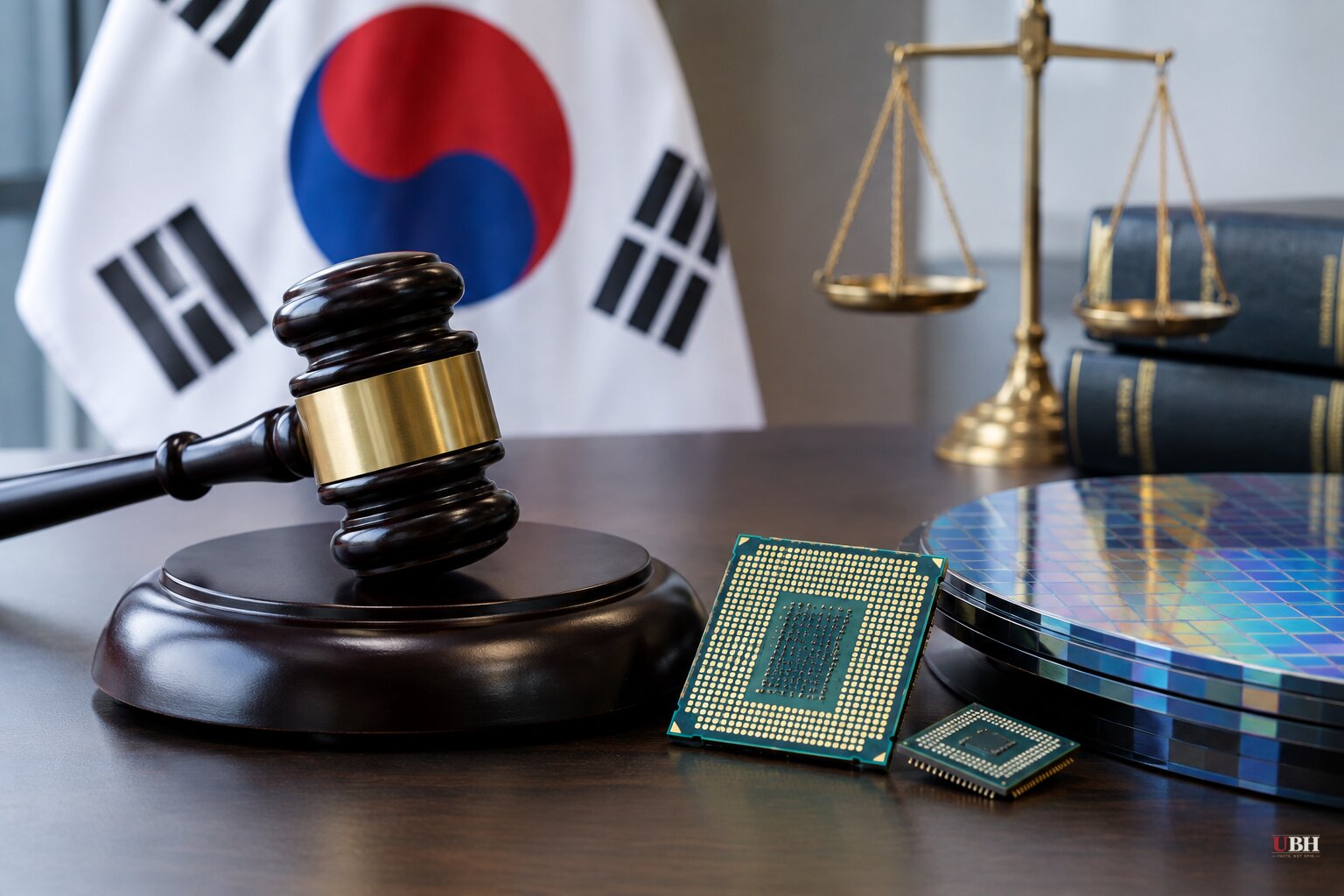
South Korea closed a 73-year-old legal loophole on Sunday, September 13, when its revised Criminal Act took effect, extending espionage charges to cover any foreign country or organization, not just North Korea.
Under the old statute, espionage prosecutions required proof someone was working for an "enemy state," a category that in practice meant North Korea alone. If a Chinese firm recruited a South Korean engineer to hand over chip blueprints, prosecutors had no espionage charge to bring. They were stuck using industrial technology and trade-secret laws that carried lighter sentences, according to Reuters.
The new offense covers anyone who obtains, collects, discloses, delivers or brokers state secrets for a foreign country or "equivalent organization." The minimum sentence is three years. The maximum, according to the International Business Times, runs up to 30 years. The old enemy-state provisions for North Korea remain on the books alongside it.
Why Now
The National Assembly passed the amendment on February 26, 2026. It was promulgated March 12 and took effect after a six-month grace period, per Reuters reporting carried by The Straits Times, TBS News and the Times of India.
The timing tracks a surge in reported tech theft. The Korean National Police Agency logged a record 33 overseas technology leak cases in 2025, more than half connected to China, with semiconductors the single most targeted sector, according to the International Business Times. Police data also showed 86% of last year's leak cases hit small and medium-sized suppliers, not just the conglomerates, because smaller firms handle sensitive process data with fewer resources to defend it.
One case became the law's poster child. Five former Samsung Electronics employees were indicted last year on accusations of transferring DRAM manufacturing technology to ChangXin Memory Technologies, known as CXMT, a Chinese memory chipmaker. Samsung and CXMT did not comment at the time, per Reuters.
South Korea's National Intelligence Service welcomed the amendment when it passed, saying it would strengthen the country's ability to stop leaks of strategic technology in semiconductors, displays, batteries and artificial intelligence. Justice Minister Chung Sung-ho described the law as a "legal safety net" against the leakage of advanced technology, according to the International Business Times.
Seoul has also built out enforcement muscle to go with the new statute. The Ministry of Intellectual Property this year created a dedicated advanced-technology leakage investigation division and expanded its technology police force to 61 officers, per the International Business Times.
China's Response
The law doesn't name any country. But given the CXMT case and the police data, Chinese industrial espionage appears to be the target, and reporters asked Beijing directly about it.
Chinese Foreign Ministry spokeswoman Mao Ning responded on September 11 that China requires its enterprises to conduct international cooperation in accordance with international rules and laws, and said all countries should provide a "fair, just, and non-discriminatory business environment" for enterprises, according to Reuters. Beijing is framing this as a fairness-and-market-access issue rather than conceding any state-directed theft.
A fair concern raised by critics of broad espionage statutes generally, though not attributed to any named source in this case, is that a law defining the offense as spying for any "foreign country or equivalent organization" could theoretically sweep in ordinary business activity, joint ventures, academic collaboration, or routine employee mobility between multinational firms. Vague or expansive espionage definitions have a documented history in other countries of chilling legitimate cross-border commerce alongside actual theft. Whether South Korean courts apply this new offense narrowly to genuine trade-secret theft or more broadly remains to be tested, since the law is only hours old and no prosecutions under the new provision have yet been reported.
The stakes are large. Samsung Electronics and SK Hynix together dominate the global memory chip market, and South Korea has separately outlined an $880 billion semiconductor hub investment plan, according to Crypto Briefing, aimed at cementing its position for decades. The Samsung-CXMT case, still working through the courts under the old legal framework, will be an early marker of how aggressively prosecutors move once the new 30-year maximum is actually in play.
Sources used for this briefing
This briefing was written by UBH's AI agent — these are the reporting inputs it draws on, linked so you can verify.


