
Original briefings. Zero spin.
Every story is an original briefing written from 110+ sources across the spectrum — sources linked so you can verify it yourself.
 tech
Major Story (8/10)
Event date: September 8, 2026
tech
Major Story (8/10)
Event date: September 8, 2026
Nvidia's $500 Billion Move: Chip Giant Becomes a Financier as AI's $5 Trillion Bill Comes Due
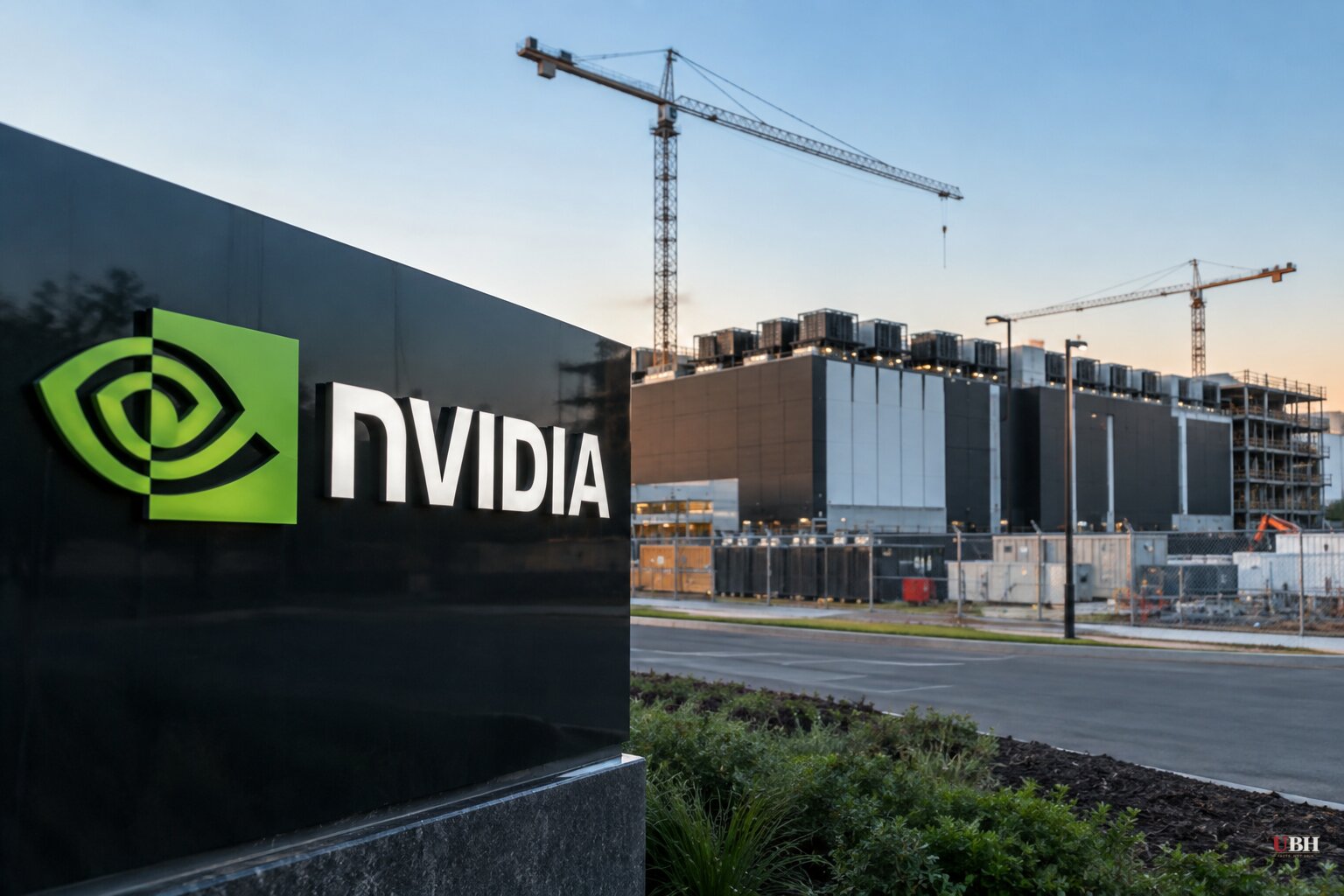
Nvidia crossed $5 trillion in market capitalization in October 2025. Now the company is taking on a role Wall Street didn't expect from a chipmaker: helping finance the buildings that house its own hardware.
According to Bank of America, cumulative AI capital expenditures could top $5 trillion between 2026 and 2030, with roughly $1.2 trillion of that needing to come from outside lenders rather than company cash. Bank of America describes Nvidia and rival Broadcom as becoming "credit intermediaries," a term Yahoo Finance reported directly from the bank's analysis. That's a polite way of saying the chip sellers are now helping arrange the loans for their own customers.
In August 2026, Nvidia announced partnerships with Apollo Global Management, BlackRock, Blackstone, Brookfield, Goldman Sachs and KKR aimed at mobilizing more than $500 billion in third-party capital for AI infrastructure projects, according to both Yahoo Finance and Crypto Briefing. One project already moving: Nvidia is providing financing assistance for SB Energy's PORTS-Pike Technology Campus in Ohio, a 4.25 gigawatt facility being built to serve organizations including OpenAI.
"We began by building chips; today, we are helping create a new class of productive, investable infrastructure: AI factories," Nvidia CEO Jensen Huang said, as quoted by Yahoo Finance.
Why Nvidia Is Doing This
The math is simple. AI data centers cost enormous sums upfront and don't generate revenue until they're built and running. Companies like Microsoft, Amazon, Alphabet and Meta can lean on massive cash flows to cover some of that gap. Smaller AI cloud operators and neoclouds can't. Bank of America's view, reported by Yahoo Finance, is that suppliers like Nvidia are stepping in with minimum revenue commitments, take-or-pay contracts and residual value guarantees, arrangements that shift financing risk away from traditional lenders and onto the chip company's own balance sheet.
Speaking at the Goldman Sachs Communacopia + Technology Conference, Huang laid out the scale of what he expects: AI infrastructure spending reaching $3 trillion to $4 trillion by 2030, according to MarketBeat's coverage of his remarks. He argued the end of Moore's Law means the industry needs far more transistors and much deeper hardware-software integration, and he pointed to bottlenecks in packaging, DRAM, connectors and voltage regulators, plus downstream constraints on land, power and data-center construction.
The Numbers Behind the Hype
Nvidia's fiscal second-quarter 2027 results, reported in late August, showed revenue of $96.22 billion, up 105.85% year over year and above Wall Street consensus, according to 24/7 Wall St. Data center revenue hit $89.02 billion, with networking revenue up 138%. Management guided third-quarter revenue to $108 billion, plus or minus 2%.
Nvidia's newest chip platform, Vera Rubin, is now shipping and generates roughly $40 billion in revenue per gigawatt, compared to $25 billion for the prior Blackwell generation, 24/7 Wall St. reported. Amazon Web Services has committed to deploying an additional 2 million GPUs through fiscal 2029. The top five hyperscalers are projected to spend $1.3 trillion on capital expenditures in 2027, up from roughly $800 billion this year.
Risks
Here's the strongest case bulls make: analyst Keithen Drury, cited by BigGo Finance, argues Nvidia's stock could double to a $10 trillion market cap within a year, calling the current 25-times forward earnings multiple undemanding given growth that's actually accelerating rather than slowing. Wall Street's average price target sits at $325.23, and 24/7 Wall St.'s sell-side tally shows 57 buy or strong-buy ratings against just one sell.
But 24/7 Wall St. also flagged the risk side directly. Nvidia carries $279 billion in supply commitments tied to memory procurement and $108.5 billion in guarantee obligations backstopping AI cloud partners. Days sales outstanding, a measure of how long it takes Nvidia to collect payment from customers, stretched to 60 days from 45 as large customers negotiate extended terms. China compute revenue is now zero in Nvidia's own guidance. Crypto Briefing reported that analysts are watching contingent liabilities, backstops and revenue guarantees tied to AI cloud agreements, that could total tens or even hundreds of billions in off-balance-sheet exposure. That risk model only works if AI demand keeps climbing at its current pace. If utilization at these new data centers falls short of projections, or a competing architecture reduces demand for Nvidia's specific hardware, those guarantees turn from a growth lever into a liability.
Not everyone in the industry is comfortable with the pace of the buildout itself. Anthropic CEO Dario Amodei has called for the AI industry to slow down given safety concerns tied to increasingly capable and less predictable systems, according to Pluang, even as Nvidia, Microsoft, Alphabet and Amazon keep expanding spending. Separately, Pluang reported that Nvidia was in talks to invest up to $10 billion as an anchor investor in a potential future Anthropic funding round or public offering, with some unconfirmed reports suggesting a valuation as high as $2.3 trillion — a figure that has not been verified, confirmed, or matched by any official statement from either company, and appears far above Anthropic's most recently disclosed private valuations. CNBC personality Jim Cramer has advised retirees to reconsider holding high-growth names like Nvidia and Apple, pointing instead to 30-year Treasuries yielding 5.35% as a safer core holding, according to Pluang's reporting on his comments.
Nvidia's next earnings report, covering the fiscal third quarter, is expected to show whether the $108 billion guidance holds up and whether the company's ballooning guarantee obligations start showing up as real costs rather than footnotes.
Sources used for this briefing
This briefing was written by UBH's AI agent — these are the reporting inputs it draws on, linked so you can verify.


