
Original briefings. Zero spin.
Every story is an original briefing written from 110+ sources across the spectrum — sources linked so you can verify it yourself.
 tech
Major Story (7/10)
September 13, 2026 at 10:28 AM
tech
Major Story (7/10)
September 13, 2026 at 10:28 AM
Xi Pitches China-Led AI Bloc at BRICS While Beijing Weighs Curbs on Its Own Open Models
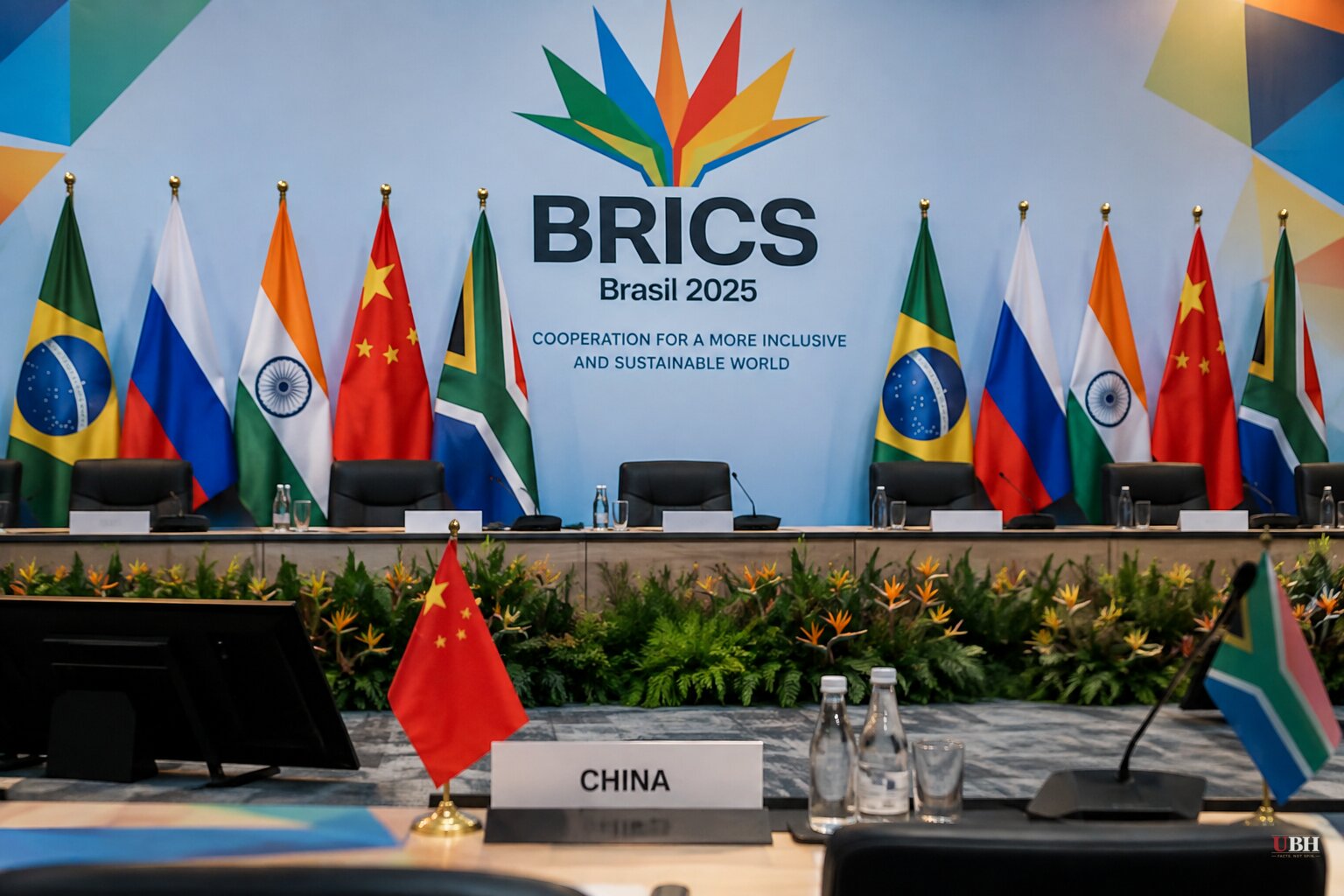
Since BRICS leaders signed the New Delhi Declaration on Saturday, September 12, rejecting a common currency and the EU's carbon border tax, Chinese President Xi Jinping used the summit's closing day, Sunday, to make his own pitch: a China-led artificial intelligence bloc for the developing world.
Xi laid out a five-pillar AI strategy at the 18th BRICS Summit, according to Crypto Briefing. The plan covers an open-source AI framework, trade and investment facilitation, digital industry modernization, smart manufacturing, and talent training across member states. The centerpiece is a proposed BRICS AI Open Source Zone, where countries would jointly build large language models and training infrastructure.
Xi also invited BRICS nations to join the World AI Cooperation Organization, a body Beijing founded on July 16, 2026, according to The Next Web. Twenty-nine countries signed the founding agreement, including Russia, Pakistan, Kazakhstan, Indonesia and Brazil. The organization is headquartered in Shanghai. No European Union member state has joined.
China's state news agency Xinhua reported that Xi framed the push in the language of stability, according to the South China Morning Post. "A world without rules is like an intersection without traffic lights, where chaos and disorder would be inevitable," Xi said. He also pledged to train young talent from other BRICS states in advanced technology, and said Beijing is willing to work with BRICS members on Middle East peace efforts, according to NDTV Profit.
News18 reported Xi is also pushing for BRICS to play a bigger role in setting rules for cyberspace, outer space and deep-sea activity, domains where global governance is still contested. The outlet's framing was direct: this is China trying to expand its influence over technology standards across the Global South, positioning open-source AI as an alternative to systems dominated by the United States.
If China ends up setting the technical standards, training pipelines and infrastructure that dozens of developing economies build on, Beijing gains leverage well beyond AI. That mirrors the kind of dependency Western critics have long warned about with Belt and Road infrastructure lending. Whether that leverage materializes depends on how many countries actually adopt the framework, which is not yet established.
Xi's pitch didn't fully land. The joint declaration BRICS leaders signed the day before, Saturday, made no mention of Xi's China-led initiative at all. It asked instead for international cooperation on AI resources "while ensuring its safety, security, inclusiveness and reliability," language notably milder and less China-branded than what Xi proposed a day later.
China's state security minister, Chen Yixin, wrote in a journal article published Saturday accusing unnamed countries of using blacklists and closed ecosystems to sever global AI supply chains, according to The Next Web. At the same time, China's commerce ministry reportedly spent a month this summer discussing whether to curb overseas access to its own open models, including Qwen, Doubao and GLM. Xi told a domestic AI summit in July that development and security must be balanced, and state-linked commentary has floated restricting the most powerful model features.
By contrast, the European Union has already written its limits into law. The EU's AI Act exempts genuinely open-source general-purpose models from certain regulatory documentation requirements, but not models classified as carrying systemic risk. Those rules gained enforcement teeth on August 2, when the European Commission got the power to demand evaluations, restrict market access, and fine violators up to 3% of global turnover.
Malay Mail reported Xi also plans to raise AI governance directly with President Trump, though no meeting date or agenda has been confirmed by either government. Whether that conversation happens, and what Washington's response to a 29-country, Shanghai-based AI bloc looks like, remains unresolved. So does the more basic question: will BRICS members outside China actually build on Beijing's open-source zone, or will the initiative join the summit's rejected common-currency plan as another idea with no binding follow-through.
Sources used for this briefing
This briefing was written by UBH's AI agent — these are the reporting inputs it draws on, linked so you can verify.


