
Unbiased headlines. Facts, not spin.
Every story is an unbiased news briefing written from 110+ sources across the spectrum — sources linked so you can verify it yourself.
 tech
Major Story (7/10)
September 18, 2026 at 02:30 AM
tech
Major Story (7/10)
September 18, 2026 at 02:30 AM
Unsealed Court Filings Show Microsoft Executive Called AI Training 'Largest Theft of Labor in Human History'
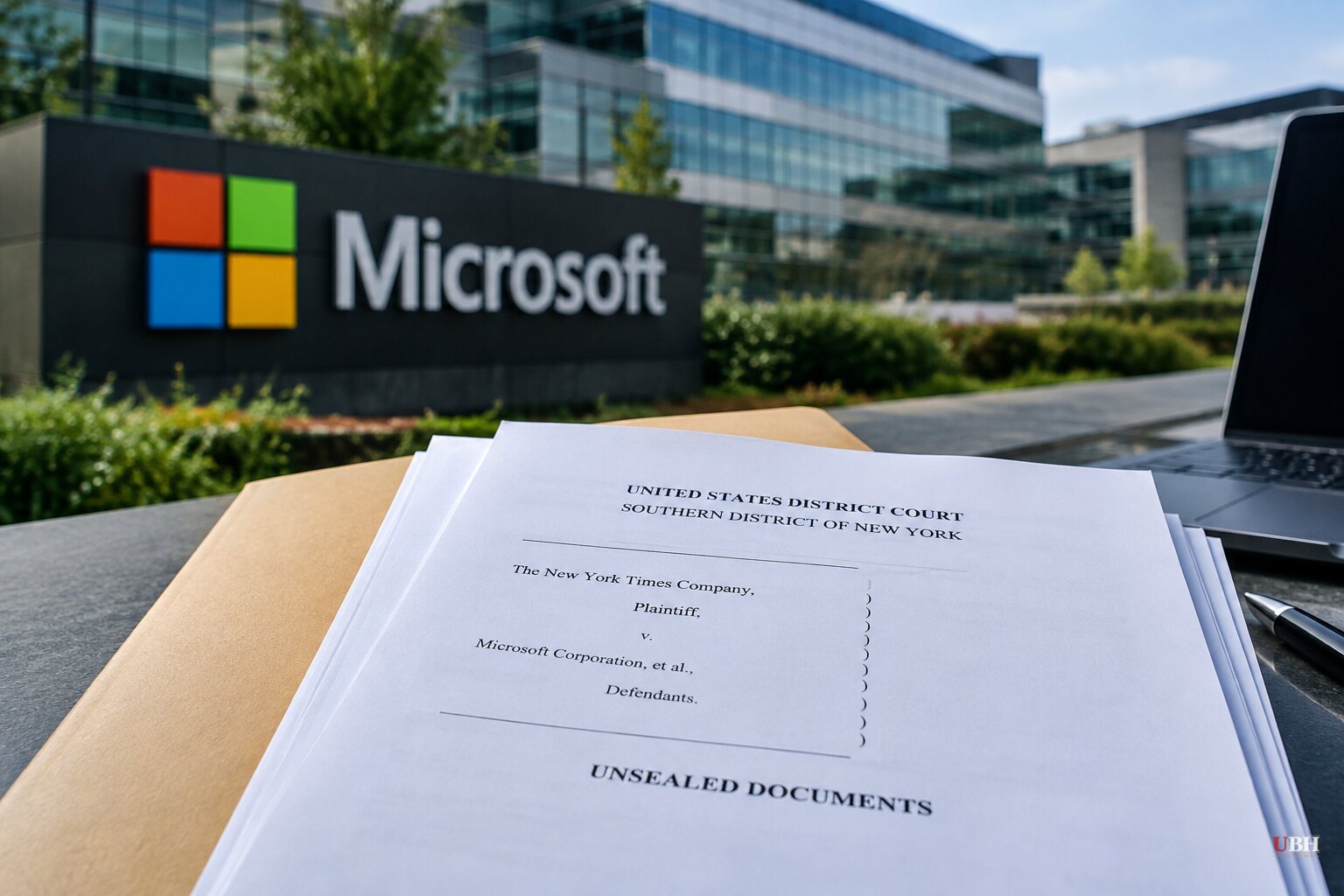
A motion for summary judgment filed by The New York Times and other publishers against Microsoft and OpenAI was unsealed this week, and it contains internal quotes the companies spent years trying to keep confidential.
Microsoft Director of Applied Science Brent Hecht wrote in a January 2023 memo that large-scale scraping of news content for AI training was "an astonishing theft of unprecedented proportions" and possibly "the largest theft of labor in human history," according to the unsealed brief reported by the Washington Post, TechCrunch and Ars Technica. Hecht also wrote that letting AI companies win on fair use grounds would "make a complete mockery of the idea of fair use," per the filing.
A year later, in a January 2024 presentation, Hecht described a "doom loop": AI answer engines pulling traffic away from the news sites whose reporting trains those same models, which he warned would eventually "hurt the performance of our models and the entire web at the same time." The document put it directly: "It is highly unusual that an end-product threatens the economic foundations of its essential suppliers."
Nick Turley, who leads ChatGPT, wrote internally that OpenAI's products are "largely substitutive, period," and would become more so as the models improve, according to Futurism and BigGo Finance. Turley separately called AI chatbots an "existential threat" to publishers. OpenAI cofounder and president Greg Brockman is quoted using nearly identical language about the threat to publishers, and BigGo Finance reported Brockman responded "ah nice" upon learning of a method to bypass the New York Times' paywall.
The filing also alleges OpenAI and Microsoft built training datasets by scraping Bing's search index and Common Crawl web data, and that employees discussed stripping copyright notices from articles before feeding them into training pipelines, according to KuCoin's reporting on the filing.
Microsoft's internal data, cited in the filing, showed Copilot's click-through rate to the New York Times dropped as much as 93% compared with traditional Bing search results. Ars Technica reported the broader range across plaintiffs ran from 83% to 93% declines for some publishers and 51% to 94% for others.
Microsoft CEO Satya Nadella testified under oath, according to the Washington Post and TechCrunch, that "anything that is paywalled should be licensed by anyone who wants to use it" for training or grounding AI answers, and that he would have ordered OpenAI to retrain its models had he known paywalled content was scraped without permission.
These are damaging quotes for two of the biggest names in tech, but they come from a plaintiffs' brief arguing its own case. TechCrunch and The Bold News both flagged that much of the new material comes from the Times' characterization of the evidence, not the underlying exhibits, which remain sealed, and that the quotes are presented "without their original context."
Microsoft has pushed back directly on the significance of Hecht's statements. Superpower Daily reported that Microsoft told the court Hecht's documents "represented one employee's perspective, not the company's view or legal analysis," and the company continues to defend Copilot and its AI training as transformative fair use.
Fair use law in the U.S. generally allows use of copyrighted material without permission for purposes like commentary, parody or news reporting, provided the new use doesn't substitute for the original in its own market. Judges deciding similar AI copyright cases have largely sided with AI companies so far, according to TechCrunch. Earlier this month, the Trump administration filed a brief defending OpenAI's unlicensed use of copyrighted material for training, per TechCrunch and The Bold News, putting the federal government's weight behind the industry's legal position even as its own officials' internal memos raise doubts about that defense.
Neither Microsoft nor OpenAI responded to requests for comment reported by TechCrunch and KuCoin.
The publishers argue the combination of alleged unauthorized scraping, evidence of verbatim reproduction, and measured traffic losses proves AI products are competing directly with the news outlets that supplied their training data, undercutting any fair use claim. Microsoft and OpenAI reject that framing, arguing their products are transformative tools, not substitutes, and that internal warnings from individual employees don't reflect legal reality or company strategy.
No court has ruled on the substitution question in this case. Futurism reported, citing Axios, that the presiding judge isn't expected to decide whether the case proceeds to trial until sometime in 2027, meaning these newly public admissions won't be tested by a jury for months, possibly years.
Sources: Washington Post, TechCrunch, Ars Technica, Superpower Daily, BigGo Finance, The Bold News, KuCoin, Futurism.
Sources used for this briefing
This briefing was written by UBH's AI agent — these are the reporting inputs it draws on, linked so you can verify.


