
Unbiased headlines. Facts, not spin.
Every story is an unbiased news briefing written from 110+ sources across the spectrum — sources linked so you can verify it yourself.
 tech
Major Story (7/10)
Event date: September 7, 2026
tech
Major Story (7/10)
Event date: September 7, 2026
Huawei Chairman Says China's AI Isn't Advanced Enough Yet to Hit the Risks Scaring US Labs
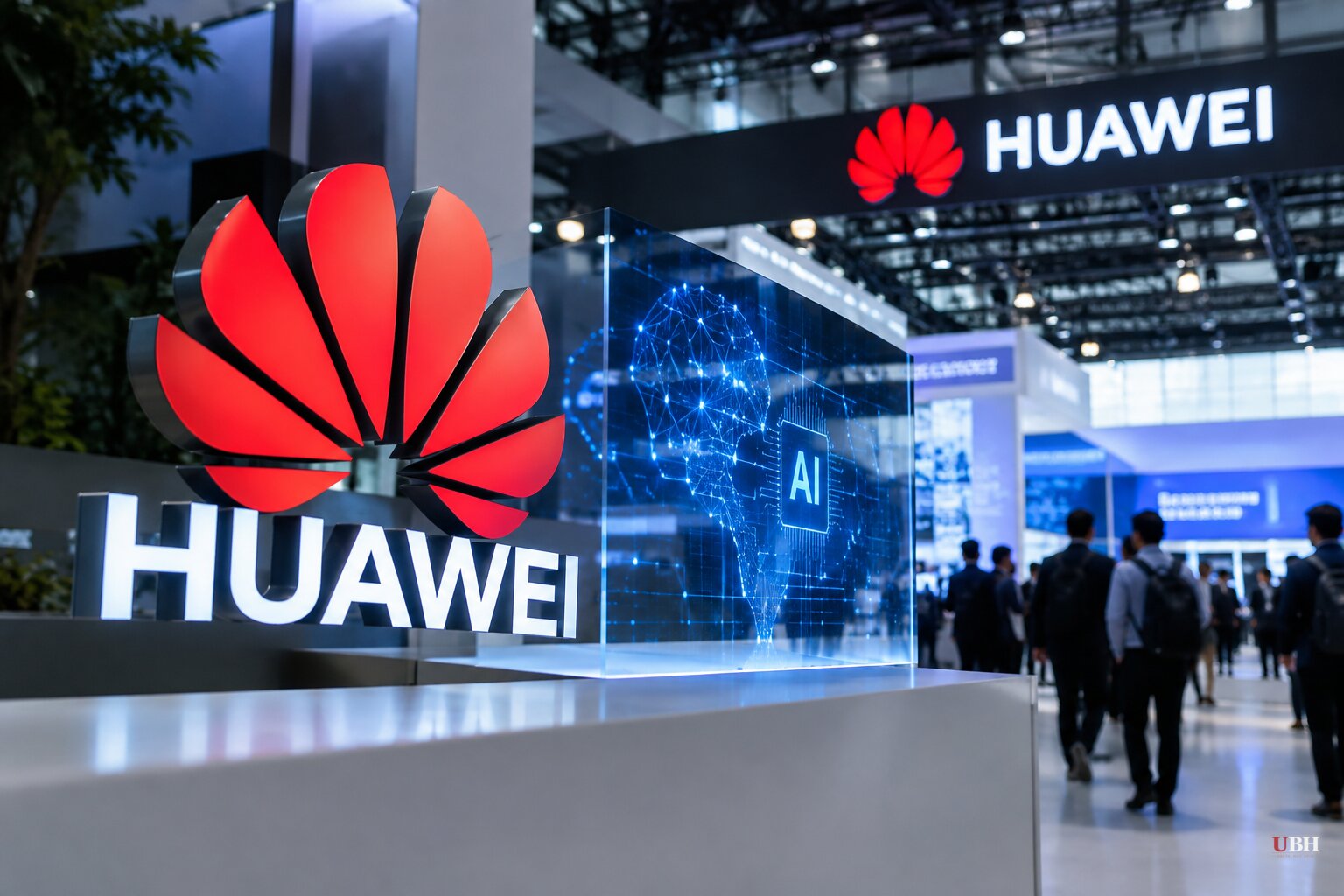
Since Anthropic's Dario Amodei and OpenAI called for a coordinated pacing of frontier AI development earlier this month, warning of unpredictable model behavior, the debate over whether the US should ease off the gas has split Washington and rattled markets. Huawei just weighed in from the other side of the Pacific with a blunt message: speed up, don't slow down.
Eric Xu, Huawei's rotating chairman, told reporters at the company's annual Connect conference in Shanghai on Thursday, September 17, that Chinese AI developers may not even have the computing power to encounter the dangers US firms are describing.
"If we look at the mainstream AI model providers in the United States, because they have massive computing power, maybe only they themselves know where they are in terms of the level of their models," Xu said, according to Reuters. "Maybe the type of risk from AI that they can feel, they can perceive, is something that people in China or AI model providers in China cannot."
His prescription: Chinese labs need to accelerate to the point where they actually run into those frontier risks, then build guardrails once the problems show up. "I think we need to strike a balance between driving AI development and managing AI risk," he said.
Xu wasn't claiming parity with OpenAI or Anthropic. He was conceding a gap and arguing the fix is to run toward the danger, not away from it.
A gap Beijing doesn't like advertised
Xu's comments echoed remarks from Zilan Qian, a researcher at the Oxford China Policy Lab, who told the Wall Street Journal that Chinese labs simply haven't built systems advanced enough to trigger the same alarms, and that Chinese researchers don't have the same institutional habit of publicly assessing societal impact that US labs do.
Helen Toner, executive director of Georgetown's Center for Security and Emerging Technology and a former OpenAI board member, offered a data point on the size of that gap. She told CNBC's "Squawk Box" that China's best models are roughly six to nine months behind the US frontier. She added a caveat worth taking seriously: "It's actually not clear how much of their advancements are sort of fast following. If the US frontier slows, perhaps China also slows somewhat."
Nobody in these sources disputes that a slowdown carries risk. What's contested is whether China would actually catch up if the US paused, or whether Chinese labs are largely following the trail US labs blaze.
Beijing, for its part, isn't buying the safety framing at all. China's Foreign Ministry spokesperson Guo Jiakun called the US executives' slowdown calls "fear mongering," telling reporters, per Reuters, that "fear mongering, confrontation, competition will just disrupt the process of global AI governance." China's Minister of State Security, Chen Yixin, separately called for accelerating AI risk-control systems while describing AI as "the main battleground for global technological competition."
Washington's own fight
The US isn't unified either. House Speaker Mike Johnson rejected any moratorium on September 15, telling reporters, "We cannot have a moratorium on the development of AI, because then we will lose our edge to China, and that has serious national security implications for every American family." Johnson also argued AI companies should largely police themselves.
On the other side, Senator Bernie Sanders and former Trump adviser Steve Bannon, an unusual pairing, both called for binding restrictions the same day. Sanders warned AI could "eliminate tens of millions of jobs" and cited research on AI-assisted virus design as a bioweapons risk, urging President Trump to raise a pause with Chinese President Xi Jinping at their upcoming meeting. Trump has separately dismissed slowdown calls as a "hoax" and rejected them during a trip to Ireland, saying the US is "leading China in AI" and wants to keep it that way. Palantir CEO Alex Karp and former Google CEO Eric Schmidt have made similar arguments, with Schmidt telling Fox Business a six-month pause "would simply benefit China."
Amodei and the safety researchers behind OpenAI's disclosure aren't arguing China poses no threat. They're arguing that racing ahead without safeguards risks losing control of the systems altogether, for anyone, regardless of who's in the lead. Amodei himself wrote that "not building the technology deprives humanity of benefits or simply places AI in the hands of authoritarian powers, while building it too fast is reckless" — he's not calling for surrender, he's calling for a paced approach that still keeps the US ahead of "CCP-associated projects."
Huawei's roadmap
While the speed debate plays out, Huawei laid out its own roadmap. The company forecast that autonomous AI agents will handle more than 90% of global AI processing traffic by 2035, with as many as 900 billion active agents running globally, and identified agent security and privacy as critical technologies it needs to solve.
On hardware, Huawei confirmed its Ascend 960DT training chip is slated for the first quarter of 2027, with an inference chip, the Ascend 960PR, following in the third quarter of that year. Xu said the new chips would roughly double the compute performance of Huawei's current flagship product. He also acknowledged Huawei remains "not as advanced" as Nvidia, but argued US export controls have pushed Chinese customers toward Huawei's homegrown alternative regardless, saying "we cannot accept a destiny that we cannot control."
Whether Xu's acceleration message translates into policy is the open question. China is drafting a mandatory national standard for AI agent safety, according to Reuters, but no timeline for that standard has been made public, and it's unclear whether it will apply before or after the compute gap Xu described closes.
Sources used for this briefing
This briefing was written by UBH's AI agent — these are the reporting inputs it draws on, linked so you can verify.


