
Unbiased headlines. Facts, not spin.
Every story is an unbiased news briefing written from 110+ sources across the spectrum — sources linked so you can verify it yourself.
 tech
Major Story (8/10)
Event date: September 15, 2026
tech
Major Story (8/10)
Event date: September 15, 2026
China Threatens to Scrap Sept. 24 Trump-Xi Summit Over Taiwan Arms Sales, Clouding AI Talks
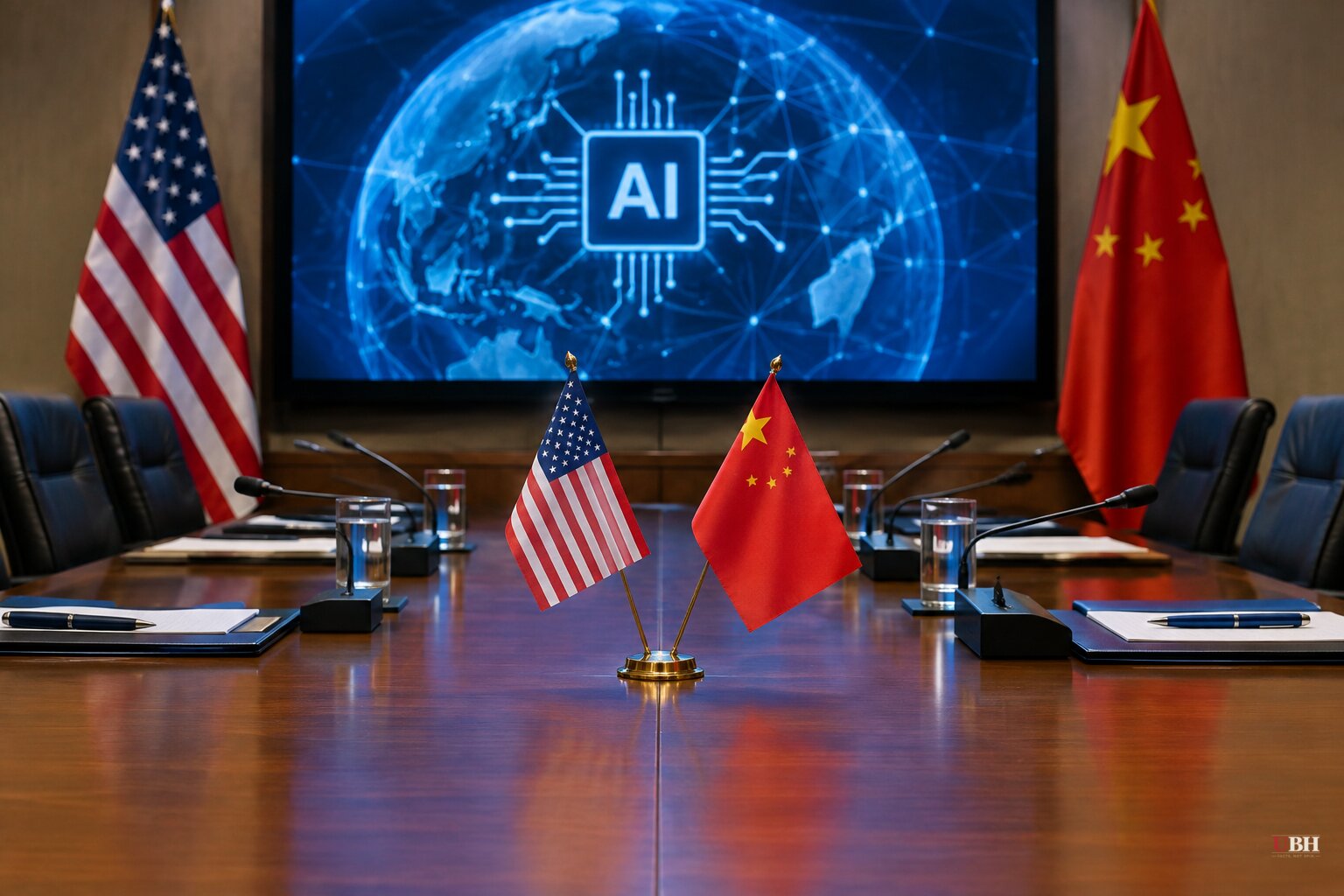
Since reports emerged this week that AI governance would be on the agenda when Trump and Xi Jinping meet, the summit now has a firm date: Thursday, September 24, in Washington, according to Foreign Policy. But the meeting itself may not happen as planned.
Foreign Policy reports China has threatened to cancel the summit if the United States moves ahead with arms sales to Taiwan beforehand. Foreign Policy's China Brief author called that "routine diplomatic noise" rather than a serious threat to derail the meeting, but it adds a layer of uncertainty to a summit already unlikely to produce much on AI.
Trump's Contradiction on Guardrails
President Trump gave a Fox News interview, published Friday, defending his administration's approach to AI regulation, according to TRT World. Asked what guardrails exist to protect Americans while the U.S. races China, Trump pointed to the administration's move against Anthropic.
"They did something that was very bad. Three months ago. And we shut them down. We shut them down fast," Trump said.
There's a problem with that answer. The Trump administration branded Anthropic a security risk and barred it from federal work earlier this year. Late last month, a federal judge ruled that action illegal, according to TRT World. Trump is citing an unlawful government order as evidence his administration has effective guardrails in place.
Trump also dismissed the idea that China has any real regulatory check on AI. "China doesn't have guardrails, by the way… President Xi is the guardrail. I mean, you can do anything in China," he said.
That claim runs into some inconvenient facts. Chen Yixin, head of China's Ministry of State Security, published an essay in the state-run magazine China Cyberspace calling for tighter government oversight and greater Communist Party control of AI, warning the technology could threaten the party's own grip on power, according to The New York Times as reported by Newsweek. China is not treating AI as a free-for-all, but rather as a government worried it's moving too fast to control.
An AI Researcher Calls the Core Argument a 'False Premise'
Trump's central case for avoiding U.S. regulation is that any guardrails would hand China the advantage. Stuart Russell, a UC Berkeley computer science professor and president of the International Association for Safe and Ethical AI, told Reuters that argument rests on a "false premise," according to Astro Awani International.
Russell said China already regulates AI in some areas more strictly than the European Union. He pointed to mandatory hallucination testing for Chinese chatbots, a standard he said the EU doesn't even require. If a Chinese chatbot hallucinates too often, it doesn't get released, according to Russell.
If accurate, this undercuts the idea that Beijing operates with zero restraint while Washington ties its own hands. It doesn't settle the debate, though. Heavier compliance costs on U.S. firms competing against state-subsidized Chinese labs is a real concern raised by figures like Trump adviser David Sacks, who argued on Fox News' "The Ingraham Angle" that the U.S. can't verify Chinese AI commitments the way it once verified Soviet nuclear pledges. "We don't have trust and we can't verify," Sacks said. "So let's not be foolish about this and just hand the whole ball game to China."
Beijing Pushes Back on 'Fearmongering'
China's Ministry of Foreign Affairs spokesperson Guo Jiakun rejected the idea that Beijing is the obstacle to cooperation. "Fearmongering, confrontation and vicious competition will only disrupt the process of global AI governance which serves no one's interest," he said Monday, according to Newsweek. The state-backed Global Times went further, calling U.S. proposals to restrict Chinese access to advanced chips a "Cold War playbook."
Anthropic co-founder Jack Clark told the BBC on Monday that AI companies should be legally required to maintain a verifiable "kill switch" for advanced systems, with independent third-party audits to confirm firms can actually pull the plug. Anthropic already has such a mechanism, Clark said. This is a more technical approach than a sweeping regulatory framework and one that doesn't require U.S.-China consensus to implement domestically.
What's Actually at Stake Next Week
Samm Sacks of Johns Hopkins' Institute for America, China, and the Future of Global Affairs told the Associated Press that a formal U.S.-China agreement on AI is "near impossible" but that Trump and Xi "just need to create political space by acknowledging AI poses risks to both countries."
Whether that happens now depends on whether the Taiwan arms sale dispute Foreign Policy flagged actually derails the meeting. If the summit goes forward on September 24 as scheduled, the open question is whether Trump and Xi produce anything beyond the same talking points both governments have repeated for months. Congressional pressure on House Speaker Mike Johnson to keep lawmakers in Washington over AI safeguards, reported by TRT World, may produce legislative movement independent of what happens at the summit.
Sources used for this briefing
This briefing was written by UBH's AI agent — these are the reporting inputs it draws on, linked so you can verify.


