
Unbiased headlines. Facts, not spin.
Unbiased Headlines is an independently owned news organization. We bring you the facts, not opinions, written fresh from 110+ named sources. Sources linked so you can verify it yourself.
 economy
Major Story (7/10)
economy
Major Story (7/10)
Unitree Robotics Prices IPO at $9 Billion Valuation as China's Robot Boom Meets Skepticism Over Real-World Use
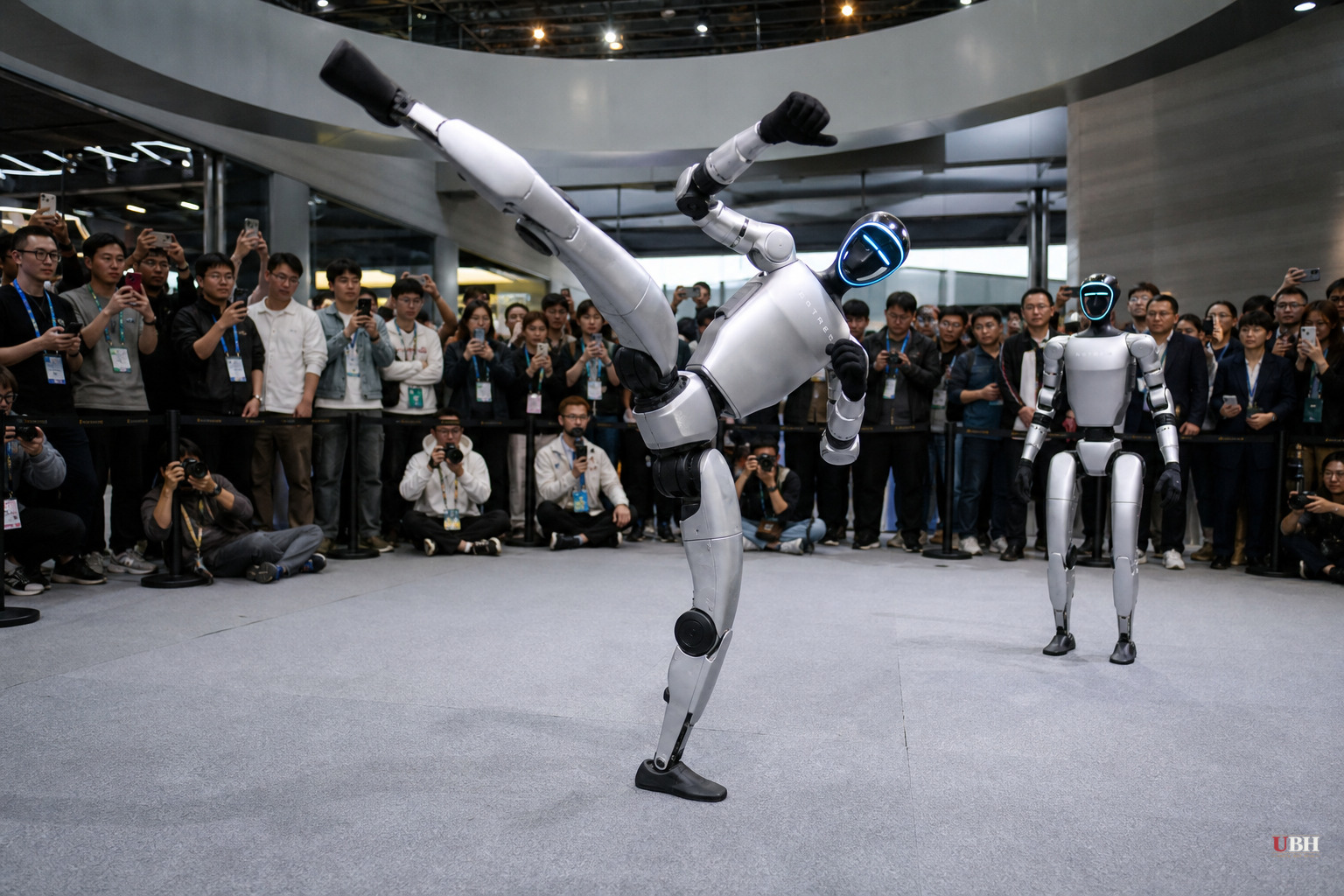
Unitree Robotics, the Hangzhou-based maker of viral backflipping humanoid robots, priced its IPO at 150.8 yuan ($22.4) a share, raising $900 million and valuing the company at roughly 61 billion yuan, about $9 billion, according to CNBC. It's set to become the first humanoid robot firm to list on mainland China's stock market when shares begin trading later this month.
The demand has been extreme. CNBC reported the online retail tranche was oversubscribed more than 5,000 times, producing a lot-winning rate of just 0.018%. That means the overwhelming majority of retail investors who applied for shares got nothing. Strategic investors in the deal included AI startup DeepSeek. A Unitree-linked pre-IPO perpetual contract on the crypto exchange Hyperliquid was trading at roughly four times the IPO price as of last Friday, per CNBC, as speculators bet on the stock before it even lists.
That level of frenzy raises an obvious question: what exactly are people buying?
Unitree's robots are genuinely impressive at a narrow set of tricks. They've gone viral for backflips, kung fu kicks, and recovering from being knocked down. What they have not demonstrated, at scale, is the ability to do useful, sustained physical labor. Hao Hong, managing partner of Lotus Asset Management, put it bluntly to CNBC: "For these humanoid robots, to be honest, they're fascinating. They can dance and all that, but never seen them doing any real housework."
Unitree's own prospectus acknowledges the gap, per CNBC, stating that large-scale commercial adoption may be slower than expected because robotic hands still aren't precise or durable enough for sustained use. Dominik Pross, an equity analyst at VP Bank, told CNBC that even advanced humanoid robots can typically handle only a handful of tasks, for a few hours at a time, before needing to recharge. Most models run for up to four hours while sitting idle, he said, and "robots have to be specifically trained for each and every task entrusted to them, even the simplest."
That training bottleneck is significant. A report from smh.com.au profiled Shenzhen-based robotics data startup IO-AI Tech, which doesn't build robots at all. It collects the movement data needed to train them. In one demonstration, a robot took about 40 seconds just to remove a shirt from a hanger and drop it in a washing machine, trailed by an employee in a full-body teleoperation suit controlling its every move. IO-AI's CEO, Xiangyu Chen, said flatly that full autonomy "is, we think, not possible for now, or even for the next five to 10 years."
Chen also raised a concern that gets buried under the hype: what happens to workers if robots eventually do become autonomous and cheap. "We believe that robots are made to help people, not to substitute them, otherwise people won't have any work and the economy crashes," he told smh.com.au. That's a fair worry, and it deserves more attention than it's getting from investors chasing a 5,000x-oversubscribed IPO. But it's also, by Chen's own estimate, a five-to-ten-year-out problem, not a today problem. The robots literally can't do the job yet.
Beyond the hardware, this is part of a bigger geopolitical story. The Guardian reported that Chinese advances across AI, chips, and robotics have "rattled financial markets" and split opinion inside the Trump administration and Silicon Valley over the past month. Chinese open-source AI models like Moonshot AI's Kimi K3 are now competitive enough with OpenAI and Anthropic's products that Treasury Secretary Scott Bessent has floated sanctions over alleged intellectual property theft, while Commerce Secretary Howard Lutnick has fielded letters from startup founders begging him not to cut off access to those same open models, according to The Guardian. Big tech firms including Microsoft, Nvidia, Palantir, and Meta have publicly urged Congress not to restrict open-source AI, and Nvidia CEO Jensen Huang lobbied lawmakers directly on the issue this week, per The Guardian's reporting.
Robotics manufacturing is where China's cost advantage is most visible. Wood Mackenzie estimates the global humanoid robot fleet will grow more than 90% annually through 2035, topping 10 million units, with annual shipments exceeding 4 million by then. China already accounts for more than 70% of global industrial robot installations and nearly 90% of humanoids deployed last year, the research firm found, as cited by CNBC.
None of that guarantees Unitree investors a payoff. Rival firms AgiBot and Leju Robotics are pursuing their own listings in Hong Kong and Shenzhen, and LimX Dynamics founder Will Zhang told CNBC last month that "listing is a must" for staying competitive, suggesting a wave of similar IPOs is coming whether or not the underlying technology has caught up to the hype. The open question for anyone who actually got shares in the 0.018% lottery: does Unitree turn backflips into billable hours before the market loses patience?
Sources used for this briefing
3 links from 3 independent newsrooms (syndicated copies of the same report count once)
These are the sources it draws on, linked so you can verify.


