
Unbiased headlines. Facts, not spin.
Unbiased Headlines is an independently owned news organization. We bring you the facts, not opinions, written fresh from 110+ named sources. Sources linked so you can verify it yourself.
 economy
Major Story (7/10)
economy
Major Story (7/10)
Amazon Rations Internal Server Access and Builds Its Own Gas Plant as AI Demand Outstrips Power Supply
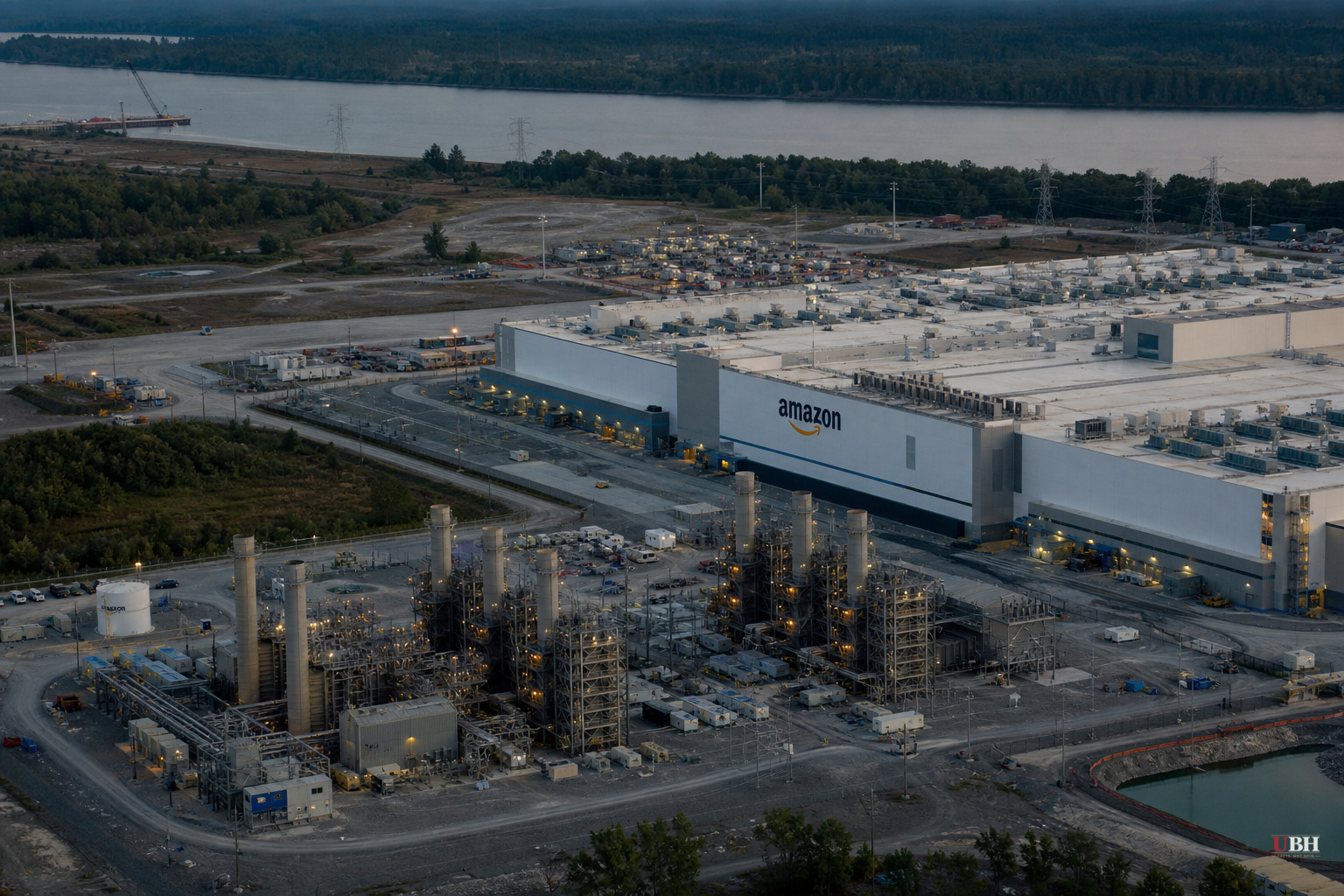
Amazon built the largest cloud computing business on Earth. Now it's telling its own engineers to ration the servers.
According to internal planning documents obtained by Business Insider, Amazon's e-commerce arm is running a multiyear project called "Region Flex" to spread its online retail infrastructure across more, smaller data center locations instead of concentrating in mega-hubs like Northern Virginia and Dublin, Ireland. One planning document said the shift was needed "to mitigate expansion risk due to AWS power constraints." A separate grocery division document called it necessary to meet "projected capacity requirements in each region."
Business Insider reports Region Flex is tracked as an "S-Team goal," meaning it has visibility from Amazon's senior leadership, with more than 100 software migrations planned.
The Information reported, and Stocktwits and Tom's Hardware both confirmed, that AWS managers met with engineers in May and told them to cut CPU usage wherever possible, including decommissioning idle EC2 instances so that capacity can go to paying customers instead. One engineer told The Information they've never waited this long for a server instance in years at the company. What used to take hours now takes several days, according to Tom's Hardware.
AWS pushed back on the characterization. The company told Stocktwits it disputes that anything has fundamentally changed, saying it continues to meet "the overwhelming majority" of compute needs for both internal teams and external customers while simply encouraging efficient use of resources. That's Amazon's on-record position, and it deserves to be weighed against the engineer accounts, since anonymous complaints about wait times don't by themselves prove a company-wide shortage.
CEO Andy Jassy said last month that AWS still can't build data centers fast enough to meet demand, according to Business Insider, even after the company added more than 3.8 gigawatts of capacity over the prior year and roughly doubled its cloud scale since 2022. Amazon says it plans to roughly double power capacity again by the end of 2027. CBRE data cited by Business Insider shows vacancy rates across North America's largest data center markets fell to a record 1.4% at the end of 2025.
The compute mix itself is also driving the crunch. Tom's Hardware reports the traditional ratio of GPUs to CPUs in AI data centers, historically four-to-one or eight-to-one, is moving toward parity because AI "agentic" workloads require far more CPU-driven orchestration and tool-calling than simple inference did. Intel, AMD and Nvidia have all reoriented product lines toward this shift, with AMD launching its Zen 6 "Venice" data center chips and Nvidia pushing its Vera CPU line.
The Texas gas plant
Facing grid bottlenecks nationwide, Amazon has decided in at least one case to stop waiting on utilities and build its own power plant. According to The New York Times, first reported through Cleanview Newsletter and cited by Common Dreams, Amazon has acquired permits to build a natural gas plant on a site called GW Ranch in Pecos County, Texas, to power a massive data center there.
The plant is permitted for up to 7.65 gigawatts of capacity across 35 natural gas turbines, with a carbon pollution ceiling of 33 million tons a year. Common Dreams notes this compares to the James H. Miller Jr. coal plant in Quinton, Alabama, currently the single largest carbon emitter in the country, which releases about 16 million tons annually. If the Texas plant runs anywhere near its permitted maximum, it would more than double that.
Amazon's stated rationale is straightforward: pairing its own power generation with the data center lets it avoid the years-long wait for grid interconnection that has slowed AI buildouts elsewhere. An Amazon spokesperson told Cleanview the company "believes in paying the full costs of powering our operations" and does not intend to raise electricity costs for Texas families, since the plant will initially run disconnected from the state grid. That's a real and defensible engineering tradeoff. Self-generation avoids straining a grid that Texas households already depend on.
But the same spokesperson said the plant is "designed to transition to grid-connected service as interconnection timelines allow," which means the current promise not to affect household rates is conditional, not permanent. Amazon also says it will use brackish water unsuitable for drinking or irrigation to limit strain on local water supplies, a response to the water-consumption fights that have dogged data centers elsewhere.
Climate advocates aren't satisfied. The advocacy group Climate Action Campaign argued, as reported by Common Dreams, that Amazon should be building clean generation to meet its AI power needs rather than fossil fuel plants. That's a fair critique on its face. Nuclear, geothermal, and grid-scale storage all exist as alternatives, but none can be permitted and built as fast as a gas plant, which is precisely why gas has become the default choice across the industry, not just for Amazon.
The company's own emissions rose 16% last year, a increase Amazon has linked to AI computing demand, according to the New York Times reporting cited by Cryptonomist. That runs against Amazon's pledge, made through its own Climate Pledge initiative, to hit net-zero emissions by 2040.
No regulatory action has been announced against the Texas project, and the permits were issued through the normal state process, not through any special exemption. The unresolved question is whether GW Ranch actually operates anywhere near its permitted ceiling, since permitted maximums and actual output are two different things, and Amazon has not said what utilization rate it expects.
Sources used for this briefing
6 links from 6 independent newsrooms (syndicated copies of the same report count once)
These are the sources it draws on, linked so you can verify.


