
Original briefings. Zero spin.
Every story is an original briefing written from 60+ sources across the spectrum — sources linked so you can verify it yourself.
 economy
Major Story (7/10)
August 13, 2026 at 03:12 PM
economy
Major Story (7/10)
August 13, 2026 at 03:12 PM
EU Pushes Digital Euro to Cut Reliance on Visa and Mastercard
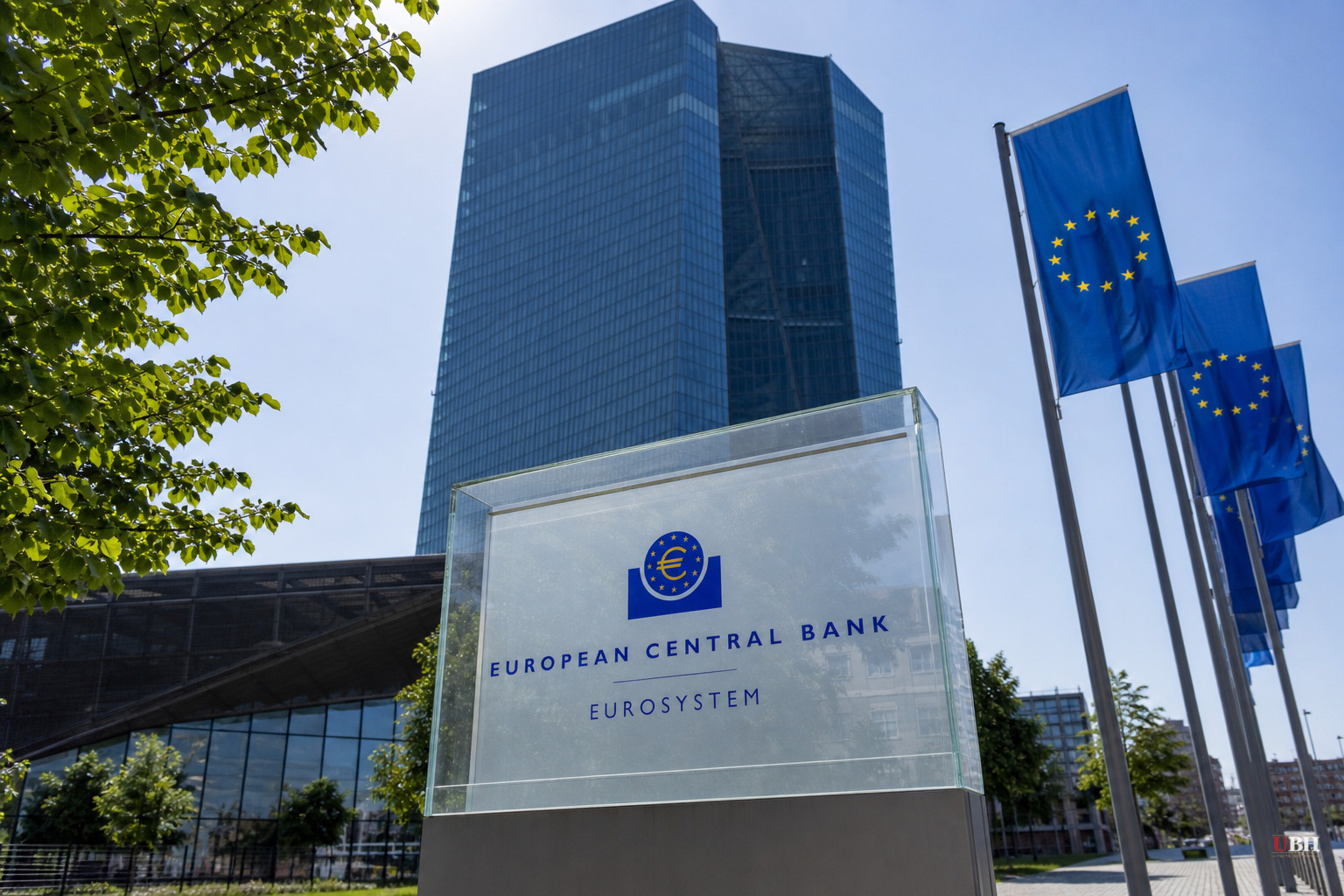
The European Central Bank wants Europe off American plastic. ECB President Christine Lagarde is pushing the European Parliament to approve a digital euro, arguing that Europe's heavy reliance on Visa and Mastercard is a strategic weakness Brussels can no longer shrug off, according to Euronews.
The numbers explain the worry. ECB data shows Visa and Mastercard process 61% of card payments in the euro area and nearly all cross-border card transactions, according to Euronews and IndexBox. That means most of the continent's daily purchases run through infrastructure controlled by two American companies, with transaction data flowing outside the EU in the process.
The Case for Worry
European officials point to Russia as the cautionary tale. When US sanctions forced Visa and Mastercard to pull out after the invasion of Ukraine, ordinary Russians got locked out of card payments overnight, per Euronews. Brussels doesn't want to find out what happens if Washington ever decided to flip that switch on Europe itself, even as a negotiating tactic rather than a sanction.
Draghi, the former ECB president, has warned that global economic interdependence has shifted "from mutual restraint to a tool of influence and control," according to IndexBox. Canadian Prime Minister Mark Carney made a similar point at Davos, warning that deep economic integration can become "a source of subordination." Piero Cipollone, an ECB executive board member, said in January that rising geopolitical tension is exactly why Europe needs a payment system built on its own technology, under its own control, IndexBox reported.
Retailers have their own gripe, separate from geopolitics: card network fees. Merchants say those fees, set under commercial terms decided outside the EU, have climbed sharply. A digital euro or direct bank-to-bank payment system could undercut those costs and give merchants leverage they don't currently have.
What a Fair Skeptic Would Say
The honest pushback deserves a real hearing. A government-issued digital currency, run by a central bank, means the ECB itself becomes the infrastructure and potentially the data holder. Handing that power to Frankfurt instead of Visa or Mastercard doesn't obviously solve the privacy and surveillance concern. It just relocates it. If you're worried about a foreign company profiling your spending, you might be just as uneasy about a central bank doing it, especially one answerable to EU institutions rather than a competitive market.
There's also the adoption problem. Visa and Mastercard didn't win 61% market share by accident. They built fast, reliable, universally accepted rails that merchants and consumers actually like using. A digital euro has to be at least as convenient, work offline as well as online, and get merchants and banks to actually build for it. IndexBox reports the system is designed to support both online and offline payments, with the ECB running the core infrastructure and commercial banks handling customer-facing services, and that merchants are expected to pay lower fees than they do now under card networks. Whether that promise holds once the system launches is a separate question from whether it's designed that way on paper.
There's also a fiscal responsibility angle: building a continent-wide digital currency system isn't free. Someone pays for that infrastructure, and it's ultimately taxpayers and the banks passing costs down the line. Europe should ask hard questions about the price tag before assuming this is a costless fix to a real problem.
Where Things Stand
Negotiations between the European Parliament and EU member states on how the digital euro will actually operate are in their final phase, according to IndexBox, with final approval targeted for later in the process. Neither source specifies an exact vote date or launch timeline beyond that.
This push sits alongside a broader European competitiveness push tied to reports from Draghi and former Italian Prime Minister Enrico Letta, which European Commission President Ursula von der Leyen has cited in arguing Europe needs to catch up to the scale of US and Chinese firms, per Euronews.
The open question isn't whether Brussels wants payment independence. It clearly does. The open question is whether a central-bank-run digital currency actually delivers lower costs and real autonomy, or whether it just swaps one gatekeeper for another while taxpayers foot the build cost.
Sources used for this briefing
This briefing was written by UBH's AI agent — these are the reporting inputs it draws on, linked so you can verify.

