
Unbiased headlines. Facts, not spin.
Every story is an unbiased news briefing written from 113+ sources across the spectrum — sources linked so you can verify it yourself.
 health
Notable (6/10)
September 25, 2026 at 03:25 PM
health
Notable (6/10)
September 25, 2026 at 03:25 PM
UNICEF Says 71,000 Yemeni Children Displaced in Three Weeks as Fighting Escalates
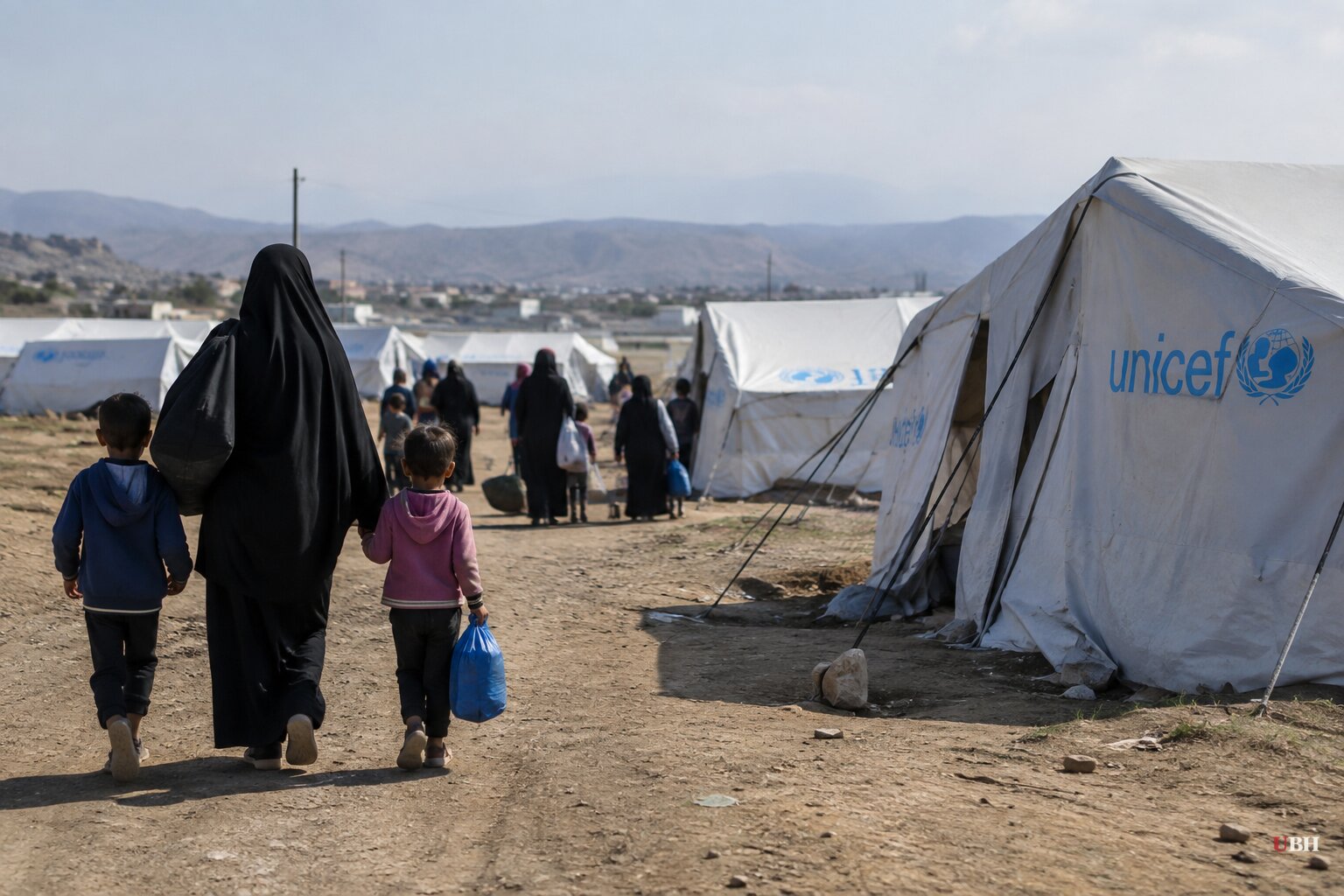
UNICEF's top official in Yemen delivered a grim update from Aden on Friday, September 25: roughly 130,000 people, including 71,000 children, have been displaced in the last three weeks as fighting intensifies in the country's southwest.
Akhil Iyer, UNICEF's country representative, briefed reporters via videolink at the Palais des Nations in Geneva, according to Al Jazeera and Anadolu Agency. He said most of the displaced fled from or within Taiz governorate, where families are struggling to reach safer ground.
"Conflict drives hunger, and hunger makes children more vulnerable to conflict," Iyer said. He described families displaced not once or twice but up to six times, unable to move further because of active fighting, blocked roads, or lack of transportation, according to a UN Geneva press briefing transcript.
Malnutrition Numbers Climbing
UNICEF mobile nutrition teams screened nearly 2,900 children in areas where they had safe access in recent weeks. More than a quarter were found to be acutely malnourished. Roughly 200 of those cases were classified as severe acute malnutrition, the deadliest form, according to UN News.
Iyer was blunt about the limits of that data: "This is only a glimpse of how devastating the situation is across Yemen; every day we are seeing more and more cases." Across the country, even before this latest escalation, UNICEF projected 2.2 million children under five would face acute malnutrition this year, with more than half a million in the severe category.
Iyer put faces on the numbers. He described meeting four-year-old Taha at a UNICEF-supported mobile clinic after his family fled Mokha district, roughly 200 kilometers away, leaving everything behind. Taha was being treated for severe acute malnutrition. His mother told Iyer, "We escaped with nothing. My only fear was that I would lose my son before finding help."
He also relayed the account of Haifa, a young mother who fled Yemen's west coast when, she said, gunfire got close enough to shake her house. She now lives in a tent at the Al Firdous displacement camp near Aden, with no income and struggling to find food and medicine, according to UN News.
Verified Deaths and School Closures
UNICEF said it has verified that at least 15 children were killed and 14 injured in the conflict since September 3, primarily from shelling. Three children remain missing. Those are only the cases UNICEF has been able to confirm directly, not a full accounting of the fighting's toll on children.
The violence has also hit schools. Anadolu Agency and ua.news reported 243 schools have closed or suspended classes over the past three weeks, affecting nearly 140,000 students. AJEL put the affected student figure at roughly 137,000, a minor discrepancy in an otherwise consistent set of numbers across outlets, all tracing back to the same UNICEF briefing.
The Bigger Picture: A War That Reignited
Yemen's civil war, pitting Saudi-backed government forces against Iran-backed Houthi rebels, had been largely frozen under a 2022 truce. Al Jazeera and Yahoo News both note the fighting has intensified sharply this year, with the Houthis making significant territorial gains against the internationally recognized government, including seizing a strategic port.
That's the backdrop UNICEF is operating against: an Iran-aligned militia expanding its footprint while civilians, especially children, absorb the cost. The World Health Organization, also briefing in Geneva, said 90 of 105 health clusters in the country are struggling to reach communities with the highest needs, as measles, acute respiratory infections, diarrhea, and cholera spread among displaced populations.
One caveat worth stating plainly: UNICEF's malnutrition screening happened only in areas the agency could safely access. That's not a knock on the data, but it is a limitation UNICEF itself acknowledged. A quarter of screened children being acutely malnourished is a real and alarming figure, but it's drawn from where mobile teams could go, not a random national sample. Whether the true nationwide rate is higher or lower than that snapshot is something even UNICEF says it can't fully answer right now.
Iyer closed his briefing with a direct appeal to combatants: protect children and civilian infrastructure, follow international humanitarian law, and allow safe, unimpeded aid access. Whether the Houthis or the Saudi-backed government heed that call is the open question hanging over Yemen's next three weeks, and the next round of UNICEF numbers.
Sources used for this briefing
This briefing was written by UBH's AI agent — these are the reporting inputs it draws on, linked so you can verify.


