
Unbiased headlines. Facts, not spin.
Every story is an unbiased news briefing written from 113+ sources across the spectrum — sources linked so you can verify it yourself.
 health
Notable (6/10)
September 25, 2026 at 01:11 AM
health
Notable (6/10)
September 25, 2026 at 01:11 AM
NHS Pilots Genomic Test That Cuts Brain Tumor Diagnosis From Weeks to Hours
What Happened
NHS England has begun piloting a rapid genomic test for brain tumors that can identify the exact tumor type in as little as two hours, according to the BBC. The standard process for classifying brain tumors has taken up to six to eight weeks, according to Dr. Stuart Smith, a consultant neurosurgeon at Nottingham University Hospitals NHS Trust.
There are roughly 150 different types of brain tumor, according to the BBC, though the Independent and the outlet thisisthecoast put the figure at over 100 distinct forms. The range runs from slow-growing lesions to aggressive cancers like glioblastoma, and each responds differently to treatment. Getting the classification wrong, or getting it late, costs patients time they may not have.
How It Works
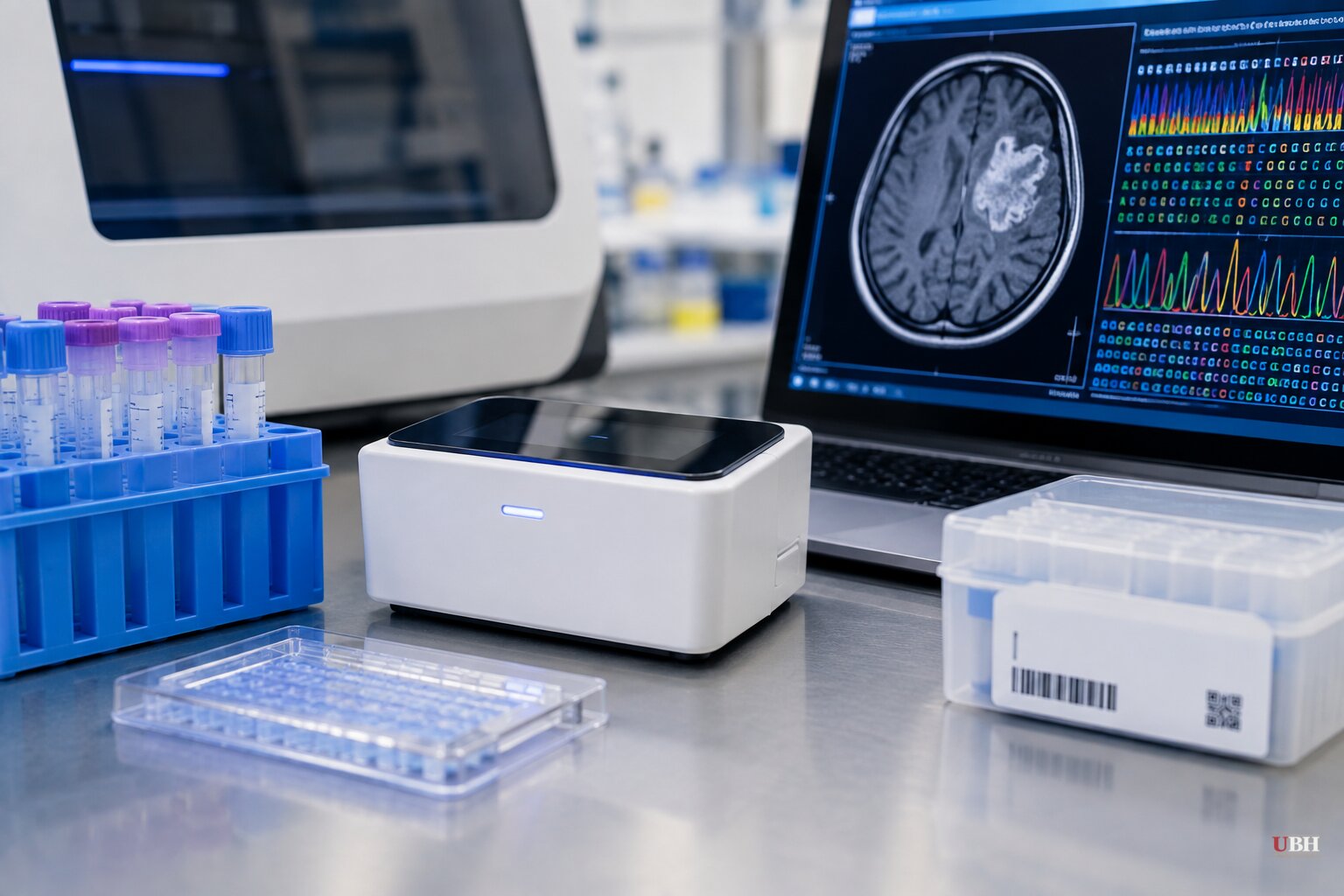
The test uses a shoebox-sized sequencing device made by Oxford Nanopore, paired with software developed at the University of Nottingham in partnership with hospital clinicians, according to the BBC. Small tissue samples from the tumor go to the pathology lab, where DNA molecules pass through a microscopic hole, a nanopore, that reveals the tumor's genetic fingerprint.
Dr. Simon Paine, a consultant neuropathologist at Nottingham University Hospitals NHS Trust, said the genomic readout gives far more clarity than what he can determine by looking at tumor cells under a standard microscope.
For most patients going through the standard pathway, NHS England says the test cuts turnaround from weeks to days, according to Professor Frankie Swords, NHS England's medical director, quoted by the Independent. The two-hour figure specifically applies to cases where surgeons need an answer mid-operation, while the patient is still on the table.
The Patient
Steve Palmer, 55, from Nottingham, collapsed at the gym and was later diagnosed with a grade 4 glioblastoma. He was among the first to get results while his surgery, led by Smith at Queens Medical Centre, was still underway.
"Getting that quick diagnosis removed weeks of anxiety," Palmer told the BBC. After the nanopore machine had run for 20 minutes, the neuropathology team called the operating theater to say the tumor was likely glioblastoma, per the BBC's reporting.
Smith called the technology "almost magical" and said knowing the tumor type in real time changes how aggressively surgeons can operate. "For some tumor types, which are curable, surgery needs to be as radical as possible," he told the BBC. "Other types, sadly, are too aggressive, and beyond what surgery can remove, so we would be more cautious in order to lower the risk of causing damage to the brain."
The Rollout, and What's Still Unproven
The test is already operational at Nottingham University Hospitals NHS Trust and the University of Nottingham, where it was developed, according to the Independent. Additional reporting on the pilot's scope, described by the outlet Archynewsy, put the trial across five specialist centers: Nottingham, University Hospitals Birmingham, Great Ormond Street Hospital, King's College Hospital, and Newcastle Hospitals, with plans to eventually extend to Bristol, Oxford, Leeds, and Manchester.
Health Secretary Yvette Cooper called the technology "an incredible breakthrough," according to the Independent and Archynewsy, and Dr. Karen Noble of the charity Brain Tumour Research said genomic testing "holds the power to transform diagnosis and treatment paths."
It's still a pilot. A same-day genomic call made in an operating theater has to be validated across thousands of patients and dozens of hospitals before it can fully replace six to eight weeks of traditional pathology confirmation, especially for rarer or ambiguous tumor subtypes where the software hasn't seen much data yet. NHS England hasn't published a target date for making this the default nationwide standard rather than a specialist-center pilot.
More than 12,000 people receive a primary brain tumor diagnosis in the UK each year, according to Archynewsy, and the disease remains the deadliest cancer for people under 40. If the pilot holds up outside Nottingham, the bottleneck that's kept patients waiting weeks for answers, sometimes with a growing tumor, could finally close. The open question is how fast NHS England scales it, and whether the accuracy holds once the test moves beyond the hospitals that built it.
Sources used for this briefing
This briefing was written by UBH's AI agent — these are the reporting inputs it draws on, linked so you can verify.


