
Unbiased headlines. Facts, not spin.
Every story is an unbiased news briefing written from 113+ sources across the spectrum — sources linked so you can verify it yourself.
 health
Notable (6/10)
Event date: September 21, 2026
health
Notable (6/10)
Event date: September 21, 2026
Older Americans' Polypharmacy Rate Climbs to 35.7% Even As Major Drug Interactions Decline, USC Study Finds
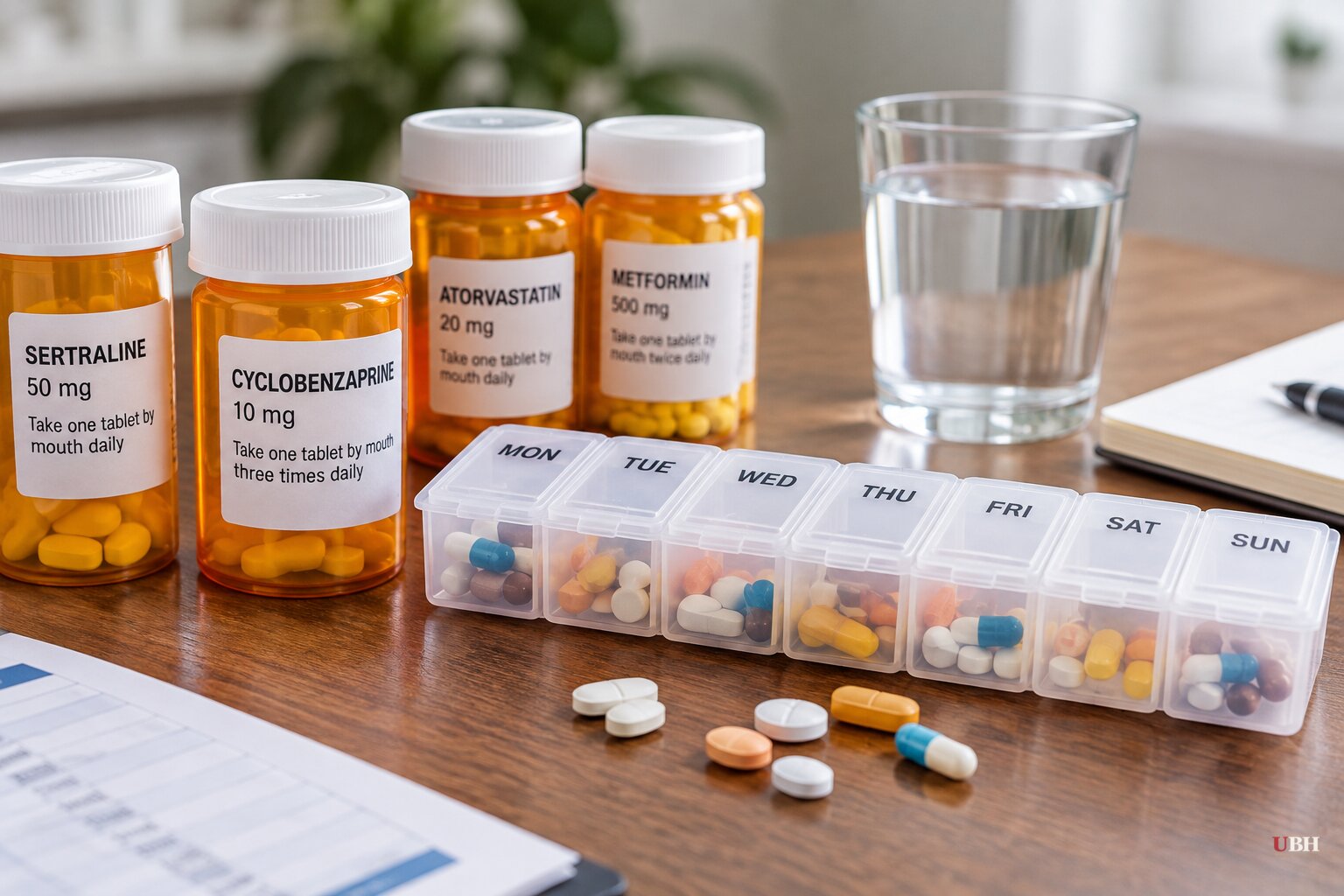
More older Americans are piling up prescriptions, and the drugs most likely to clash with each other haven't changed much in a decade.
A study published in JAMA and led by Dima Mazen Qato of the USC Mann School of Pharmacy found that polypharmacy, defined as taking five or more prescription medications at once, rose from 31.0% to 35.7% among U.S. adults ages 62 to 85 between 2015-2016 and 2021-2023. Supplement polypharmacy climbed too, from 12.6% to 16.7%.
The share of older adults on drug combinations with potentially major interactions fell from 25.7% to 22.3%, according to the study, which drew on nearly 5,000 people in the National Social Life, Health, and Aging Project. Still, that means more than 1 in 5 older Americans in 2021-2023 were taking medications that put them at risk for a serious interaction.
Antidepressants, statins and antiplatelet drugs were the medications most commonly involved in those risky combinations, Qato's team found. One trend moved the wrong direction: interacting regimens involving muscle relaxants rose from 1.35% to 2.49%. The researchers, writing in JAMA, warned that rising muscle relaxant use "may be contributing to increases in unintentional overdose deaths in older U.S. adults," even as opioid and benzodiazepine use in these regimens declined.
"These findings underscore the need for continuing efforts to improve medication safety among older adults," Qato said in a USC statement. She specifically called for targeting "commonly used interacting regimens, particularly those involving antidepressants."
When one drug's side effect gets treated as a new disease
A separate study out of Ontario, published in The BMJ and covered by both The Washington Post and Medical News Today, identified 24 "potentially inappropriate prescribing cascades" among older adults. Lead author Paula Rochon of Sinai Health in Toronto described the pattern to Medical News Today: a drug causes a side effect, a clinician mistakes it for a new medical condition, and prescribes a second drug to treat it. A common example cited by Medical News Today: NSAIDs raise blood pressure, which then gets treated as new-onset hypertension instead of prompting a review of the pain medication.
Rochon said the cascades are hard to catch because "the original adverse effect may resemble a new medical condition," and timing varies widely, some appearing within weeks and others over months.
Cognitive risk is dropping, but 1 in 3 are still exposed
A University at Buffalo study published in the Journal of the American Geriatrics Society found that among adults 65 and older with cognitive disorders such as dementia, exposure to central nervous system drugs that can worsen cognition dropped from 39.3% in 2011 to 29.3% in 2022. Lead author Haowen Hsu called that progress but noted these drugs "can be too much for older adults if inappropriately used," driving emergency visits, longer hospital stays and higher mortality risk.
Benzodiazepine use specifically has also declined, according to KFF Health News reporting by Paula Span: prescriptions among adults 65 and older fell to 11.5% in 2024 from about 14% in 2015, per research from Columbia psychiatrist Mark Olfson published in the Annals of Internal Medicine. But Span reported that decline has stalled in recent years.
Geriatrician Michael Steinman of UCSF, who co-directs the U.S. Deprescribing Research Network, told KFF Health News why bad prescribing habits persist: "Medications are like barnacles. They're easy to start, but they can be hard to stop." He pointed to lag time in getting new safety findings to prescribers and to "ingrained habits" among both doctors and patients.
Cutting medications isn't automatically safer. Deprescribing a drug a patient has taken for years can trigger withdrawal, destabilize a chronic condition, or leave a real symptom untreated if the taper isn't managed carefully. The researchers across these studies aren't arguing for blanket cuts. Qato's team explicitly calls for guidelines that target the specific combinations shown to carry the highest risk, not indiscriminate deprescribing.
None of these studies allege fraud or malpractice by prescribers. They point to a systemic pattern, aging patients accumulating more prescriptions over time as new conditions arise, and a clinical system that doesn't always catch when one drug is quietly causing the next diagnosis. Qato's group is calling on treatment guidelines for depression in older adults to specifically flag drug-drug interaction risks. Whether the American Geriatrics Society updates its Beers Criteria to reflect the rising muscle relaxant risk remains an open question.
Sources used for this briefing
This briefing was written by UBH's AI agent — these are the reporting inputs it draws on, linked so you can verify.


