
Unbiased headlines. Facts, not spin.
Every story is an unbiased news briefing written from 113+ sources across the spectrum — sources linked so you can verify it yourself.
 health
Major Story (8/10)
September 25, 2026 at 06:08 PM
health
Major Story (8/10)
September 25, 2026 at 06:08 PM
CDC Still Has No Recommendation on New Flu Shot as Vaccine Policy System Stays Frozen Under RFK Jr.
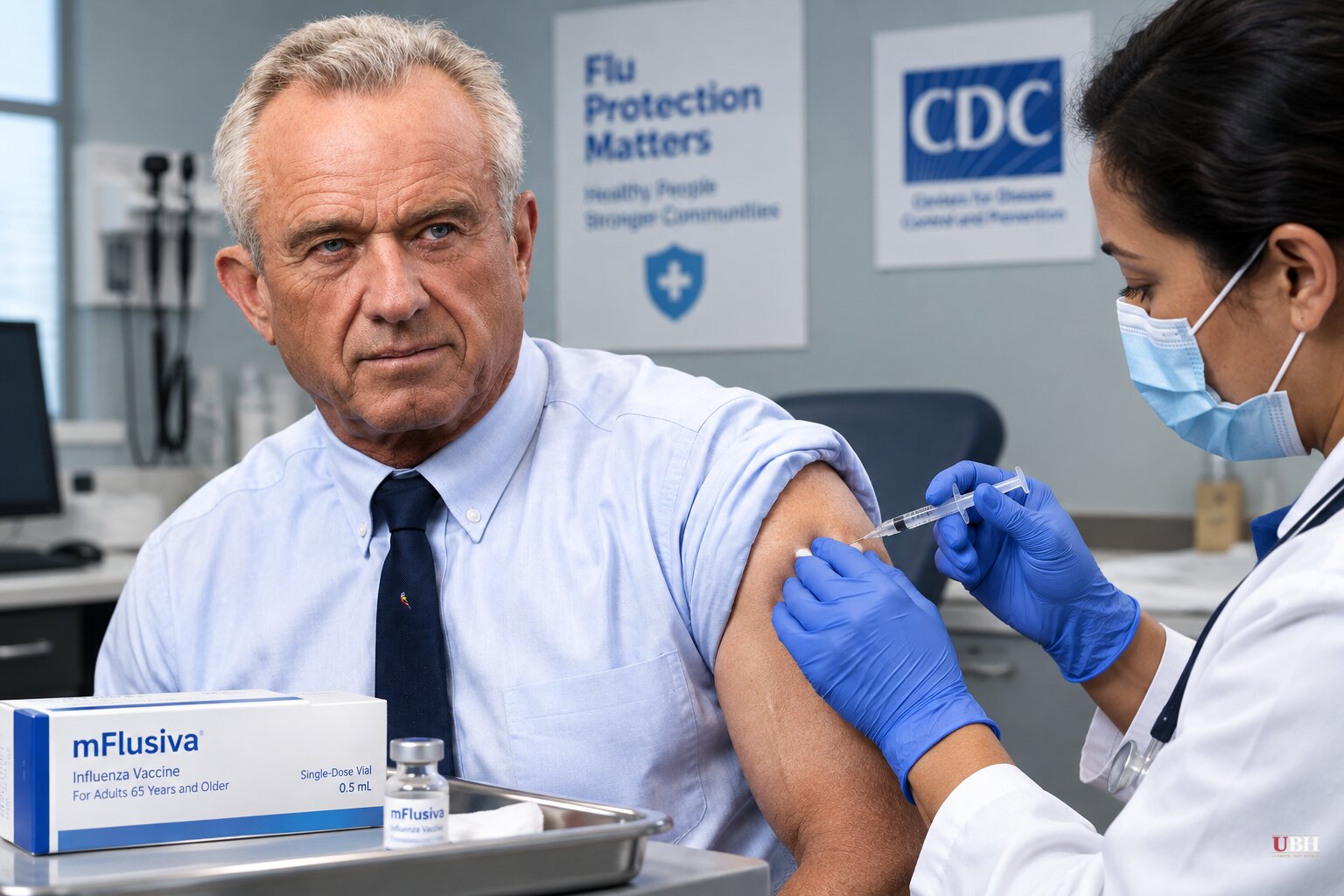
The FDA approved a new flu vaccine called mFlusiva, built on the mRNA-1010 platform, after it tested well in older adults. Normally that would trigger a quick recommendation from the CDC on who should get it and when.
That hasn't happened. According to the Associated Press, the CDC has issued no guidance on mFlusiva at all, a break from decades of standard practice. The silence isn't a one-off. It's a symptom of a vaccine policy system that has effectively stopped functioning over the past year.
For 60 years, the CDC leaned on the Advisory Committee on Immunization Practices, a panel that met in public, reviewed data, took input from medical groups and voted on recommendations the CDC director almost always adopted. Those recommendations mattered practically: they're what push public and private insurers to actually pay for a shot.
Health Secretary Robert F. Kennedy Jr., appointed by President Trump to run HHS, dismissed the entire ACIP last year and replaced it with a new panel that included several vaccine skeptics. That triggered a lawsuit from the American Academy of Pediatrics and other medical groups.
In March, a federal judge ruled Kennedy had likely violated federal procedures, blocked his new panel from holding further meetings, and suspended his move to cut the number of vaccines recommended for children, according to the Associated Press. Dr. Jason Goldman, president of the American College of Physicians, said at the time he hoped the ruling would mean "a return to a transparent and evidence-driven process that safeguards the health of all communities and the best interests of our patients."
That return hasn't materialized. With Kennedy's panel frozen by court order and the old ACIP dismantled, there is no functioning body left to formally evaluate new vaccines like mFlusiva or update guidance on existing ones. Physician groups that used to work through ACIP have started developing their own vaccine advice independently, working with outside academic partners, since that collaborative channel broke down.
Jason Schwartz, a Yale University health policy researcher, told the Associated Press the system is now stuck in a genuine institutional gap. "We find ourselves at a point where even if credible evidence (for a new vaccine policy) has reached a tipping point, we don't have an obvious mechanism that can formalize that change," he said.
A country without a functioning vaccine recommendation process means doctors, insurers and parents are all guessing, and that guesswork lands during flu season.
The Case Kennedy's Side Would Make
Kennedy's defenders would argue the old ACIP process wasn't as clean as its defenders suggest, and that some questions, like whether kids are getting more shots than the evidence justifies, deserved a harder look than the committee ever gave them. That's a legitimate policy question, and reasonable people can disagree on how aggressively the childhood schedule should be scrutinized.
But a court found, based on federal procedural law, that Kennedy's method of pursuing that goal was unlawful. And whatever the merits of reopening the debate over the vaccine schedule, the practical result so far isn't a more rigorous process. It's no process at all. Even if Kennedy's underlying evidentiary concerns are valid, freezing the machinery that turns evidence into guidance doesn't resolve them, it just leaves the country without an answer.
A Separate Credibility Fight
Kennedy is facing a second, unrelated dispute this month over his personal finances. Democratic Senators Elizabeth Warren, Ron Wyden, Richard Blumenthal and Angela Alsobrooks sent Kennedy a letter, reported by the Associated Press, saying he quietly changed his ethics agreement after his confirmation hearing. Kennedy had told lawmakers he'd transfer his financial stake in cervical cancer vaccine litigation to his adult son, Conor Kennedy. The senators say records show he instead transferred it to his former law firm, Wisner Baum, where Conor Kennedy works.
"Your decision to withhold this information from Congress and apparent failure to report this change to agency ethics officials is deeply alarming," the senators wrote.
HHS spokeswoman Emily Hilliard disputed the characterization, telling the Associated Press that HHS confirmed Kennedy's compliance with his ethics agreement back in May 2025 and that "any claim that Secretary Kennedy maintained a financial interest in this litigation after taking office is false." HHS has not offered a detailed public accounting of exactly why the beneficiary changed from Kennedy's son personally to the firm where his son is employed, and Kennedy hasn't personally responded to the senators' letter as of this writing.
Both disputes point to the same underlying issue: whether Kennedy's public commitments, on vaccines and on his own finances, match what's actually happening inside HHS. The vaccine guidance vacuum has a concrete deadline attached to it. Flu season is here, mFlusiva is approved, and neither doctors nor insurers have federal guidance telling them what to do with it.
Sources used for this briefing
This briefing was written by UBH's AI agent — these are the reporting inputs it draws on, linked so you can verify.


