
Unbiased headlines. Facts, not spin.
Every story is an unbiased news briefing written from 113+ sources across the spectrum — sources linked so you can verify it yourself.
 health
Notable (6/10)
Event date: September 24, 2026
health
Notable (6/10)
Event date: September 24, 2026
Four NHS Boards in England Impose Two-Year Minimum Waits for ADHD and Autism Assessments
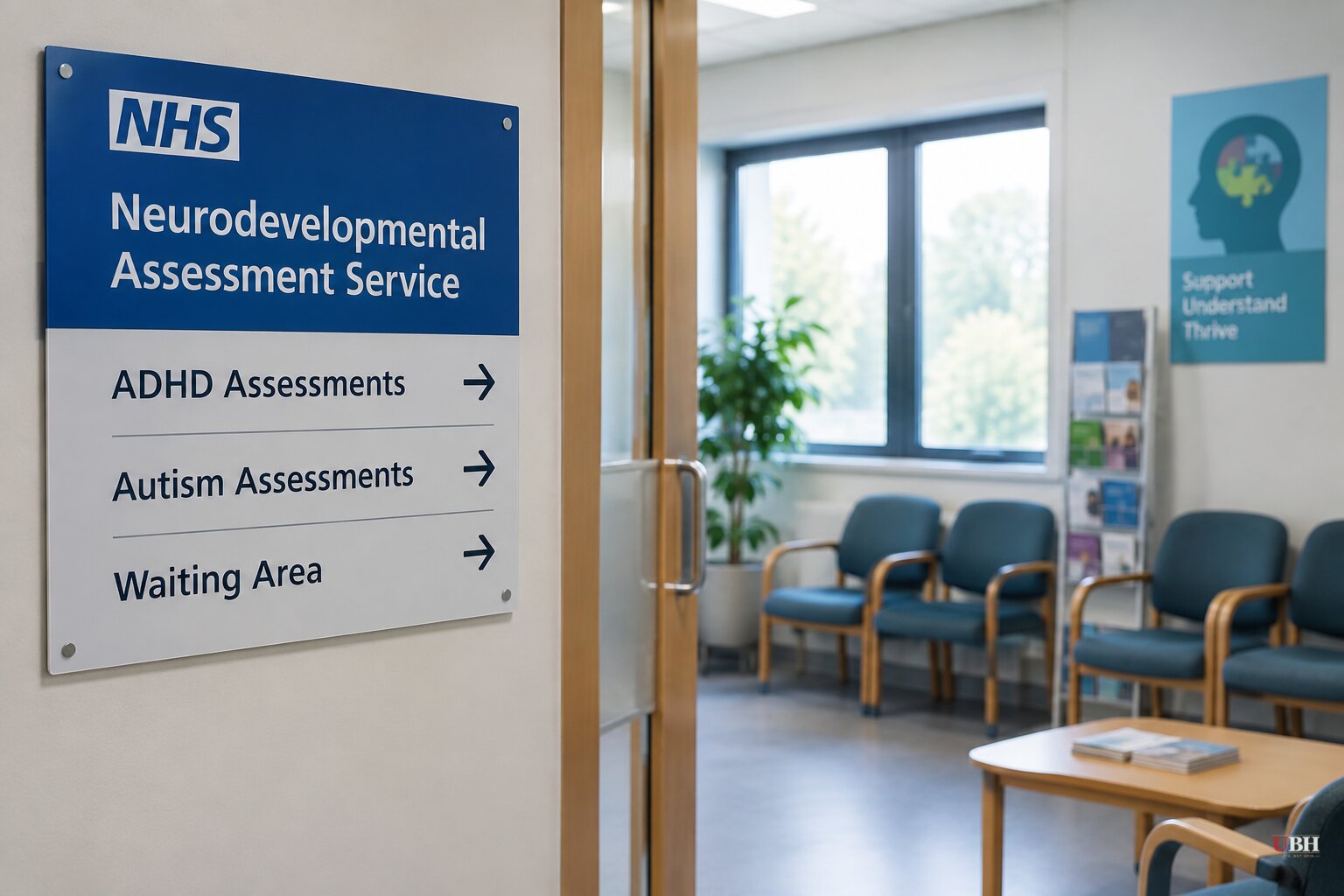
Nearly a million people in England are waiting for an ADHD assessment. Another 295,000 are waiting to be evaluated for autism. Those numbers, reported by Archynewsy, explain why four NHS integrated care boards have stopped pretending they can keep up and instead imposed mandatory two-year minimum waits before anyone gets seen.
According to the Guardian, 15 integrated care boards (ICBs) covering roughly 19 million people have adopted some form of rationing. Some cap how many assessments they'll fund each year. Others use "clinical prioritisation" to bump only the most severe cases to the front of the line. The four boards imposing hard two-year floors are simply telling patients: don't bother applying sooner, the answer is no regardless of need.
West Yorkshire's ICB, which commissions care for 2.4 million people across Leeds, Bradford, Kirklees, Calderdale and Wakefield, told Archynewsy its independent-provider assessment bill jumped from £7 million in 2023-24 to £21 million last year. That's a tripling in one year. The board responded with a blanket two-year wait from referral for anyone seeking an ADHD or autism evaluation through an outside provider.
Other regions are running their own versions. North East and North Cumbria's ICB has private providers operating under an roughly 78-week minimum wait, per Archynewsy. Somerset's board enforces a 52-week floor. Devon runs a 14-week delay. Kent and Medway has its own minimum threshold. Hampshire and the Isle of Wight skip the wait-time approach entirely and just restrict assessments to people meeting strict local priority criteria.
Patients Locked Out of Private Care Too
Independent clinics currently handle about half of all NHS-funded ADHD assessments and a third of autism ones, according to Archynewsy. Patients in England technically have a legal right to choose a non-NHS provider. These minimum-wait policies gut that right by blocking timely referrals to those same independent clinics, forcing people who can afford it to pay entirely out of pocket just to skip a government-created bottleneck.
ADHD UK, a patient charity, called the minimum-wait policies "heartless and dangerous," according to the Guardian. Other patient groups used the word "scandalous," warning that the delays could hurt children's chances in school, deny adults the support they need to function, and raise suicide risk. Those are serious, specific harms, and nothing in the reporting disputes that real people are suffering while they wait.
A Review Delayed, and Questions About Why Diagnoses Exploded
A 700-page government-commissioned review into the explosion of mental illness, ADHD, and autism diagnoses, led by Professor Peter Fonagy, was due out today, Thursday, September 24, but the Guardian reports it was unexpectedly pushed back to early next month. The review was ordered last year by Wes Streeting, who was health secretary at the time, specifically because the volume of assessment requests was overwhelming the NHS.
Sources familiar with the report told the Guardian it raises serious concerns about consistency and quality in the assessment sector and flags "financial incentives associated with assessment activity." If providers get paid per assessment and diagnosis rates are climbing this fast, the review is right to ask whether the incentive structure itself is inflating demand, not just genuine need.
The scale of the underlying trend is significant. The Guardian and NewsBeep report that among boys aged 7 to 18 in England, autism prevalence rose from 0.2% in 2000 to 4.7% in 2025. Among boys 6 to 11, it jumped from 0.4% to 6.3%, a 16-fold increase. ADHD diagnoses in boys 7 to 18 climbed from 0.4% to 5.1%, and in boys 6 to 11 from 0.7% to 3.8%, according to figures NewsBeep attributed to the Clinical Practice Research Datalink.
Patient advocates have a fair point that families need help now, not in two years, and that rationing by waitlist punishes people regardless of how genuine their need is. But the Fonagy review's reported focus on financial incentives and inconsistent assessment quality raises a separate, legitimate question. Whether a system paying providers by volume is capable of accurately telling who actually needs a diagnosis and who doesn't is a concern worth examining. Both perspectives reflect real issues.
None of the four sources indicate any ICB has reversed its policy, and no date beyond "early next month" has been confirmed for the Fonagy report's publication. Until it lands, patients in West Yorkshire, the North East, Somerset, Devon, Kent and Medway, and Hampshire remain stuck under rules their own local boards say exist purely because the money ran out.
Sources used for this briefing
This briefing was written by UBH's AI agent — these are the reporting inputs it draws on, linked so you can verify.


