
Original briefings. Zero spin.
Every story is an original briefing written from 110+ sources across the spectrum — sources linked so you can verify it yourself.
 defense
Major Story (8/10)
September 2, 2026 at 04:37 PM
defense
Major Story (8/10)
September 2, 2026 at 04:37 PM
UN Watchdog Confirms Assad's Syria Built Secret Nuclear Reactor, Hid 73 Tons of Uranium
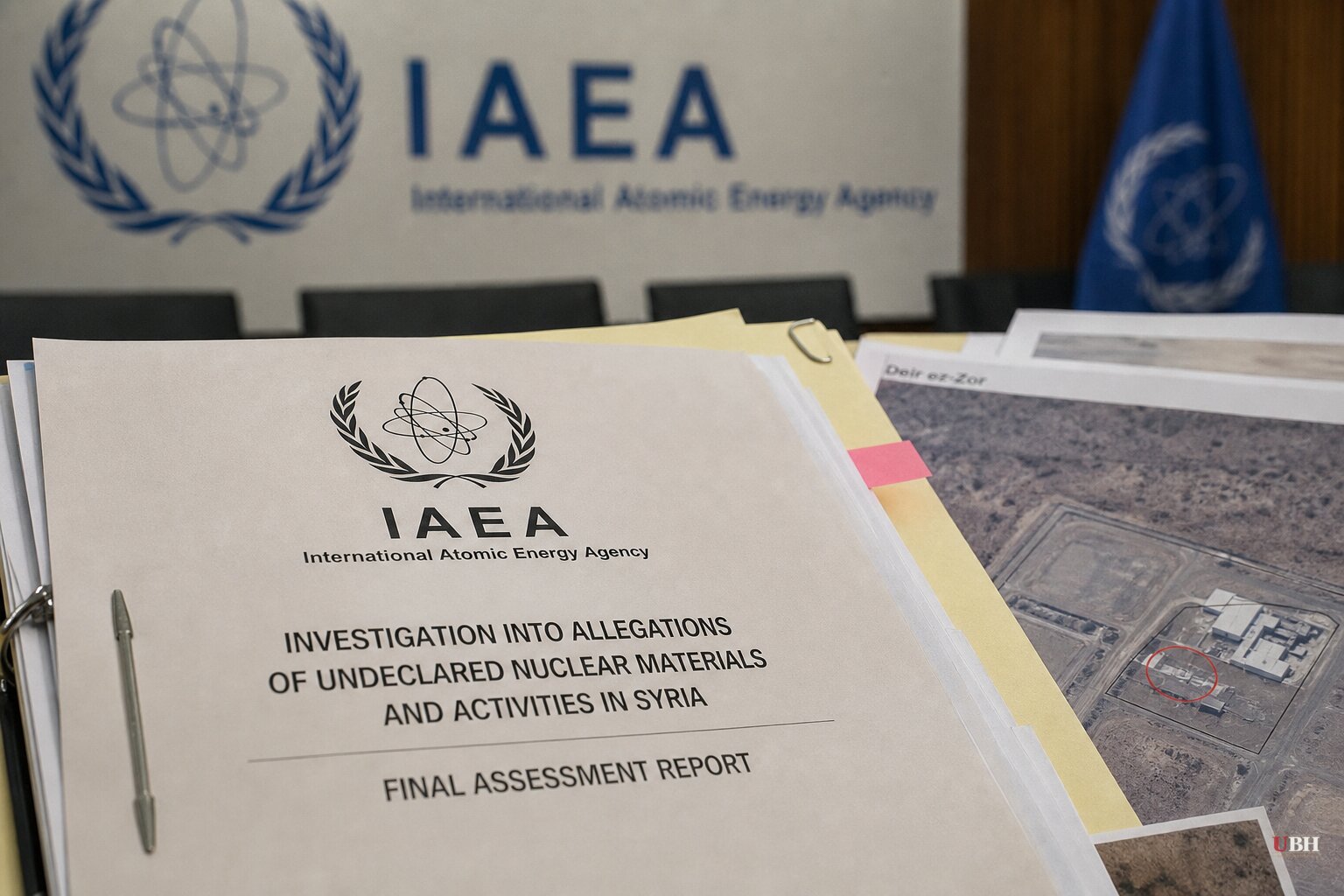
The International Atomic Energy Agency has confirmed what Israeli intelligence has claimed for nearly two decades: Bashar al-Assad's regime secretly built a nuclear reactor and hid 73 tons of uranium from the world.
A confidential IAEA report circulated to member states on September 1, 2026, states that inspectors verified approximately 73 metric tons of natural uranium metal at a Syrian site, according to Daily Sabah, The Media Line, and hidabroot. Roughly 55 tons of that uranium was found in clad fuel rods, meaning it had been processed and shaped for use in a reactor. Nearly 18 tons showed up as uranium scrap and waste, according to a NewsCord compilation of the reporting.
The agency also confirmed that cooling infrastructure uncovered at the Deir ez-Zor site is consistent with a nuclear reactor design, directly contradicting Assad's decades-old claim that the site was an empty military building.
A Nearly 20-Year Cover-Up
This goes back to September 2007, when Israeli fighter jets destroyed the Al-Kibar facility in a nighttime airstrike. Intelligence assessments at the time suggested the target was a plutonium-producing reactor built with North Korean help, according to The Media Line. Assad's government denied everything, called the bombed structure a conventional military site, and refused meaningful IAEA access for years.
The IAEA opened a formal investigation in 2008. It went nowhere. Damascus razed the site and stonewalled inspectors' questions for close to two decades, according to The Media Line.
Assad's ouster in late 2024 changed the situation. President Ahmed al-Sharaa's new government took a different posture with international inspectors and started letting them in.
Syria Turns Over the Evidence
Syria's new authorities informed the IAEA of the previously undeclared uranium storage site in a July 17, 2026 letter, inviting inspectors to verify whatever they found there, according to The Media Line and Crypto Briefing. IAEA Director General Rafael Grossi and senior inspectors visited Damascus in August, meeting with Syria's interim foreign minister and personally overseeing verification work at the site.
Grossi praised what he called Syria's "courageous decision" to report the undisclosed material, according to Daily Sabah, which cited an AFP report. The IAEA's own report went further, stating it is "able to establish that the former Syrian authorities had failed to report nuclear material, facilities and activities as required under the NPT Safeguards Agreement," per Daily Sabah.
Syrian Foreign Minister Asaad al-Shibani affirmed his country's right to pursue civilian nuclear energy, stressing that any nuclear material found on Syrian soil will remain under the custody of the Syrian state, according to NewsCord's compilation of the coverage. The Media Line notes any Syrian civilian nuclear ambitions will require continued cooperation with the IAEA and confidence that every remaining piece of the former program has been located and secured. That confidence isn't automatic. Full site excavation was still underway at Deir ez-Zor as of the report's release, and the IAEA said it "will continue to monitor the activities at the site as excavation work progresses," according to Daily Sabah.
NewsCord's review of 18 outlets found a real split in how the findings were characterized. Sawt Bayrut International described the report as having "resolved the outstanding issues in its inquiry into past secret nuclear activities in Syria," while Al Jazeera stuck to the narrower fact that the IAEA "will continue to monitor activities at the site." The IAEA's own language backs the more cautious framing. Ongoing excavation and monitoring means this file isn't fully closed, whatever Sawt Bayrut's headline suggests.
The Iran Contrast
The Media Line drew a pointed comparison that other outlets missed: Syria's cooperation stands in stark contrast to Iran, where IAEA inspectors have not regained access to several major nuclear sites following U.S. and Israeli strikes in 2025. One country facing scrutiny over decades-old covert nuclear work opened its doors. The other, under the ayatollahs, is still refusing to let inspectors back in after military action targeted its program.
A regime that hid a reactor for 17 years handed over 73 tons of uranium voluntarily once its government changed. Tehran hasn't offered the same. Whether Syria's new government follows through on full transparency as the Deir ez-Zor excavation continues, and whether Iran ever grants comparable access, remains the open question the IAEA's Board of Governors will be watching in the months ahead.
Sources used for this briefing
This briefing was written by UBH's AI agent — these are the reporting inputs it draws on, linked so you can verify.


