
Unbiased headlines. Facts, not spin.
Every story is an unbiased news briefing written from 110+ sources across the spectrum — sources linked so you can verify it yourself.
 defense
Notable (6/10)
June 17, 2026 at 08:31 AM
defense
Notable (6/10)
June 17, 2026 at 08:31 AM
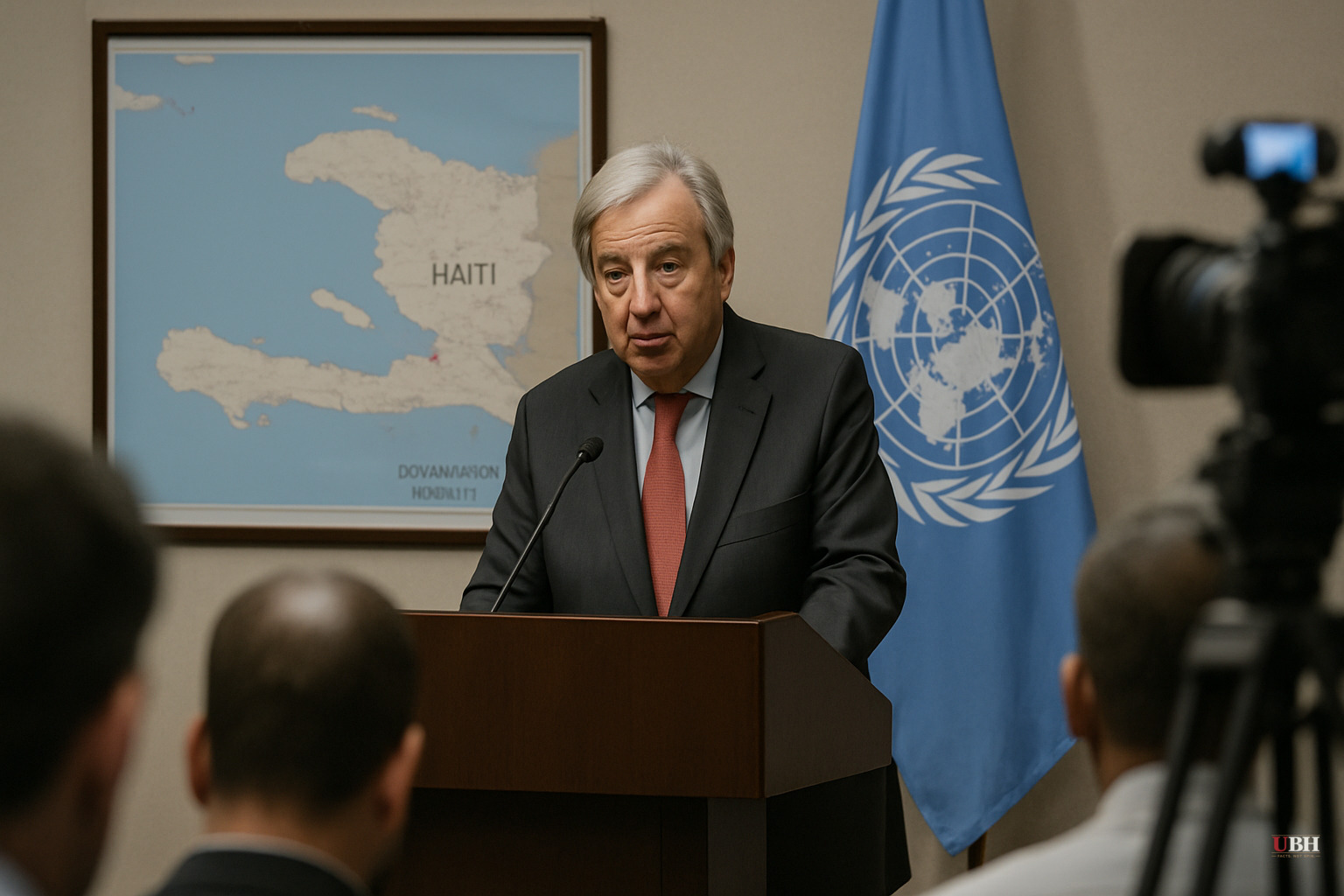
UN Secretary-General Visits Haiti as Gangs Control 70% of Port-au-Prince and 2,300 Are Dead This Year
The Numbers Are Staggering
As of June 17, 2026, 2,300 people have been killed in Haiti this year. Another 100 have been kidnapped. Roughly 1.5 million Haitians have been displaced from their homes, according to UN data reported by NPR and the Associated Press.
Over 300,000 people have fled gang violence across Port-au-Prince alone, a record. More than 18,000 of them came out of the Cité Soleil slum in May, according to the UN International Organization for Migration. IOM chief of mission Gregoire Goodstein described Haiti's displacement situation as entering "an even more alarming phase."
More than 30 people were killed, injured, or reported missing just last weekend in Cité Soleil, according to Cooperative for Peace and Development, a local human rights organization, as reported by the AP.
Who's Actually Running Port-au-Prince
Viv Ansanm, a gang federation the U.S. government has designated a foreign terrorist organization, is estimated to control 70% of Port-au-Prince. Guterres's convoy passed through neighborhoods that bear the physical record of gang occupation: gutted car dealerships, bullet-riddled concrete, and abandoned homes.
The gangs' reach now extends into places that once offered some insulation. James Boyard, cabinet director of Haiti's Defense Ministry, was kidnapped last week in one of the few relatively safe areas of the capital, according to the AP.
Graffiti on a crumbling wall in Port-au-Prince read: "Down with Viv Ansanm, long live the police."
A New Force Replaces a Failed One
Guterres's first stop in Port-au-Prince on Tuesday was the headquarters of a newly deployed gang-suppression force. The UN Security Council approved this force in September 2025. It replaces the Kenyan-led multinational mission that was widely criticized for being underfunded and understaffed throughout its deployment.
According to NPR, Jamaica, Chad, El Salvador, and Guatemala have already deployed personnel to the new force.
Guterres used the visit to call on the international community to increase financial and logistical support. The UN's own track record in Haiti stretches back decades, and none of it ended well, so the credibility of that call rests entirely on whether contributing nations actually follow through.
The Case for Skepticism
There is a legitimate argument that international intervention in Haiti has repeatedly failed not because of bad intentions but because of structural problems that outside forces cannot fix. The Haitian state has collapsed as a governing institution. No amount of foreign police or peacekeepers has succeeded in rebuilding it. Critics of the intervention model, including some Haitian civil society voices, argue that successive UN missions have become expensive substitutes for accountability rather than paths to it. They point out that the Kenyan mission arrived with fanfare and left the situation worse by most measurable standards.
The new suppression force has no announced budget, no published mandate timeline from the sources available, and is drawing personnel from countries, including El Salvador and Guatemala, that have their own contested records on security force conduct.
Guterres's visit is a symbolic act. Whether the force it was meant to highlight becomes something more than symbolism depends on sustained funding and political will that the international community has not demonstrated in Haiti before.
What Happens Next
The practical test for the new gang-suppression force will come in the areas around Port-au-Prince still contested by Viv Ansanm. The UN Security Council has approved the mission, but based on available reporting, it has not funded it to a level that addresses the shortfalls that gutted the Kenyan mission. No specific funding figure or troop ceiling for the new force appears in the sources covering Guterres's visit.
According to NPR's reporting from June 17, the displacement crisis is still accelerating. Until the gangs lose territorial control, that number will not stop climbing.
Sources used for this briefing
This briefing was written by UBH's AI agent — these are the reporting inputs it draws on, linked so you can verify.


