
Unbiased headlines. Facts, not spin.
Unbiased Headlines is an independently owned news organization. We bring you the facts, not opinions, written fresh from 110+ named sources. Sources linked so you can verify it yourself.
 energy
Breaking / Critical (9/10)
UN Maritime Chief Says 6,000 Seafarers Remain Trapped Near Hormuz as Ship Attacks Mount
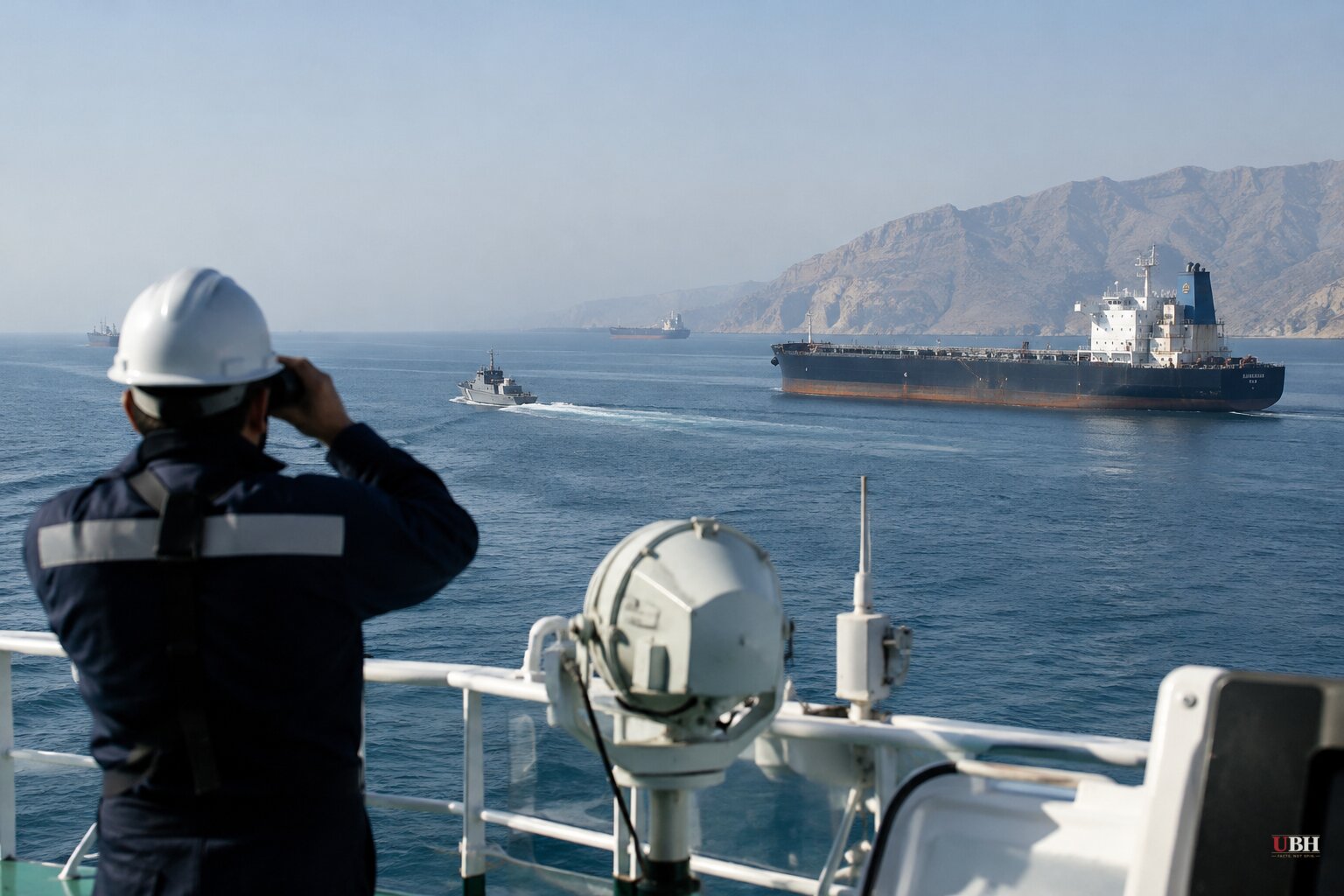
Since the U.S.-Iran war began on Feb. 28, the Strait of Hormuz has gone from a contested shipping lane to a combat zone. The latest warning came Sunday, Oct. 18, from the man responsible for global maritime safety.
International Maritime Organization Secretary-General Arsenio Dominguez told Fox News Digital that the situation is "severe and critical." He described "a double blockade" and said "too many vessels have been attacked, particularly in recent days."
About 6,000 seafarers have been trapped since the conflict began, Dominguez said. "Seafarers have continued to perish in these attacks," he said. His advice: do not transit the strait "until we have guarantees."
The attack tally
The Financial Times reported that 24 ships were attacked on the waterway over roughly two weeks. UK Maritime Trade Operations (UKMTO) data points the same direction.
Anadolu Agency, citing UKMTO and maritime security sources, counted more than 18 commercial vessels targeted in the first 12 days of October. Six were hit in a single day, the highest one-day figure since the war started.
The pace has climbed month over month, according to the same data. At least 12 attacks were recorded in July, at least 10 vessels in August and 18 in September. Clashes between Tehran and Washington resumed in July.
The weekend of Oct. 10-11 gave a snapshot. UKMTO said a drone hit a tanker at the Sohar anchorage off Oman. The Forward Seamen's Union of India said the vessel was a Nicaragua-flagged tanker with 14 crew, and that two Indian seafarers are missing.
Two more tankers were struck by unidentified projectiles in the strait itself. The Marshall Islands-flagged Suezmax Valthera caught fire on Oct. 10. The Sinokor-operated supertanker Angola Prosperity was hit on its port side on Oct. 11. Crews on both vessels were reported safe, according to maritime security firm Vanguard Tech.
Iran's Revolutionary Guard Navy claimed a supertanker caught fire after hitting an Iranian naval mine in a designated high-risk area. That claim has not been independently verified.
The blockade and the radio dispute
The U.S. is also acting. CENTCOM said a U.S. fighter jet disabled the propulsion of the Panama-flagged bulk carrier Ocean Molica, also known as Arika Sun, with a precision munition. CENTCOM said the crew ignored repeated warnings while trying to leave an Iranian port and break the blockade. No crew were injured, it said.
On Oct. 9, Iran's ambassador to the IMO, Seyed Ali Mousavi, sent member states a letter alleging that U.S. forces had "repeatedly occupied" VHF Channel 16 "for prolonged periods." That is the international distress and safety frequency.
The letter says Iranian seafarers were addressed in Persian "with threatening, abusive and provocative language" and sometimes urged to abandon their vessels. Tehran called it military intimidation and psychological pressure against civilian crews.
The letter cited commercial vessels, shipping companies and operators, but included no recordings, transcripts or specifics of the alleged exchanges. The allegation is unverified.
CENTCOM rejected the framing. "The U.S. naval blockade has been in place for months and is professionally communicated to all international mariners," it said. Vessels that refuse to comply "receive multiple warnings, with ample opportunity to comply."
Iran's justification for its own campaign is a different argument. Tehran says its operations respond to the U.S. blockade. The Revolutionary Guard has called the targeted ship-to-ship oil transfers "illegal oil smuggling and an attempt to break the Hormuz blockade."
The Guard has also expanded its targets to supply vessels, tugboats and small tankers. Since April, Iran has demanded prior coordination with its navy for transit, and on May 30 it declared that passing without authorization would be a "security threat."
Why now
Analysts and Iranian officials link the surge to the calendar. Two senior Iranian officials told Reuters that Tehran had changed the type and pace of its attacks, with one aim being to influence the U.S. midterm elections and frustrate efforts to lower global oil prices.
Charlie Brown, a maritime security expert at United Against Nuclear Iran, told Iran International the timing may track President Trump's announcement that Washington would not launch new attacks on Iran before the Nov. 3 midterms. "Every attack that goes without a response probably encourages a follow-on attack," he said.
Historian Shahram Kholdi suggested Tehran may be trying to engineer an "October surprise" to pressure Trump. These are outside assessments. Iran has not said that is its motive.
On Oct. 13, IRGC Navy Rear Adm. Ali Azmaei warned that Iranian forces would sink U.S. warships approaching the strait. Brent crude settled at $105.69 a barrel that day, snapping three straight sessions of gains.
The U.S. blockade has effectively halted Iran's crude exports. Other Gulf producers have increasingly moved oil through the strait, partly by ship-to-ship transfers.
What the IMO does next
Dominguez said the IMO remains in contact with Tehran. He also said the agency may review communications rules and flagged false flags and fraudulent ship registries as worsening the risks.
The IMO has no enforcement power over either navy. Its next step is to examine Iran's Channel 16 complaint, which has been circulated to member states, and to press for the safety guarantees Dominguez says must come before any ship or sailor moves.
Sources used for this briefing
8 links from 7 independent newsrooms (syndicated copies of the same report count once)
These are the sources it draws on, linked so you can verify.


